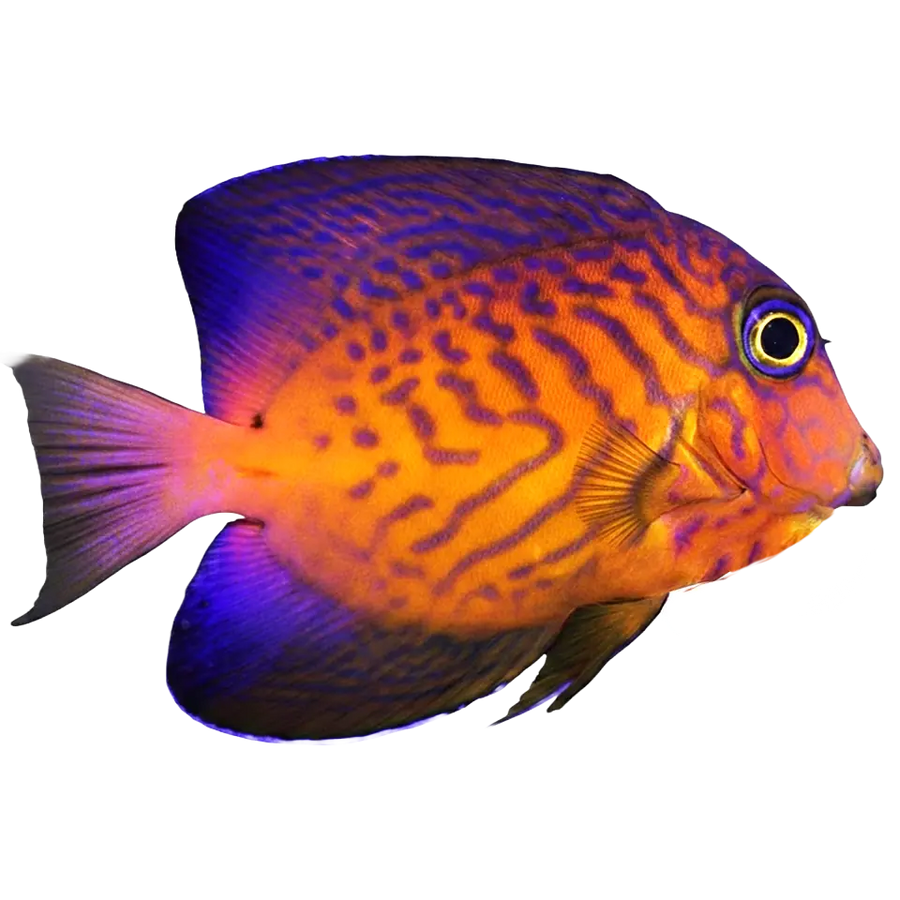
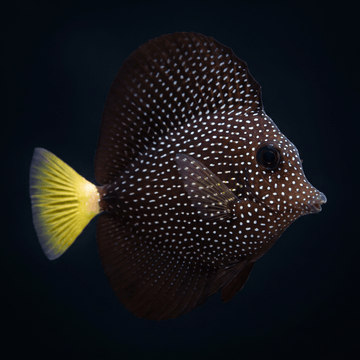
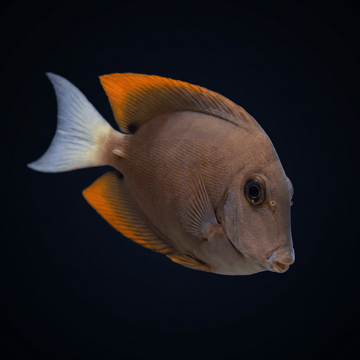
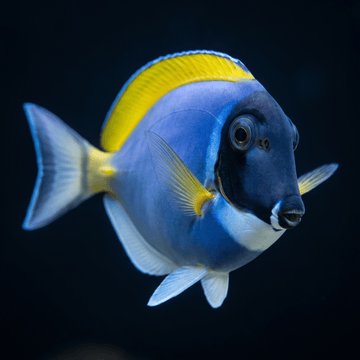
In the wild, Acanthurus tennentii grazes marine algae, taking some meaty material opportunistically. Captive feeding should mirror that balance: build the diet primarily around marine algae and plant matter such as dried nori, spirulina flakes, and herbivore flakes or pellets, then supplement with a smaller portion of meaty items like frozen mysis shrimp. Soaking prepared foods in a vitamin or garlic supplement supports immune health during and after acclimation.
Offer food two to three times daily, and clip algae sheets, seaweed, or vegetables such as romaine or green leaf lettuce for grazing three to four times per week. If the rockwork does not carry much natural algae growth, increase both feeding frequency and algae-rich supplementation. An underfed Lieutenant Tang is the one most likely to start picking at large polyp stony corals, so keeping its grazing needs satisfied is the simplest form of coral insurance.
Toward dissimilar community fish it is far more tolerant and generally coexists without incident in a large, well-structured display. It is regarded as reef safe and is not a typical threat to corals, clams, or motile invertebrates, which is why it is a popular algae-control choice in big reef systems. The one caveat remains nutrition, since a hungry specimen may sample large polyp stony corals.


FAQ
Frequently Asked Questions
About the Lieutenant Tang
-
How big of a tank does a Lieutenant Tang need?
Plan on a minimum of 150 gallons for an adult, with as much open swimming length as possible. This species cruises constantly and needs room to do it. -
Is the Lieutenant Tang safe for a reef tank with corals?
Yes, it is considered reef safe and is not a typical threat to corals or invertebrates. Underfed individuals may pick at large polyp stony corals, so keep algae-based feedings generous. -
Can I keep more than one tang with a Lieutenant Tang?
It is possible in a large system, but this fish can become semi-aggressive toward tangs of similar shape, size, and color, including conspecifics. Add the more aggressive species last and provide multiple separate hiding spots.