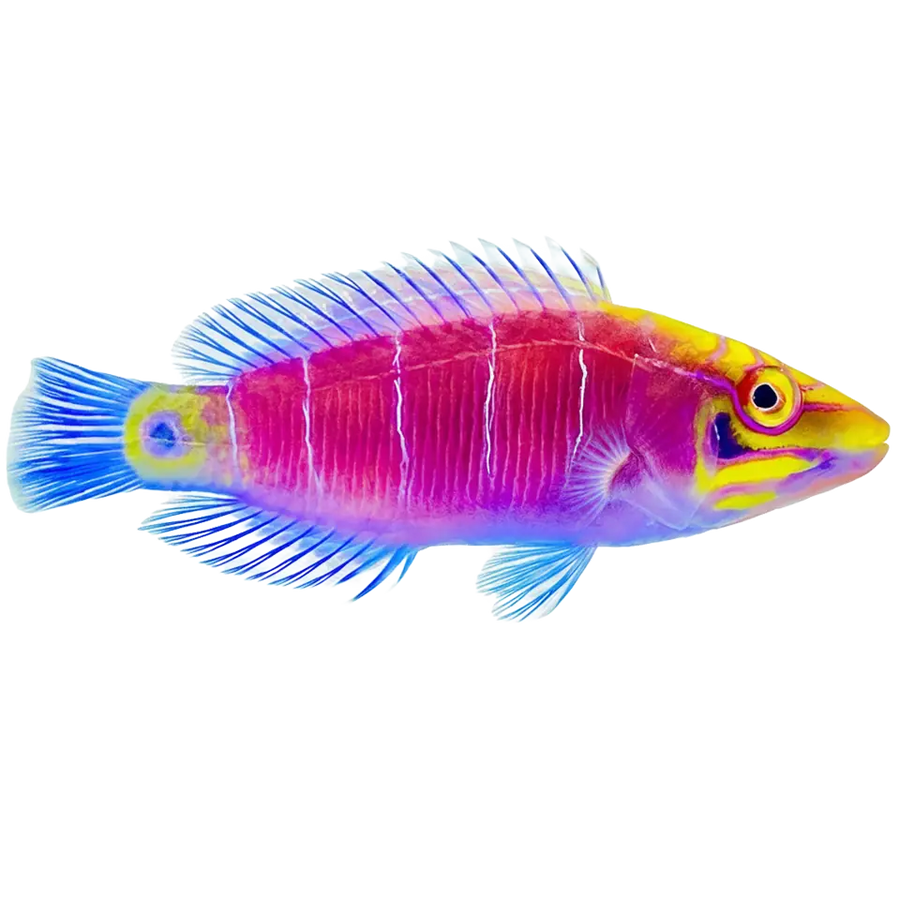
Exquisite Fairy Wrasse saltwater fish care guide

The Exquisite Fairy Wrasse, Cirrhilabrus exquisitus, is a slender, laterally compressed wrasse found across the tropical Indo-Pacific, from East Africa and South Africa east to the Tuamotu Islands. Males typically show a deep green to greenish base overlaid with vivid red markings and variable blue, orange, yellow, or purple accents, while females are considerably more subdued and often carry a conspicuous black spot on the caudal peduncle. Color and pattern shift with sex, mood, breeding condition, and collection locality, so specimens from different regions can look strikingly dissimilar. Adults reach roughly 5 inches.

In the wild this species patrols rubble zones, low patch reefs, reef edges, and isolated bommies at depths of about 20 to 130 feet. Replicate that structure with substantial rockwork containing crevices and caves for shelter and nighttime rest, balanced against generous open water where the fish can swim and display. A deep sand bed is not required, since this wrasse does not habitually bury itself. Brisk water movement suits its current-swept habitat. House adults in a 70-gallon or larger aquarium, with additional volume for pairs or harems, and fit the tank with a tight-sealing lid and a secured overflow: startled fairy wrasses rush upward and readily jump through small openings.

On the reef, the Exquisite Fairy Wrasse feeds on zooplankton drifting above the substrate, and a captive diet should follow that model closely. Offer mysis shrimp, enriched brine shrimp, and copepods along with finely chopped shrimp, mussel, clam, squid, and similar marine flesh. Appropriately sized marine flakes and pellets round out the rotation once the fish is settled and competing confidently for food.

Feed at least twice daily, and preferably two to three meals or several smaller portions spread through the day, since this planktivorous feeder processes small amounts frequently. Newly introduced specimens are often shy and may hide while food is in the water, so patience and repeated small offerings help during acclimation. Mouth damage sustained during transport can interfere with feeding, which makes it important to confirm that a prospective fish is alert, undamaged, and actively eating.

Mysis Shrimp Enriched Brine Shrimp Copepods Finely Chopped Shrimp Clam And Mussel Chopped Squid Marine Flakes Marine Pellets
This is an active, open-water swimmer that spends the day cruising above rockwork rather than lurking in it. In nature it gathers in moderately large mixed-sex groups where males posture and flash color at one another. A single specimen, a male and female pair, or one male with several females all work in the aquarium. When keeping a group, introduce the members simultaneously or place the females first and add the male afterward to reduce friction.

Temperament is peaceful toward most community reef fishes, though males can turn territorial toward other male fairy wrasses, similar-looking species, or rival zooplankton feeders in cramped quarters. Avoid large damsels, aggressive triggerfish, puffers, and any fish inclined to chase or bully. The species is coral-safe and considered safe around clams and other invertebrates, with no reported interest in sessile reef organisms, although fairy wrasses may occasionally pick at very small crustaceans, so prized ornamental micro-crustaceans deserve observation. One further caution concerns the wrasse itself: a spooked individual can bolt into a powerful anemone and be captured.

FAQ

Frequently Asked Questions

About the Exquisite Fairy Wrasse

  • What size aquarium does an Exquisite Fairy Wrasse need?
    Plan on a 70-gallon or larger aquarium for a single adult, with extra volume for a pair or a harem. A tight-fitting lid and a screened overflow are essential because this wrasse jumps when startled.
  • Is this wrasse safe with corals and ornamental invertebrates?
    Yes, it is regarded as reef-safe and does not bother corals, clams, or other sessile invertebrates. Fairy wrasses may pick at very small crustaceans, so unusually valuable ornamental micro-crustaceans warrant monitoring.
  • What should I look for before buying, and how often should it be fed?
    Select an alert specimen that is already eating, and inspect the mouth for transport-related damage that can hinder feeding. Offer varied zooplankton and meaty foods at least twice daily, with two to three meals preferred during acclimation.