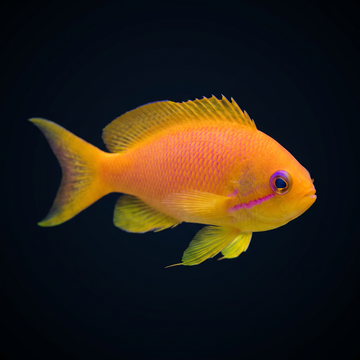
Evansi Anthias saltwater fish care guide

Overview:
Evansi Anthias, also known as Yellowtail Anthias, are vibrant marine fish that thrive in well-maintained reef aquariums. They require a tank of at least 70 gallons with plenty of live rock to provide hiding spots and replicate their natural habitat. A stable environment with a temperature range of 72-78°F, pH between 8.1-8.4, and specific gravity of 1.020-1.025 is essential. Strong water movement and efficient filtration are crucial to maintain water quality and oxygenation. These fish prefer subdued lighting to mimic their deep-water origins.

Compatibility:
Evansi Anthias are generally peaceful and do well in a community tank with other non-aggressive species. They can be kept in groups, ideally with one male and several females, as they exhibit a hierarchical social structure. Avoid housing them with aggressive or overly dominant fish that may intimidate or outcompete them for food. Suitable tankmates include other peaceful anthias species, gobies, blennies, and small wrasses. Providing ample hiding spaces can help reduce stress and aggression within the group.

Health and Quarantine:
Maintaining the health of Evansi Anthias requires attentive care and preventive measures. Quarantine new arrivals for at least two weeks to monitor for signs of disease and acclimate them to your tank conditions. Common health issues include marine ich and bacterial infections, often due to stress or poor water quality. Regular water changes and maintaining stable tank conditions are vital for preventing disease. Observing their behavior and appetite can help detect early signs of illness. If health issues arise, consult with a marine veterinarian for appropriate treatment options.

Pellets Mysis Finely Chopped Seafood
Evansi Anthias display active swimming habits, often found in mid-water, frequently darting around. They are social, forming large shoals for protection and feeding efficiency. Territoriality is minimal within their group, but males may exhibit dominance displays during breeding. They are generally peaceful, compatible with other non-aggressive fish species, but may be outcompeted for food by more assertive tank mates. Regular feeding and a spacious environment help maintain their health and social structure.

FAQ

Frequently Asked Questions

About the Evansi Anthias

  • How can I keep Evansi Anthias (Pseudanthias evansi) alive long term given their poor survival record compared to other anthias?
    Evansi Anthias are notoriously delicate due to stress, shipping losses, and finicky feeding. Start with a large, stable tank (at least 125–150 gallons) with strong surface agitation, excellent gas exchange, and pristine water (nitrate <10–15 ppm, phosphate low but detectable). Keep temperature stable around 76–78°F and salinity at 1.025–1.026. Only buy individuals that are alert, not breathing heavily, with no sunken belly or frayed fins. Acclimate slowly with dim lighting, and quarantine if possible to establish feeding before introduction to the display. Provide many caves, overhangs, and shaded swimming areas so they feel secure. They do best in small groups introduced at the same time, in a peaceful reef with no aggressive tankmates. Consistent feeding with small, frequent meals of high-quality frozen foods is essential; if they don’t eat within 24–48 hours, try live foods and reduce flow temporarily during feeding.
  • What is the ideal social structure and male-to-female ratio for a group of Evansi Anthias in a home reef tank?
    In nature, Evansi Anthias live in harems with a single dominant male and multiple females. In captivity, aim for one male with 4–8 females, depending on tank size (minimum ~20 gallons per fish, with larger systems preferred). If you can’t find females, buy all juveniles or “unsexed” subadults and let one naturally transition to male. Avoid adding multiple males at once unless the tank is very large with lots of rockwork and line-of-sight breaks. Aggression is managed by giving them vertical and horizontal swimming space plus dense rockwork and branching corals or faux structures so subordinates can dodge the male’s chasing. Watch for one fish staying thin or hiding all day; that individual may need to be removed if harassment is severe.
  • Why do my Evansi Anthias only stay active in shaded areas and seem stressed under bright reef lighting?
    Evansi Anthias are often collected from deeper or more dimly lit reef zones and feel more secure away from harsh, direct light. If your reef lights are very intense for SPS corals, they may react by hugging caves, shaded overhangs, and the lower half of the tank. To help them, build rock structures that create archways, overhangs, and shaded “tunnels” across the aquascape. Use a gentle light ramp-up in the morning and ramp-down at night to reduce sudden light shock. Running slightly reduced intensity in the lower and back areas of the tank (through mounting height and light spread) gives them comfortable zones to cruise while still visible. Over time, they often become bolder, but many will always prefer the dimmer parts of the aquarium.
  • What specific feeding strategy works best to get newly imported Evansi Anthias eating consistently?
    Evansi Anthias are microplanktivores that graze small zooplankton all day, so they respond best to small, moving foods. For new arrivals, start with live foods such as enriched baby brine shrimp, copepods, or live blackworms (if available). Once they respond to movement, transition to frozen copepods, finely chopped mysis, Calanus, rotifers, and high-quality reef plankton blends. Feed very small portions 3–5 times per day rather than one or two large meals. Temporarily reduce flow or hit “feed mode” to keep food suspended but not blasted away. After they’re taking frozen reliably, you can mix in very small, soft pellets designed for planktivores, soaked briefly in tank water. Watch each fish at feeding; shy individuals may need spot feeding with a turkey baster or pipette into their favorite cave entrances.
  • Are Evansi Anthias suitable for mixed reefs with strong flow and active fish like tangs and wrasses, and how should the flow be arranged?
    Evansi Anthias can live in mixed reefs with tangs and wrasses, but they dislike constant, extreme blast flow and can be outcompeted for food by very boisterous fish. Arrange flow with strong, pulsing gyres or wavemakers that create high-energy zones in the upper water column and calmer “eddies” behind rock structures. This mimics their natural environment, where they hover and dart in moderate flow while being able to dip into lower-energy pockets to rest and feed. Avoid aiming powerheads directly at their preferred hiding spots and shaded overhangs. Choose tangs and wrasses with moderate temperament; overly aggressive species will keep Evansi in hiding, causing them to starve. Ensure feeding time includes broadcast feeding into midwater, not just sinking food, so the anthias can feed in their preferred zone without being crowded at the bottom.