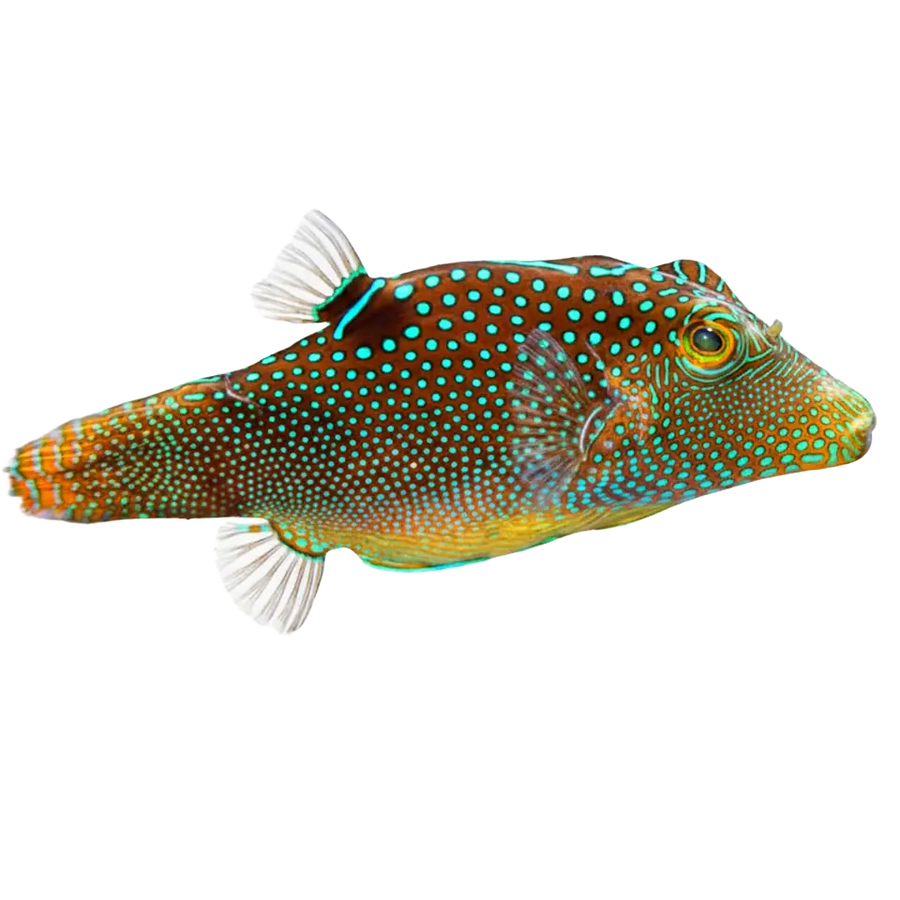
On the reef, Dogface Puffers hunt at night, working over mollusks, crustaceans, sponges, corals, sea squirts, and algae, and crushing shells with their powerful beak. In the aquarium they are straightforward carnivores that thrive on substantial meaty items: raw shrimp, squid, krill, mussels, clams, scallops, chopped fish, octopus, and crab meat. Offer these in pieces sized to the fish and feed on a consistent daily or near-daily schedule, adjusting portions to keep water quality in check.
Hard-shelled foods are a health requirement, not an enrichment extra. Include whole snails, crabs, or shrimp still in the shell on a regular basis so the continuously growing beak stays worn down; an overgrown beak can eventually prevent a puffer from eating at all and may require veterinary trimming. Newly introduced fish are often withdrawn and may refuse food for up to a week, so keep the tank quiet, continue presenting food, and be patient. Once settled, most become shameless beggars that rush the glass at feeding time.
Good companions include other similarly sized Arothron puffers, clownfish, tangs, angelfish, lionfish, triggerfish, moray eels, butterflyfish, and squirrelfish. Very small fish are likely to be swallowed, and Porcupine Puffers can prove problematic due to aggression. This species is not reef safe. It will consume shrimp, snails, crabs, and hermit crabs, and it may pick at or damage both soft and stony corals, so any invertebrate in the system should be regarded as food. A fish-only display with live rock suits it best.
FAQ
Frequently Asked Questions
About the Dogface Puffer
-
Can a Dogface Puffer be kept in a reef tank with corals and a cleanup crew?
No. This species will eat shrimp, snails, crabs, and hermit crabs, and it may pick at or damage soft and stony corals, so a fish-only setup with live rock is the appropriate home. -
How large an aquarium does an adult Dogface Puffer need?
Adults reach about 13 inches, so plan on a 125-gallon system at minimum, ideally a tank around six feet long with caves for shelter and open space for swimming. -
Why do Dogface Puffers need hard-shelled foods?
Their beak-like teeth grow continuously, and regular whole snails, crabs, or shell-on shrimp wear them down. Without such foods the beak can overgrow and prevent the fish from eating.