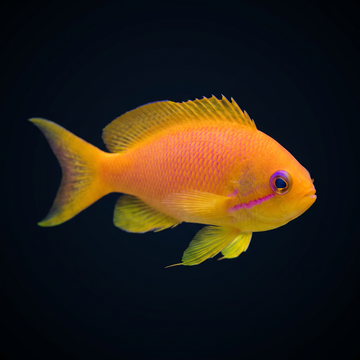
On the reef, this anthias is a zooplankton feeder, picking prey from the water column as current delivers it across the slope. In the aquarium, build the diet around small meaty items: mysis shrimp, enriched brine shrimp, finely chopped prawn, copepods, amphipods, rotifers and prepared zooplankton preparations. Once settled, most individuals also accept appropriately sized marine pellets and flakes.
Constant activity and a high metabolism make feeding frequency the deciding factor in long-term success. Offer small portions at least two or three times daily, and more often if the schedule allows. An automatic feeder or a productive refugium seeding live plankton into the display helps extend food availability between meals. Newly introduced specimens occasionally refuse frozen fare at first, in which case Cyclops, Artemia or live crustaceans can trigger a feeding response, though many fish transition from frozen foods to pellets without difficulty.
Choose tankmates carefully. Peaceful community fish are ideal, while aggressive, territorial or fast, competitive feeders will intimidate a Dispar Anthias and keep it from eating enough. In a reef display the species is entirely safe: it poses no expected threat to stony or soft corals, and no particular risk to ornamental shrimp, crabs, snails or clams has been identified. Its bright coloration and midwater schooling behavior make it one of the more animated additions to a well-fed coral aquarium.


FAQ
Frequently Asked Questions
About the Dispar Anthias
-
What tank size is appropriate for a Dispar Anthias?
Allow at least 70 gallons for a single specimen, and favor an aquarium with roughly four feet of swimming length for a small social group. A large harem of one male and eight to ten females may require 125 gallons or more. -
Can it be kept singly, or should I buy a group?
A single fish does well on its own, but the species naturally forms schools and harems. For a group, pair one male with several females and avoid housing two males together unless the aquarium is exceptionally large, since male-male aggression can be severe. -
How often must Dispar Anthias be fed?
Feed small portions at least two or three times per day, with additional meals being beneficial. Newly introduced fish may need live or highly attractive foods such as Cyclops or Artemia before they accept prepared diets.