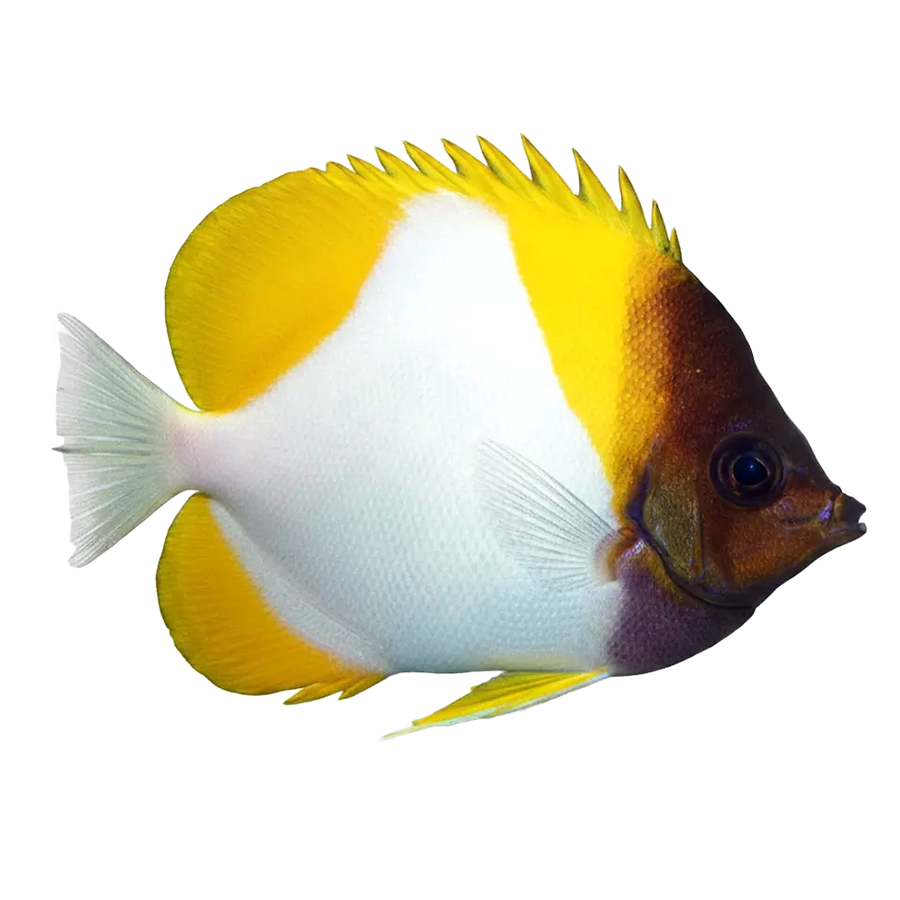
Declivis Butterflyfish saltwater fish care guide

Overview:
The Declivis Butterflyfish thrives in a well-maintained marine aquarium that mimics its natural coral reef habitat. Ideal conditions include a tank size of at least 75 gallons, with plenty of live rock for grazing and hiding. Water quality is crucial; maintain a temperature of 72-78°F, pH between 8.1-8.4, and specific gravity of 1.020-1.025. Strong water movement and efficient filtration are essential to replicate ocean currents and maintain cleanliness.

Compatibility:
This species is generally peaceful but can be territorial, especially in smaller tanks. It is best kept with other non-aggressive fish of similar size. Avoid housing with overly aggressive species or those that may outcompete it for food. Suitable tankmates include tangs, gobies, and other butterflyfish. Introduce new fish carefully and monitor interactions to ensure harmony.

Health and Quarantine:
Regular health monitoring is vital for the Declivis Butterflyfish. Common issues include ich and marine velvet, often due to stress or poor water quality. Quarantine new arrivals for 2-4 weeks to prevent disease introduction. Maintain pristine water conditions and provide a stress-free environment to support immune health. Regularly check for signs of illness, such as changes in behavior or appearance, and address promptly with appropriate treatments.

Nori Mysis Finely Chopped Seafood
Declivis Butterflyfish exhibit graceful swimming patterns, often seen gliding through coral reefs. They are generally solitary but may form pairs during breeding. Territoriality is moderate; they defend small areas, especially when food is scarce. In community tanks, they coexist with non-aggressive species but may show aggression towards similar-looking fish. Regular feeding and ample hiding spots reduce stress.

FAQ

Frequently Asked Questions

About the Declivis Butterflyfish

  • Can a Declivis Butterflyfish be safely kept in a reef tank, and if so, what types of corals are most at risk versus generally safer?
    Declivis Butterflyfish are among the “more reef-tolerant” butterflies but are not fully reef-safe. Individual behavior varies, but they commonly nip at fleshy LPS (Acanthastrea, Trachyphyllia, Scolymia, Euphyllia), zoanthids, and fleshy soft corals like Xenia and some leathers. Small-polyp stony corals (Acropora, Montipora, Seriatopora) and non-fleshy gorgonians are often ignored or only lightly investigated, especially if the fish is very well-fed. Clams and feather dusters may also be targeted. If you try one in a reef, introduce it last, monitor closely for the first 2–3 weeks, keep it heavily fed with frequent small feedings, and be ready to remove it if it develops a taste for particular colonies.
  • What tank size and aquascape layout best suit a Declivis Butterflyfish to minimize stress and aggression in a mixed community?
    A single adult Declivis Butterflyfish does best in at least a 75–90 gallon tank, with more length (4 ft or longer) preferred over height. They appreciate a “canyon” layout: large, stable rock structures creating overhangs and swim-throughs, but with open water in the front and along the top for cruising. Provide multiple caves so it can retreat out of sight, as this species can be shy initially. Avoid a wall-of-rock that leaves no open swimming room. In mixed communities, strong rockwork with distinct territories helps reduce minor chasing with tangs and other active swimmers. Use moderate flow: enough current to keep water well-oxygenated and food suspended, but with calmer zones under ledges where the butterfly can rest.
  • Declivis Butterflyfish can be picky eaters at first. What specific foods and feeding strategies work best to get a new specimen eating reliably in captivity?
    Newly imported Declivis Butterflyfish often respond best to meaty, smell-rich frozen foods: enriched mysis shrimp, finely chopped clam or mussel, finely chopped raw shrimp, and frozen “reef plankton.” Start with small portions multiple times a day, allowing food to drift past them rather than just dumping in a big cloud. Many will begin by pecking at food that settles on rock; you can wedge food (like clam on the half shell or a seafood mash) in small crevices to trigger natural picking behavior. Once eating well, slowly introduce a varied diet including high-quality marine omnivore pellets, small flakes, and frozen blends with sponge content. Soaking foods in a vitamin and HUFA supplement (e.g., Selcon-type products) supports long-term health and better coloration.
  • How does a Declivis Butterflyfish typically interact with other butterflies, angelfish, and tangs, and are there pairing or stocking strategies that reduce conflicts?
    Declivis Butterflyfish are generally peaceful but can be territorial toward similar-looking butterflies, especially other Chaetodon with similar body shape and coloration. In most home aquaria, they are best kept singly or as a proven bonded pair (usually collected or raised together). Avoid adding closely related species such as Lineatus or Burgess butterflyfish in small systems, as they may squabble. With tangs and angelfish, they are usually fine as long as the tank is large and rockwork provides sight breaks. Add the Declivis before or at the same time as more assertive tangs and larger angels, so it isn’t bullied into hiding. If adding a Declivis to a tank with established aggressive fish, rearrange some rockwork and dim lights during introduction to reset territories and reduce chasing.
  • What are the key water quality and lighting conditions that keep a Declivis Butterflyfish healthy and showing its best coloration long-term?
    Declivis Butterflyfish come from clear, well-oxygenated reef slopes, so they do best in stable, high-quality water: temperature 24–26°C (75–79°F), salinity 1.024–1.026, pH 8.1–8.4, ammonia/nitrite at 0, nitrate ideally under 15–20 ppm, and phosphate kept low but not absolutely zero. Good surface agitation or strong skimming helps maintain high oxygen. For lighting, they adapt to a wide range, but moderate to strong reef lighting brings out their crisp black-and-white pattern and yellow highlights. Avoid sudden lighting changes; ramp up and down with a schedule or dimming to reduce startle responses. A stable photoperiod of 8–10 hours with some shaded areas under rock ledges allows them to retreat from intense light if they choose, which supports more natural behavior and reduces stress.