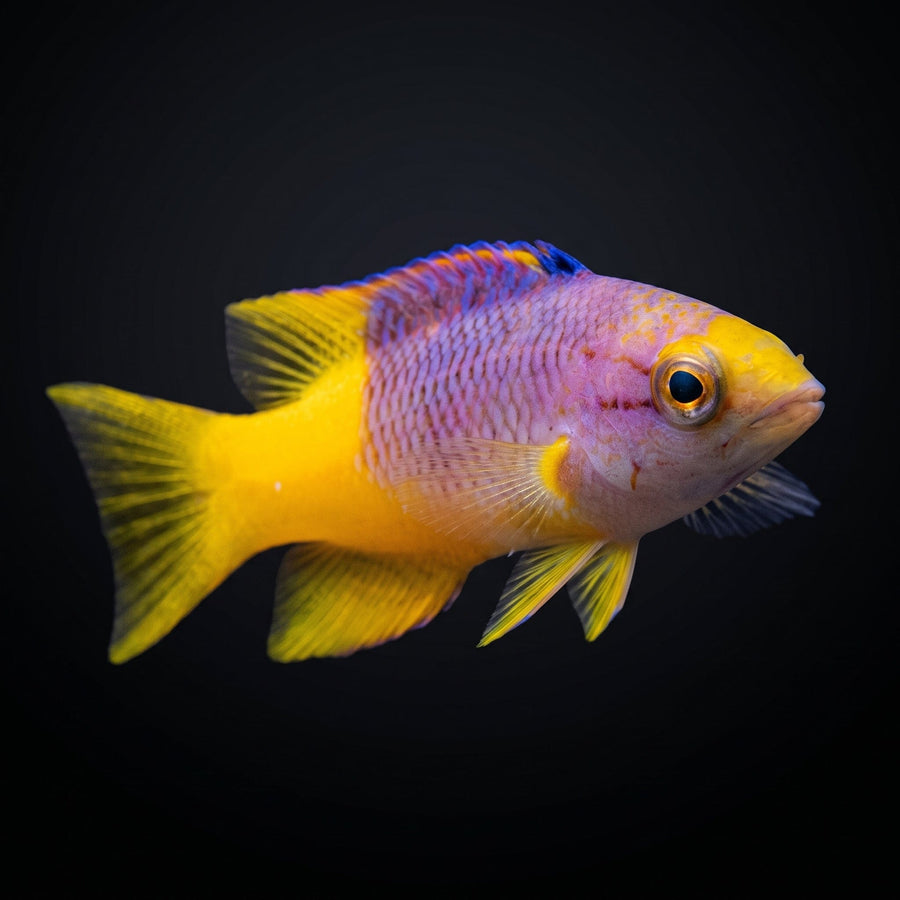
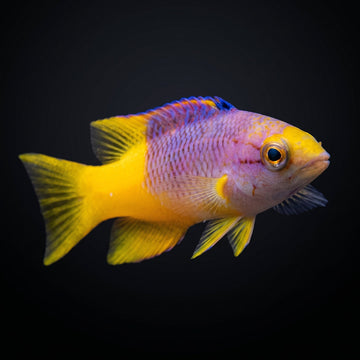
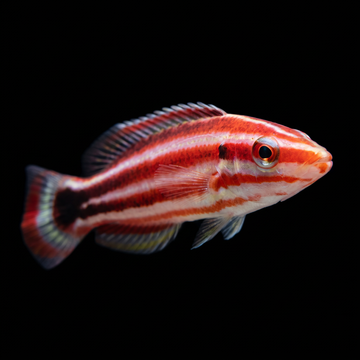
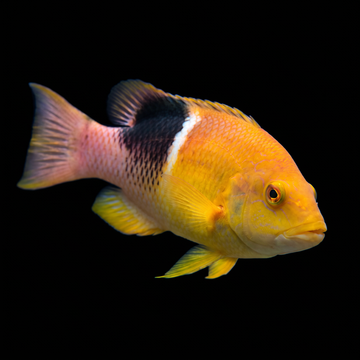
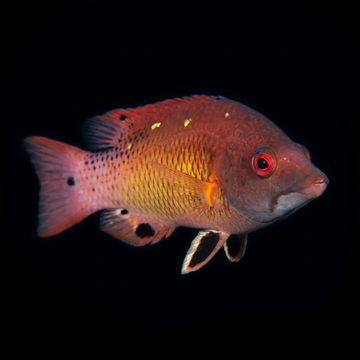
The Cuban Hogfish is a carnivorous marine fish that naturally feeds on crustaceans, mollusks, marine worms, and other bottom-dwelling invertebrates. Its strong jaws and specialized teeth allow it to capture and consume a variety of hard-shelled prey.
In captivity, it readily adapts to a varied diet of high-quality marine foods.
Recommended foods include:
Frozen mysis shrimp
Vitamin-enriched brine shrimp
Chopped shrimp, clam, squid, and other marine seafood
Frozen krill and marine carnivore blends
High-quality marine carnivore pellets
Appropriately sized shellfish and crustacean-based foods
Feed two to three moderate portions daily, adjusting the amount according to the fish's size, appetite, and activity level.
The Cuban Hogfish is generally an enthusiastic feeder and may become particularly energetic during feeding time. Providing a varied diet supports healthy growth, vibrant coloration, and strong body condition.
Avoid relying exclusively on a single frozen food, as dietary diversity is important for maintaining balanced nutrition.
Suitable tankmates include:
Larger angelfish and dwarf angelfish
Tangs and surgeonfish
Moderately aggressive wrasses
Larger clownfish
Peaceful to moderately assertive triggerfish species
Appropriately sized groupers and other robust marine fish
Avoid housing this species with very small fish, delicate ornamental species, or timid tankmates that may struggle to compete during feeding.
Aggression may also occur toward similarly shaped wrasses and other hogfish, particularly in aquariums with limited space or established territories.
A single Cuban Hogfish is generally recommended for most home aquariums. Although this species forms social groups in the wild, maintaining multiple individuals in captivity requires substantial space, appropriate introductions, and careful monitoring of territorial interactions.
Reef classification: With Caution.
The Cuban Hogfish is considered reef safe with caution.
It generally does not consume healthy corals and can be maintained in reef aquariums containing SPS corals, LPS corals, and soft corals. However, its natural hunting behavior makes it a potential threat to numerous ornamental invertebrates.
As the fish matures, it may consume:
Ornamental shrimp, including smaller cleaner shrimp
Small crabs and other crustaceans
Snails and small mollusks
Marine worms and other benthic invertebrates
Small fish that can be captured
Its active foraging behavior may also disturb loose coral frags, sandbeds, and unsecured decorations while searching for food.
Although corals themselves are generally not targeted, the Cuban Hogfish is not an ideal choice for reef systems containing valuable ornamental shrimp, small crabs, or delicate invertebrate populations.
It is particularly well suited to larger fish-only aquariums or reef systems where its predatory tendencies can be accommodated.
FAQ
Frequently Asked Questions
About the Cuban Hogfish
-
What size aquarium does the Cuban Hogfish need?
Provide at least 125 gallons for adult housing. Up to 11 inches (28 cm). -
Is the Cuban Hogfish reef safe?
With Caution. The Cuban Hogfish is considered reef safe with caution. It generally does not consume healthy corals and can be maintained in reef aquariums containing SPS corals, LPS corals, and soft corals. However, its natural hunting behavior makes it a potential threat to numerous ornamental invertebrates. As the fish matures, it may consume: Ornamental shrimp, including smaller cleaner shrimp Small crabs and other crustaceans Snails and small mollusks Marine worms and other benthic invertebrates Small fish that can be captured Its active foraging behavior may also disturb loose coral frags, sandbeds, and unsecured decorations while searching for food. Although corals themselves are generally not targeted, the Cuban Hogfish is not an ideal choice for reef systems containing valuable ornamental shrimp, small crabs, or delicate invertebrate populations. It is particularly well suited to larger fish-only aquariums or reef systems where its predatory tendencies can be accommodated. -
What does the Cuban Hogfish eat?
The Cuban Hogfish is a carnivorous marine fish that naturally feeds on crustaceans, mollusks, marine worms, and other bottom-dwelling invertebrates. Its strong jaws and specialized teeth allow it to capture and consume a variety of hard-shelled prey. In captivity, it readily adapts to a varied diet of high-quality marine foods. Recommended foods include: Frozen mysis shrimp Vitamin-enriched brine shrimp Chopped shrimp, clam, squid, and other marine seafood Frozen krill and marine carnivore blends High-quality marine carnivore pellets Appropriately sized shellfish and crustacean-based foods Feed two to three moderate portions daily, adjusting the amount according to the fish's size, appetite, and activity level. The Cuban Hogfish is generally an enthusiastic feeder and may become particularly energetic during feeding time. Providing a varied diet supports healthy growth, vibrant coloration, and strong body condition. Avoid relying exclusively on a single frozen food, as dietary diversity is important for maintaining balanced nutrition.