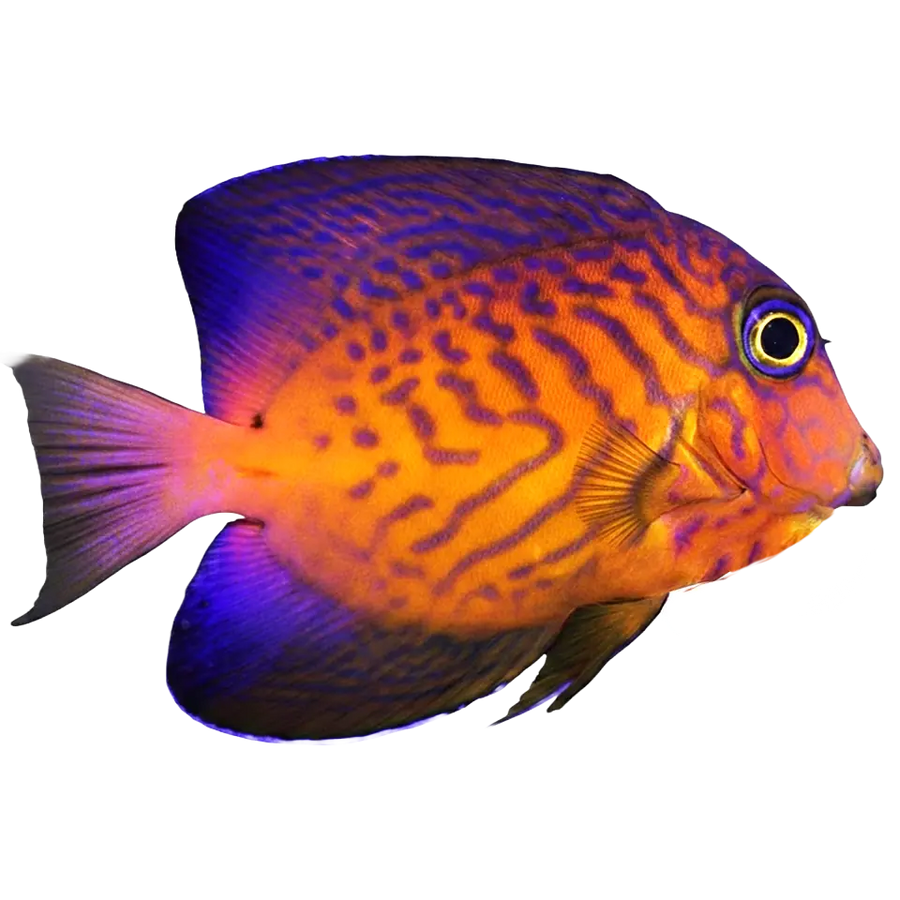
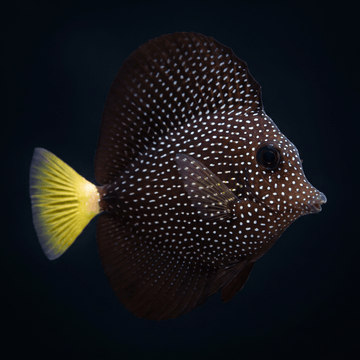
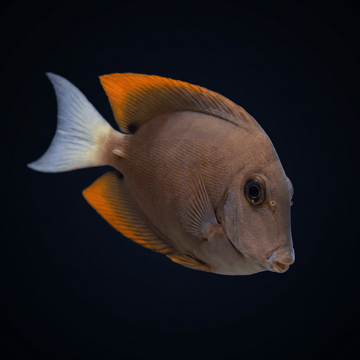
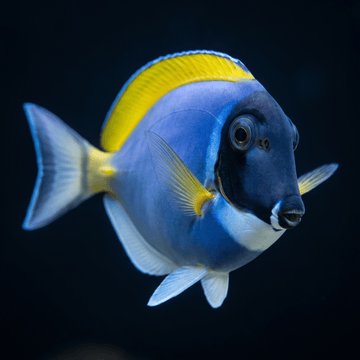
Clown Tang -  Acanthurus lineatus

Overview:
The Clown Tang (Acanthurus lineatus) is a vibrant and active marine fish known for its striking blue and yellow stripes. It requires a spacious aquarium of at least 180 gallons due to its potential size of up to 15 inches and its need for ample swimming space. The ideal habitat should mimic its natural reef environment, with plenty of live rock for grazing and hiding. Water conditions should be stable, with a temperature range of 72-78°F, pH between 8.1-8.4, and specific gravity of 1.020-1.025. Strong water movement and efficient filtration are crucial to maintain high water quality.

Compatibility:
Clown Tangs can be aggressive, especially towards other tangs or fish with similar body shapes and colors. It is best to house them with other peaceful or semi-aggressive species that do not compete for the same territory or food sources. Avoid keeping them with smaller, more timid fish that may become stressed by their active nature. Introduce them to the aquarium last to minimize territorial disputes. If multiple tangs are desired, introduce them simultaneously and ensure the tank is large enough to accommodate their space needs.

Health and Quarantine:
Clown Tangs are susceptible to common marine diseases such as ich and marine velvet, often due to stress or poor water quality. Quarantine new arrivals for at least 2-4 weeks to monitor for signs of illness and to prevent the spread of disease to the main tank. Maintain optimal water conditions and provide a balanced diet to boost their immune system. Regularly inspect for signs of stress or disease, such as rapid breathing, loss of appetite, or white spots. Prompt treatment with appropriate medications and maintaining a stable environment are essential for their long-term health.

Nori Pellets Mysis
The Clown Tang is an active and aggressive swimmer that requires a spacious tank environment of at least 250 gallons to thrive. It displays territorial behavior, often asserting dominance over its space, making it challenging to keep with other tangs or similarly sized fish. This species is best housed as the only tang in the tank to prevent aggressive interactions. Despite its aggression, the Clown Tang is reef-safe and does not harm corals or invertebrates. It is important to select robust tank mates that can withstand its assertive nature, avoiding shy or slow-moving species. The Clown Tang is an omnivore with a preference for algae-based foods, playing a beneficial role in controlling algae growth in the tank. A diet rich in algae, seaweed, and spirulina, supplemented with mysis shrimp, is essential for its health.

FAQ

Frequently Asked Questions

About the Clown Tang

  • My new Clown Tang is constantly pacing and glass-surfing in my 250-gallon tank. Is this normal, or a sign the tank is too small or not mature enough?
    Clown Tangs (Acanthurus lineatus) are high-strung, open-water swimmers that often pace when first introduced, but persistent frantic glass-surfing can indicate either an undersized or visually “bare” environment, or a system that’s too young. For this species, 180 gallons is the bare minimum, and the tank should be very stable (ideally 9–12+ months old) with strong, turbulent flow and long, open swimming lanes. Add substantial rockwork for security but keep plenty of horizontal run. Dim your lights for a few days, provide nori on clips at multiple spots, and avoid sudden movements near the glass. If water parameters are pristine and behavior doesn’t calm within 1–2 weeks, the fish may be too cramped or stressed by tankmates; in that case, a larger system (240g+) or different stocking plan is often required for long-term success.
  • My Clown Tang is relentlessly harassing my Yellow and Kole Tangs, but ignores other fish. Is there any way to manage this aggression other than removing the Clown Tang?
    Clown Tangs are among the most aggressive Acanthurus, especially toward other tangs with similar body shapes or feeding niches. Management options are limited, but you can try several steps before rehoming: - Rearrange rockwork significantly to “reset” territories. - Overprovide algae: multiple nori clips spread out to reduce competition hot-spots. - Use high, chaotic flow patterns to break up chase lines. - Temporarily house the Clown Tang in an acclimation box inside the display to break its established dominance while others move freely. - If you must keep multiple tangs, prioritize mixing very different body shapes (e.g., Zebrasoma or Ctenochaetus vs. similar Acanthurus), and introduce them all at the same time, with the Clown Tang not being the last or the sole large tang added. If aggression still escalates or causes injury, permanent separation is usually the only humane solution.
  • My Clown Tang eats nori but ignores all prepared foods. What specific diet and feeding pattern should I use to keep it in top condition long term?
    Clown Tangs are highly active herbivores that need near-constant access to plant material and frequent supplemental feeds. Base diet on: - Dried seaweed (nori, red and brown types) clipped 2–3 times daily in different locations. - Frozen herbivore blends (with spirulina, marine algae, and some sponge/seaweed components), offered in small amounts 2–3 times per day. - High-quality pellets or flakes designed for herbivores, with spirulina and marine algae at the top of the ingredient list; soak briefly in tank water to improve acceptance. - Occasional fresh macroalgae (gracilaria, ogo, ulva) if available. Feed smaller amounts more often rather than large infrequent meals. Once the fish is stable and eating aggressively, you can slowly introduce varied prepared foods by mixing them with favored items (e.g., thawed herbivore mix on top of a nori clip), but plant matter should remain the bulk of its diet.
  • How much water flow does a Clown Tang actually need, and what powerhead layout works best so it can swim naturally without constantly fighting the current?
    Clown Tangs come from high-energy reef slopes and thrive in strong, turbulent flow. Aim for total turnover in the range of 20–40x tank volume per hour, but distribute it smartly: - Use multiple powerheads/wave pumps on alternating or random modes rather than a single high-velocity jet. - Create a main “gyre” or racetrack current along the length of the tank so the fish can cruise in one direction, then drift back in gentler return flow. - Direct some pumps toward the surface to increase oxygenation; this species is sensitive to low O2. - Leave at least one long, relatively unobstructed side-to-side swimming lane. Watch the fish: if it can swim in place without being pinned to the glass or rock and still shows strong, purposeful movement (not struggling or hiding from the flow), you’re in the right range.
  • I want to keep a Clown Tang in a mixed reef with SPS corals and invertebrates. Are there any specific compatibility or behavior issues I should expect beyond the usual “reef safe with caution”?
    Clown Tangs typically ignore corals and most invertebrates, making them generally safe for SPS, LPS, and soft corals. Specific considerations in a mixed reef: - They may nip at fleshy clams or graze near their mantles if underfed, so keep them very well supplied with algae. - Their constant motion and size mean they can knock over loosely placed frags or rocks; secure all coral mounts and ensure rockwork is stable. - They can outcompete shyer fish at feeding time; target feed slower species and use broadcast feeding plus nori to spread out competition. - Strong light and high-flow SPS systems align well with their oxygen and swimming needs, but ensure temperatures remain stable (ideally 24–26°C / 75–79°F) and that you have strong gas exchange, as heavily stocked reefs can run closer to oxygen limits at night. Overall, in a large, stable reef with secure aquascaping and abundant algae, a Clown Tang can be a striking but demanding show fish.