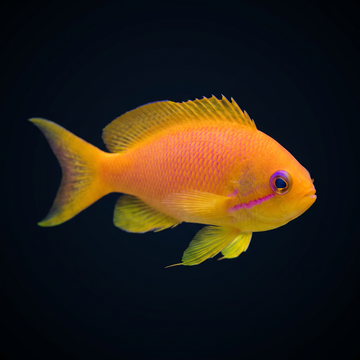
Carberryi Anthias saltwater fish care guide

Overview:
Carberryi Anthias, scientifically known as Nemanthias carberryi, are vibrant, schooling fish native to the Indian Ocean. They thrive in well-established marine aquariums with plenty of live rock and open swimming spaces. Ideal conditions include a tank size of at least 70 gallons, a temperature range of 72-78°F, pH levels between 8.1 and 8.4, and a specific gravity of 1.020-1.025. These fish prefer moderate water flow and require a stable environment with pristine water quality. Regular water changes and efficient filtration are crucial to maintaining their health and vibrant coloration.

Compatibility:
Carberryi Anthias are peaceful and do well in community tanks with other non-aggressive species. They thrive in groups of 5 or more, which helps reduce stress and encourages natural schooling behavior. Avoid housing them with aggressive or overly dominant species, as this can lead to stress and hiding. Suitable tankmates include other anthias species, clownfish, gobies, and wrasses. Ensure ample hiding spots and territories to minimize territorial disputes and promote harmony.

Health and Quarantine:
Carberryi Anthias are susceptible to common marine diseases such as ich and marine velvet. Quarantine new arrivals for at least 2-4 weeks to monitor for signs of illness and prevent the spread of disease to the main tank. Maintain optimal water quality and a stress-free environment to reduce susceptibility to disease. Regularly observe for signs of stress, such as loss of coloration, labored breathing, or erratic swimming. If symptoms appear, consult a marine veterinarian for appropriate treatment. Proactive care, such as maintaining a varied diet and stable water parameters, is key to preventing health issues.

Pellets Mysis Finely Chopped Seafood
Carberryi Anthias are active swimmers, often seen in mid-water columns. They form large social groups called harems, typically consisting of one dominant male and several females. They exhibit moderate territorial behavior, with the male defending the harem's space. They are generally peaceful but may become aggressive if their territory is threatened. Compatible with other non-aggressive fish species, they thrive in environments with ample swimming space and hiding spots. Regular feeding and stable water conditions are crucial for their well-being.

FAQ

Frequently Asked Questions

About the Carberryi Anthias

  • How many Carberryi Anthias can I keep together in a 4-foot (120 cm) reef tank, and what’s the ideal male-to-female ratio to minimize aggression and stress?
    In a standard 4-foot reef (75–120 gallons), 1 male with 4–7 females is ideal. Keep only one male per tank unless you have a very large system (8+ feet, 240+ gallons) with heavy rockwork and visual breaks. Start with all juveniles or all females and allow the dominant one to change into a male; adding an adult male to an existing group of females is usually safer than trying to introduce an extra male later. Avoid mixing similarly shaped anthias males (especially of the same subgenus) in smaller systems, as they may see each other as rivals.
  • My Carberryi Anthias are hanging near the surface and breathing faster after I turn off the lights. Is this normal behavior for this species or a sign of a problem?
    Mild clustering high in the water column at dusk can be normal transition behavior, but rapid breathing and persistent surface-hugging after lights out can indicate low dissolved oxygen or stress. Carberryi Anthias are high-oxygen-demand fish; ensure strong surface agitation and at least one powerhead angled to ripple the surface at night. If you run a tightly sealed lid, consider adding additional aeration or increasing skimmer air draw. Check for a big pH and ORP drop at night and reduce sudden light transitions by using ramp-down or a dim “moonlight” period to help them settle.
  • Why does my Carberryi Anthias male sometimes lose his bright magenta and yellow coloration and look washed out, especially after feeding or during minor tank disturbances?
    Temporary color fading in Carberryi Anthias is a typical stress response and also linked to mood and hierarchy. Sudden movement near the tank, aggressive neighbors, or even intense feeding competition can cause quick blanching. If the male frequently looks pale, review tank mates (avoid boisterous tangs, large wrasses, and dottybacks that harass midwater fish), reduce sharp light changes, and provide more midwater “comfort zones” with overhangs or tall branching rock. Stable parameters, frequent small feedings, and a carotenoid-rich diet (mysis, krill, quality pellets with astaxanthin) will help maintain stable, vivid colors.
  • How should I structure feeding for Carberryi Anthias to keep them healthy long-term without wrecking my nutrient levels in a SPS-dominant reef?
    Carberryi Anthias do best with 3–5 small feedings per day rather than one large feeding. Use a mix of very small, meaty foods: enriched brine shrimp, mysis, copepods, finely chopped seafood, and a high-quality micro-pellet (0.5–1 mm). To avoid nutrient spikes, use an auto-feeder for tiny pellet feedings during the day and target a slightly heavier frozen feeding once or twice. Run a strong skimmer, maintain robust export (refugium, roller mat, or frequent filter sock changes), and tune your feeding so nitrate stays roughly 5–20 ppm and phosphate 0.03–0.1 ppm. Observe their bellies: slightly rounded but not bulging indicates a good balance.
  • I want to quarantine Carberryi Anthias, but they seem shy and reluctant to eat in a bare QT. What QT setup and protocol works best for this species?
    Use a dim, quiet QT with three sides covered and moderate flow, not a stark, brightly lit bare tank. Add inert shelter like PVC elbows and at least one dark “cave” region, but keep the bottom bare for easy cleaning. Start with a low-stress approach: observe for a few days while offering small, frequent feedings of live or very enticing frozen foods (enriched brine, copepods, small mysis) to get them eating. Once they feed aggressively, you can begin prophylactic treatments (e.g., copper for ich/velvet and praziquantel for flukes) if desired. Maintain high oxygen with vigorous aeration and keep copper, ammonia, and salinity changes very gradual; Carberryi Anthias are sensitive to abrupt swings and will often go off food if stressed.