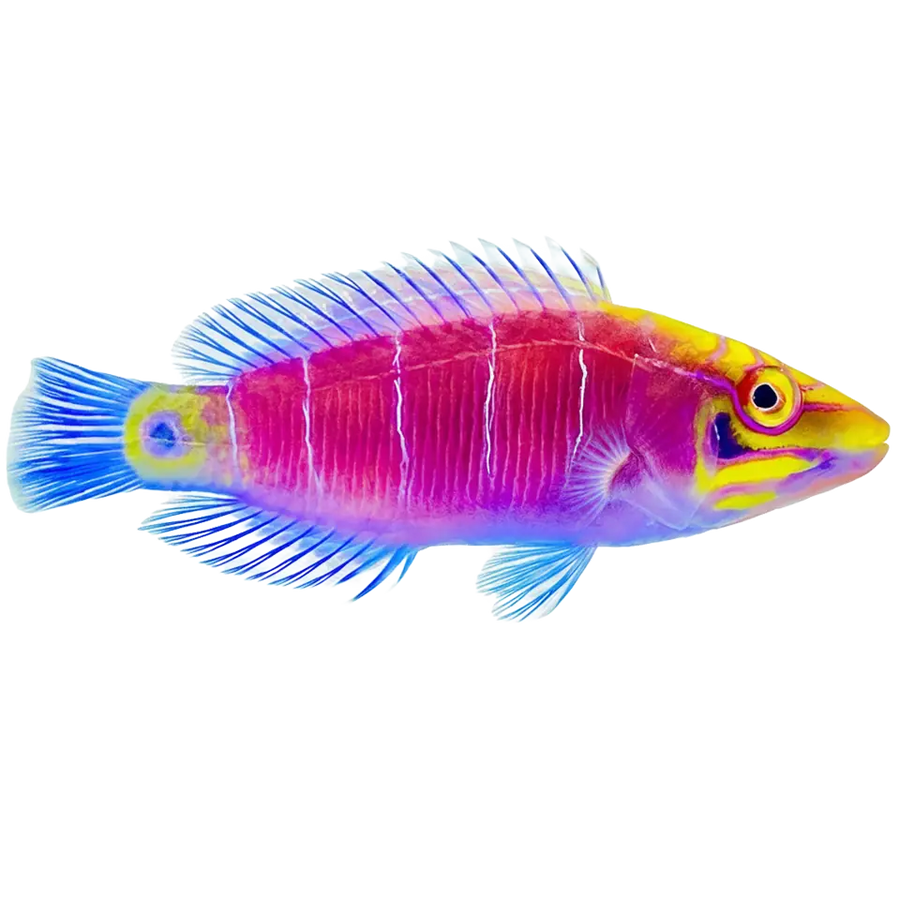
Canarytop Wrasse saltwater fish care guide

Overview:
The Canarytop Wrasse, known for its vibrant yellow coloration and active swimming behavior, thrives in well-maintained marine aquariums. This species requires a tank of at least 50 gallons with plenty of live rock for hiding and foraging. Optimal water conditions include a temperature range of 72-78°F, a pH of 8.1-8.4, and a salinity of 1.020-1.025. A sandy substrate is recommended to accommodate their natural burrowing behavior, which they use for sleeping and avoiding stress. Adequate water flow and a secure lid are essential, as they are known jumpers.

Compatibility:
The Canarytop Wrasse is generally peaceful and can coexist with a variety of tankmates. Ideal companions include other peaceful fish species that are not overly aggressive or territorial. Avoid housing them with overly aggressive fish or those that may view the wrasse as competition. They can be kept with other wrasses, but it is advisable to introduce them simultaneously to minimize territorial disputes. Ensure ample space and hiding spots to reduce stress and aggression.

Health and Quarantine:
Maintaining the health of Canarytop Wrasses involves regular monitoring and preventive care. Quarantine new additions for at least two weeks to prevent the introduction of diseases. Common health issues include marine ich and bacterial infections, which can be mitigated by maintaining pristine water conditions and a nutritious diet. Regularly check for signs of stress or illness, such as changes in coloration or behavior. Employ a UV sterilizer and maintain a stable environment to reduce the risk of disease. If illness occurs, consult a marine veterinarian for appropriate treatment options.

Pellets Mysis Finely Chopped Seafood
The Canarytop Wrasse is a peaceful, active swimmer, often seen darting among rocks and corals. It exhibits non-aggressive social behavior but may show mild territoriality, especially when establishing its area in a new tank. While generally compatible with other peaceful species, caution is advised in reef tanks due to its potential to nip at small invertebrates. It thrives in a spacious environment and enjoys a varied carnivorous diet, contributing to its easy care level.

FAQ

Frequently Asked Questions

About the Canarytop Wrasse

  • My Canarytop Wrasse keeps burying itself in the sand for long periods. How deep should the sand bed be, and what type of substrate is safest for this behavior?
    Canarytop Wrasses naturally dive into sand to sleep and hide when stressed, so you need a soft, fine substrate. Aim for at least 2–3 inches (5–7.5 cm) of fine aragonite sand; coarser crushed coral or sharp substrates can damage their scales and eyes when they dive. Avoid mixed beds with large rubble on top, as they may crash into it when spooked. If your sand is too shallow, they may repeatedly try to dive, bump the glass bottom, and risk injury. A uniform, fine sand bed across the tank—not just in one corner—gives them multiple safe “landing” spots when they dart for cover.
  • My Canarytop Wrasse has started picking at my clean-up crew. Which invertebrates are at the highest risk, and which are usually safe long term?
    As they mature, Canarytop Wrasses often shift from just eating pods and worms to sampling shelled inverts. Tiny decorative shrimp (sexy shrimp, anemone shrimp), small feather dusters, spaghetti worms, flatworms, and very small snails (especially new trochus/astrea juveniles) are at the highest risk. Larger, well-established cleaner shrimp, fire shrimp, and big snails or conchs usually do better, but there are no guarantees once the wrasse realizes they’re food. Hermit crabs are hit-or-miss; they may be left alone or picked at for food. If you want to protect a specific small invert, introduce the wrasse last, keep it well fed with frozen foods, and avoid extremely tiny ornamental shrimp entirely.
  • The color on my Canarytop Wrasse looks washed out and patchy compared to store photos. What specific tank conditions and diet help maintain their bright yellow and orange coloration?
    Color quality in Canarytop Wrasses depends on low stress, stable water, and a carotenoid-rich diet. Keep temperature 24–26 °C (75–79 °F), salinity 1.024–1.026, nitrates below ~20 ppm, and avoid frequent big swings in salinity or temperature. Provide rockwork and sand so they feel secure; a constantly spooked wrasse will pale out. For diet, use multiple small feedings: high-quality marine pellets, mysis shrimp, enriched brine, finely chopped seafood, and especially foods with natural color boosters (krill, salmon, spirulina, astaxanthin-containing pellets). Soak foods in a vitamin supplement a few times a week. With stable conditions, reduced aggression, and a varied, carotenoid-rich diet, they typically regain their saturated yellow and orange tones over a few weeks.
  • My Canarytop Wrasse constantly searches the rockwork and seems obsessed with pests. Can I rely on it to control flatworms, nudibranchs, and other coral parasites, and are there limits to what it will eat?
    Canarytop Wrasses are very active pickers and often consume flatworms, small nudibranchs, and some snail and clam pests, but they are not guaranteed “eradication tools.” Many will eat planaria-type flatworms, some zoa-eating nudibranchs, and small bristleworms. However, they may ignore certain species entirely, and dense infestations can exceed what a single wrasse can consume. They usually do not eliminate Aiptasia, vermetid snails, or large bristleworms. Consider their pest control a useful supplement, not your only method; combine them with manual removal, siphoning, and other controls. Also, once pest numbers drop, the wrasse must still have a solid staple diet of prepared foods, or it may start sampling more of your inverts.
  • I’ve heard Canarytop Wrasses can jump. How secure does my lid need to be, and are there specific stressors that trigger jumping in this species?
    Canarytop Wrasses are notorious jumpers and will launch themselves through surprisingly small gaps, especially when startled. You need a tight-fitting lid or mesh top with openings no larger than about 6 mm (1/4"). Cover all cutouts for cables, overflows, and plumbing with mesh or acrylic strips. Jumping is often triggered by sudden lights on/off, aggressive tankmates (dottybacks, some damsels, larger wrasses), quick movements near the glass, or strong surges that surprise them. Use a gentle ramp for light changes, avoid hyper-aggressive tankmates, and keep the tank in a relatively calm spot away from constant banging or slamming doors. Even with a deep sand bed for hiding, assume they will try to jump at some point and secure every opening.