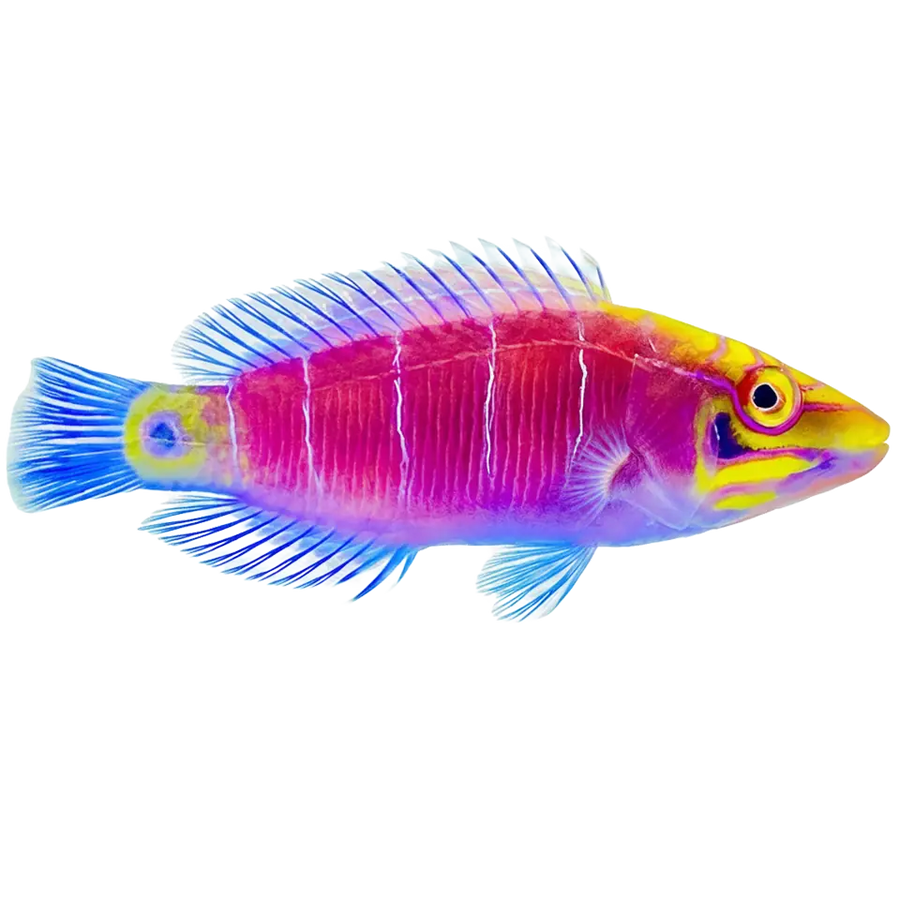
Bluesided Fairy Wrasse saltwater fish care guide

Overview:
The Bluesided Fairy Wrasse (Cirrhilabrus cyanopleura) is a vibrant and active marine fish, ideal for intermediate aquarists. It thrives in a well-established aquarium with a minimum size of 55 gallons, providing ample swimming space. The tank should mimic their natural reef habitat, featuring live rock formations for hiding and exploration. Maintain water parameters with a temperature of 72-78°F, pH of 8.1-8.4, and specific gravity of 1.020-1.025. A moderate water flow and efficient filtration system are essential to ensure optimal water quality. Regular water changes are crucial to maintain stability and reduce nitrate levels.

Compatibility:
Known for their peaceful nature, Bluesided Fairy Wrasses are generally compatible with a wide range of tankmates. They coexist well with other peaceful fish species, including other wrasses, gobies, and clownfish. Avoid housing them with aggressive or territorial species, as this can lead to stress and conflict. When introducing multiple wrasses, ensure they are added simultaneously to minimize territorial disputes. Providing ample hiding spots and visual barriers within the tank can help reduce aggression and establish a harmonious environment.

Health and Quarantine:
Bluesided Fairy Wrasses are relatively hardy but can be susceptible to common marine diseases such as ich and marine velvet. Implementing a quarantine period of at least two weeks for new arrivals is essential to prevent the introduction of pathogens into the main tank. During quarantine, observe for signs of illness, such as white spots, rapid breathing, or lethargy. Maintain optimal water quality and a stress-free environment to support their immune system. Regularly inspect for parasites and consider prophylactic treatments if necessary. A balanced diet and stable tank conditions are key to preventing health issues and ensuring the long-term well-being of your Bluesided Fairy Wrasse.

Pellets Mysis Finely Chopped Seafood
The Bluesided Fairy Wrasse is an active swimmer, often seen darting through the mid to upper water column. It exhibits peaceful social behavior, thriving in groups, and displays minimal territoriality, making it compatible with other non-aggressive species. This species is reef-safe, posing no threat to corals or invertebrates. It requires a diet of mysis shrimp, brine shrimp, and finely chopped seafood. A minimum tank size of 75 gallons is recommended to accommodate its active nature and social grouping preferences.

FAQ

Frequently Asked Questions

About the Bluesided Fairy Wrasse

  • Can a Bluesided Fairy Wrasse change from female to male in a home aquarium, and what signs show it is transitioning?
    Yes. Bluesided Fairy Wrasses are protogynous hermaphrodites, meaning females can become males, especially if there is no dominant male present. Signs include: increased body size and more elongated fins; intensifying coloration with stronger blue along the flanks and more vivid reds/oranges; more active swimming in the water column and patrolling behavior; and increased display toward other wrasses, including flaring fins and short, rapid dashes. The full transition can take several weeks to a few months, depending on diet, stress level, and tank hierarchy.
  • Why does my Bluesided Fairy Wrasse lose its bright colors in the evening, almost turning pale or mottled?
    Bluesided Fairy Wrasses have a distinct “sleep” pattern, often dulling their colors dramatically at night. This is normal and serves as camouflage while they rest. As lights dim, hormones shift and the fish switches to its night pattern: colors fade, patterns become blotchy, and the fish may tuck into rock crevices or rest on the sand if no secure cave is available. Once lights come back on and the fish fully wakes up (usually within 15–30 minutes), normal daytime coloration returns.
  • My Bluesided Fairy Wrasse constantly paces the glass and jumps at the lid—what specific environmental factors cause this in this species?
    Bluesided Fairy Wrasses are very active, mid‑water swimmers that react strongly to confinement stress and sudden movement. Common causes include: tanks under ~75–90 cm (30–36 in) long; too little open swimming space due to heavy rock stacking; bright room light or sudden shadows outside the tank; strong reflections in the glass causing the fish to “fight” its own image; and high-flow outlets pointed directly across its normal swimming path. Solutions: use a tight-fitting, fine mesh lid; provide at least a 3-foot tank length with open central swimming space; break up reflections with background film or plants; angle powerheads so flow is strong but diffuse; and maintain a stable, calm room environment.
  • What is the best feeding strategy for a Bluesided Fairy Wrasse that ignores pellets but eagerly eats frozen and live foods?
    This species often prefers movement and scent. Start with finely chopped frozen foods (mysis, brine, chopped krill, calanus, fish roe) and small live items (copepods, enriched baby brine). Then: mix a few high-quality small pellets (e.g., 0.5–1 mm) into thawed frozen food so they take on the scent; gradually increase the pellet ratio over days to weeks; feed small amounts 2–3 times daily to match their grazing nature; and occasionally release food into the flow so it drifts and triggers hunting behavior. Many Bluesided Fairy Wrasses eventually accept pellets once they associate their smell and shape with normal feeding.
  • How does keeping multiple Bluesided Fairy Wrasses or mixing them with other fairy wrasse species affect aggression and coloration?
    With enough space (typically a 4-foot tank or larger), a small harem—one male Bluesided Fairy Wrasse with 2–3 females—usually produces the best behavior and color intensity in the male. He will display more often, showing stronger blues and reds. However, housing more than one male Bluesided Fairy Wrasse in a modest tank often leads to persistent chasing and stress. When mixing with other Cirrhilabrus species, avoid combining with very similar-looking males (similar body shape and color patterns) in smaller systems, as they see each other as rivals. Instead, pair one Bluesided male with females of his own species and, if desired, other fairy wrasses that have distinctly different body patterns and which are known to be relatively peaceful, adding the Bluesided male later or with an acclimation box to manage territorial disputes.