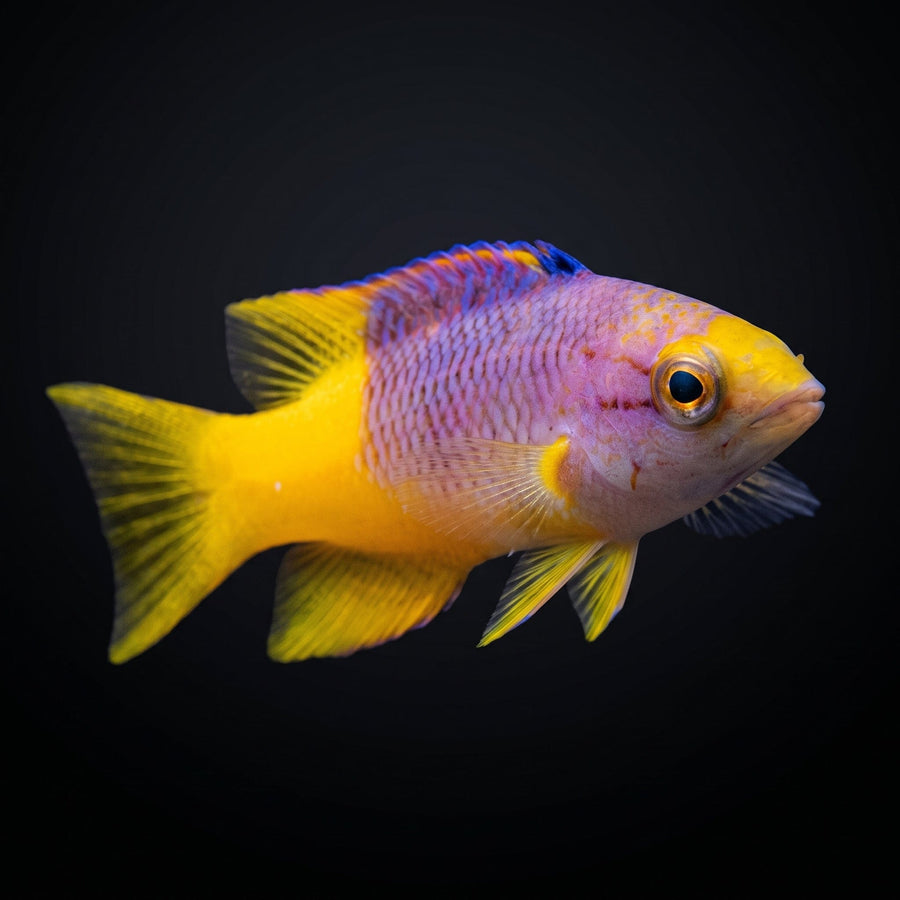
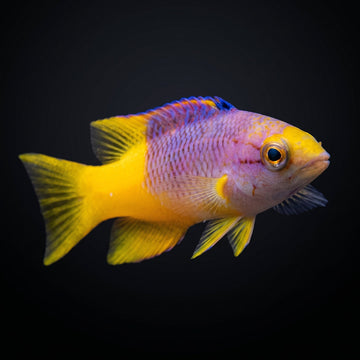
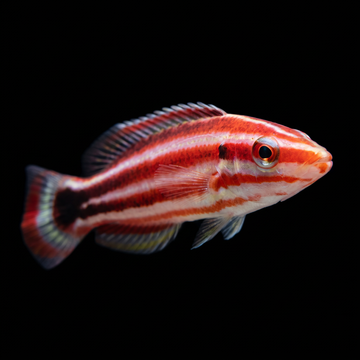
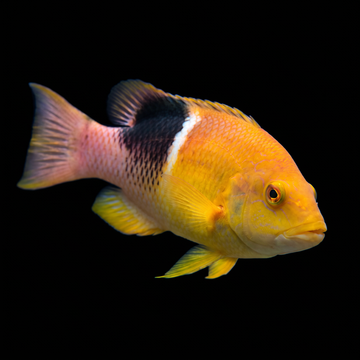
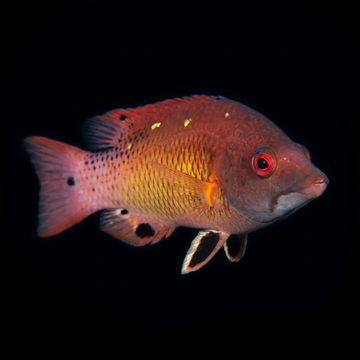
The Blackbar Hogfish is a carnivorous marine fish with strong jaws and prominent teeth adapted for capturing and consuming benthic invertebrates. Its natural feeding behavior includes searching rocky reef environments for crustaceans, mollusks, worms, and other small marine animals.
In captivity, it should receive a varied diet of high-quality, protein-rich marine foods.
Recommended foods include:
Frozen mysis shrimp
Vitamin-enriched brine shrimp
Chopped shrimp, clam, squid, and other marine seafood
Frozen krill and marine carnivore blends
Quality marine carnivore pellets
Appropriately sized shellfish and crustacean-based foods
Feed one to two substantial meals daily, adjusting portions according to the fish's size, appetite, and activity level. Smaller meals may be offered more frequently during acclimation.
Larger individuals benefit from appropriately sized pieces of marine seafood that encourage natural feeding behavior. A varied diet helps support healthy body condition, coloration, and long-term nutritional balance.
Avoid relying exclusively on a single food source or offering excessive quantities of fatty or nutritionally incomplete foods.
While it may coexist successfully with many medium to large marine fish, its substantial adult size and powerful jaws make it unsuitable for aquariums containing very small or delicate tankmates.
Suitable companions may include larger angelfish, tangs, robust wrasses, appropriately sized triggerfish, and other moderately assertive marine fish that can comfortably coexist with an active hogfish.
Avoid very small fish, delicate ornamental species, and timid tankmates that may be intimidated or outcompeted during feeding.
Territorial disputes may occur with other hogfish, particularly members of the Bodianus genus, as well as similarly shaped wrasses that occupy overlapping areas of the aquarium.
Maintaining a single Blackbar Hogfish is generally recommended for most home aquarium systems. Multiple individuals should only be considered in exceptionally spacious environments with careful monitoring of social behavior.
Reef classification: With Caution.
The Blackbar Hogfish is considered reef safe with caution, primarily because of its natural predatory behavior toward marine invertebrates.
It is not generally regarded as a coral-feeding species, and healthy SPS corals, LPS corals, and soft corals are unlikely to be targeted directly. However, its size, strength, and active foraging behavior can create challenges in reef aquariums.
Potentially vulnerable aquarium inhabitants include:
Ornamental shrimp, including cleaner shrimp
Small crabs and other crustaceans
Snails and small mollusks
Marine worms and other benthic invertebrates
Very small fish that may be vulnerable to predation
Larger individuals may also disturb unsecured coral fragments, loose rockwork, and lightweight aquarium decorations while investigating the substrate.
Because of these considerations, the Blackbar Hogfish is generally better suited to large fish-only aquariums or carefully planned reef systems without valuable ornamental crustaceans.
FAQ
Frequently Asked Questions
About the Blackbar Hogfish
-
What size aquarium does the Blackbar Hogfish need?
Provide at least 300 gallons for adult housing. Up to 20 inches (51 cm). -
Is the Blackbar Hogfish reef safe?
With Caution. The Blackbar Hogfish is considered reef safe with caution, primarily because of its natural predatory behavior toward marine invertebrates. It is not generally regarded as a coral-feeding species, and healthy SPS corals, LPS corals, and soft corals are unlikely to be targeted directly. However, its size, strength, and active foraging behavior can create challenges in reef aquariums. Potentially vulnerable aquarium inhabitants include: Ornamental shrimp, including cleaner shrimp Small crabs and other crustaceans Snails and small mollusks Marine worms and other benthic invertebrates Very small fish that may be vulnerable to predation Larger individuals may also disturb unsecured coral fragments, loose rockwork, and lightweight aquarium decorations while investigating the substrate. Because of these considerations, the Blackbar Hogfish is generally better suited to large fish-only aquariums or carefully planned reef systems without valuable ornamental crustaceans. -
What does the Blackbar Hogfish eat?
The Blackbar Hogfish is a carnivorous marine fish with strong jaws and prominent teeth adapted for capturing and consuming benthic invertebrates. Its natural feeding behavior includes searching rocky reef environments for crustaceans, mollusks, worms, and other small marine animals. In captivity, it should receive a varied diet of high-quality, protein-rich marine foods. Recommended foods include: Frozen mysis shrimp Vitamin-enriched brine shrimp Chopped shrimp, clam, squid, and other marine seafood Frozen krill and marine carnivore blends Quality marine carnivore pellets Appropriately sized shellfish and crustacean-based foods Feed one to two substantial meals daily, adjusting portions according to the fish's size, appetite, and activity level. Smaller meals may be offered more frequently during acclimation. Larger individuals benefit from appropriately sized pieces of marine seafood that encourage natural feeding behavior. A varied diet helps support healthy body condition, coloration, and long-term nutritional balance. Avoid relying exclusively on a single food source or offering excessive quantities of fatty or nutritionally incomplete foods.