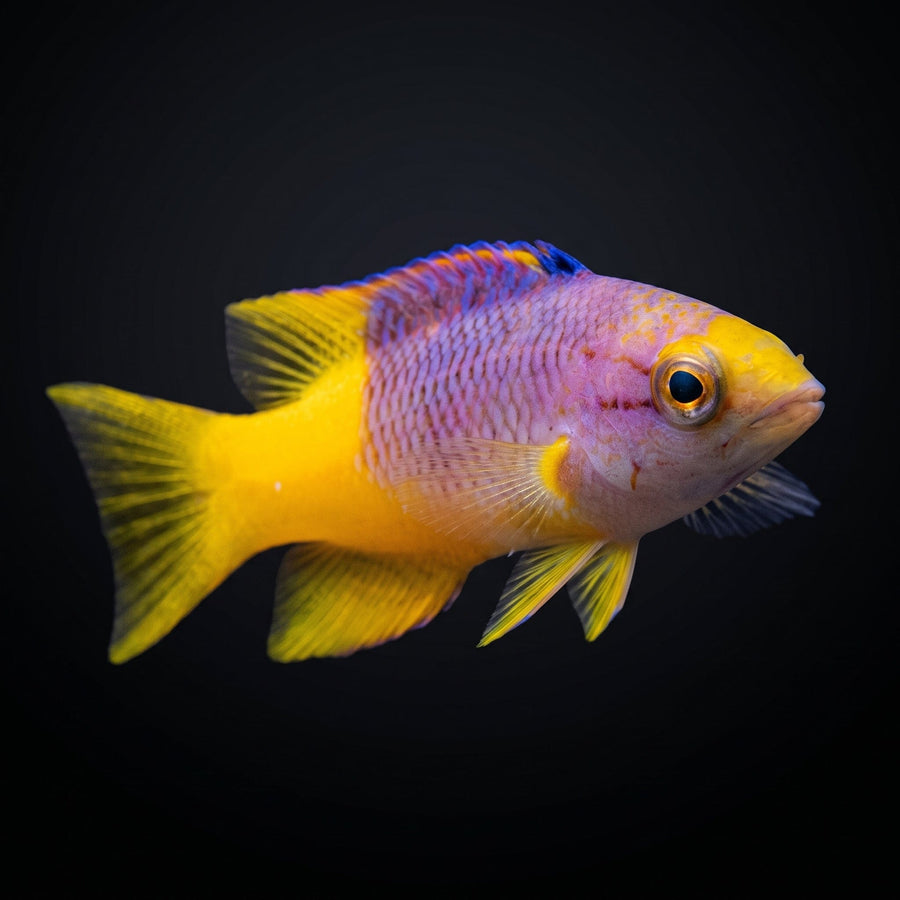
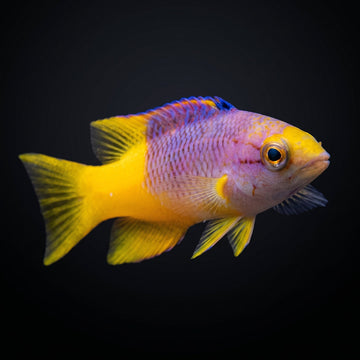
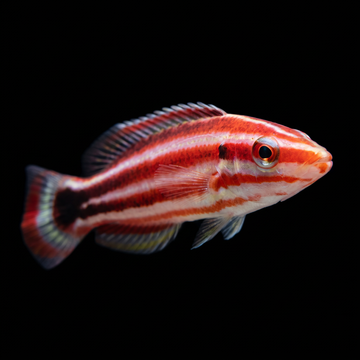
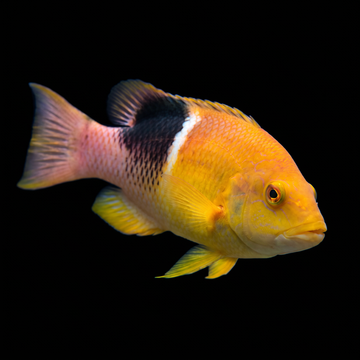
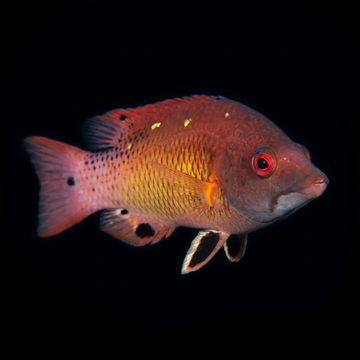
The Bennetti Hogfish is a carnivorous marine fish expected to feed primarily on small benthic crustaceans and other marine invertebrates. Its natural feeding habits have not been extensively documented, so a varied diet based on the nutritional requirements of similar small Bodianus species is recommended.
Suitable aquarium foods include:
Frozen mysis shrimp
Vitamin-enriched brine shrimp
Finely chopped shrimp, clam, and other marine seafood
Small frozen marine carnivore blends
High-quality marine carnivore pellets
Amphipods, copepods, and other appropriately sized crustaceans
Offer two to three small meals daily, adjusting portions according to appetite and body condition.
Newly introduced specimens may be reluctant to accept prepared foods, particularly following collection and acclimation from deepwater environments. Small frozen crustaceans and other naturally appealing meaty foods may help encourage an initial feeding response.
Once feeding consistently, maintain a varied diet rather than relying on a single food source.
It may initially display shy or secretive behavior, spending time among rockwork while becoming accustomed to aquarium conditions. As it settles into its environment, it may become more active and confident.
Like other members of the Bodianus genus, it may exhibit territorial behavior toward closely related hogfish or similarly shaped wrasses.
Suitable tankmates may include peaceful to moderately assertive marine fish such as clownfish, appropriately sized basslets, peaceful dwarf angelfish, and other species that are unlikely to compete aggressively for shelter or food.
Avoid highly aggressive tankmates, larger predatory fish, and particularly boisterous species that may prevent this deepwater hogfish from feeding comfortably.
Keeping a single individual is the most practical recommendation. Attempting to maintain multiple Bennetti Hogfish together should be reserved for specialized aquariums with sufficient space and careful behavioral monitoring.
Reef classification: With Caution.
The Bennetti Hogfish is considered reef safe with caution.
Like other small hogfish species, it is not expected to feed directly on healthy corals and may be suitable for established reef aquariums containing SPS corals, LPS corals, and soft corals.
However, its carnivorous feeding habits create potential risks for smaller ornamental invertebrates. Tiny shrimp, small crabs, amphipods, copepods, and other crustaceans may be investigated or consumed.
Very small ornamental shrimp should not be considered completely safe, particularly as the fish matures and becomes more confident.
Larger established shrimp, snails, and other invertebrates may be less vulnerable, although individual compatibility cannot be guaranteed. Direct aquarium observations of this species remain limited, so caution is appropriate.
For reef aquariums containing valuable ornamental crustaceans or delicate invertebrate populations, careful consideration is recommended before introduction.
FAQ
Frequently Asked Questions
About the Bennetti Hogfish
-
What size aquarium does the Bennetti Hogfish need?
Provide at least 75 gallons for adult housing. Documented to 4.3 inches (10.9 cm standard length; excluding the tail fin). -
Is the Bennetti Hogfish reef safe?
With Caution. The Bennetti Hogfish is considered reef safe with caution. Like other small hogfish species, it is not expected to feed directly on healthy corals and may be suitable for established reef aquariums containing SPS corals, LPS corals, and soft corals. However, its carnivorous feeding habits create potential risks for smaller ornamental invertebrates. Tiny shrimp, small crabs, amphipods, copepods, and other crustaceans may be investigated or consumed. Very small ornamental shrimp should not be considered completely safe, particularly as the fish matures and becomes more confident. Larger established shrimp, snails, and other invertebrates may be less vulnerable, although individual compatibility cannot be guaranteed. Direct aquarium observations of this species remain limited, so caution is appropriate. For reef aquariums containing valuable ornamental crustaceans or delicate invertebrate populations, careful consideration is recommended before introduction. -
What does the Bennetti Hogfish eat?
The Bennetti Hogfish is a carnivorous marine fish expected to feed primarily on small benthic crustaceans and other marine invertebrates. Its natural feeding habits have not been extensively documented, so a varied diet based on the nutritional requirements of similar small Bodianus species is recommended. Suitable aquarium foods include: Frozen mysis shrimp Vitamin-enriched brine shrimp Finely chopped shrimp, clam, and other marine seafood Small frozen marine carnivore blends High-quality marine carnivore pellets Amphipods, copepods, and other appropriately sized crustaceans Offer two to three small meals daily, adjusting portions according to appetite and body condition. Newly introduced specimens may be reluctant to accept prepared foods, particularly following collection and acclimation from deepwater environments. Small frozen crustaceans and other naturally appealing meaty foods may help encourage an initial feeding response. Once feeding consistently, maintain a varied diet rather than relying on a single food source.