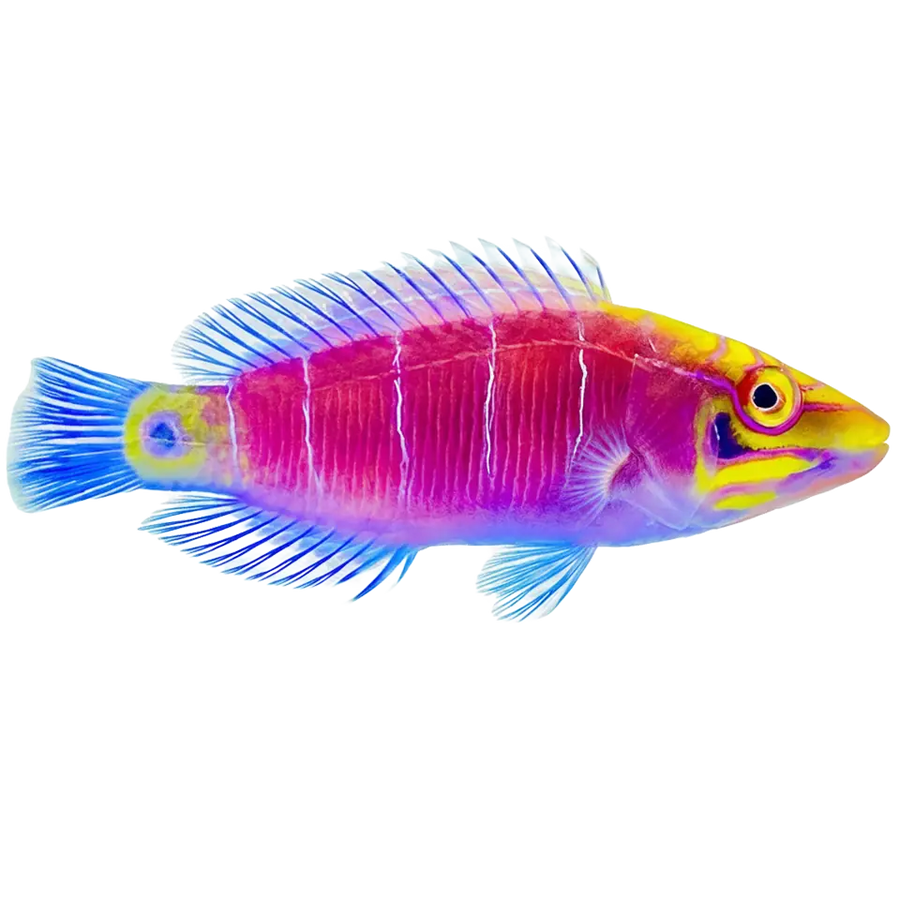
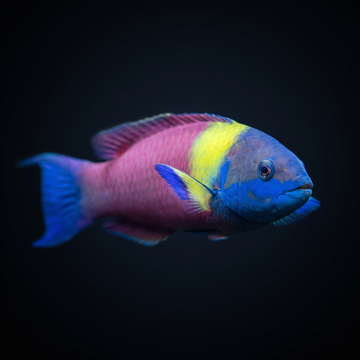
Beau’s Fairy Wrasse saltwater fish care guide

Overview:
Beau’s Fairy Wrasse, a vibrant and active species, thrives in well-maintained marine aquariums. Ideal conditions include a tank size of at least 55 gallons, providing ample swimming space and a variety of hiding spots using live rock. Maintain water parameters with a temperature between 72-78°F, pH levels of 8.1-8.4, and specific gravity of 1.020-1.025. Ensure efficient filtration and moderate water flow to mimic their natural reef environment. Lighting should be moderate to high, as it enhances their vivid coloration and supports any accompanying coral growth.

Compatibility:
This species is generally peaceful and can coexist with a variety of tankmates. Ideal companions include other non-aggressive fish such as gobies, blennies, and other wrasses. Avoid housing with overly aggressive species or those that may outcompete them for food. Beau’s Fairy Wrasse can be kept singly or in small groups, provided the tank is large enough to accommodate their active nature. When introducing multiple wrasses, add them simultaneously to minimize territorial disputes. Monitor interactions closely, especially during initial introductions.

Health and Quarantine:
Regular monitoring and preventive care are essential to maintain the health of Beau’s Fairy Wrasse. Quarantine new arrivals for at least two weeks to prevent the introduction of parasites and diseases into the main tank. Watch for signs of stress or illness, such as changes in coloration, labored breathing, or erratic swimming. Maintain pristine water quality and a stable environment to reduce stress-related health issues. Regularly check for common marine ailments like ich or fin rot and treat promptly if detected. Providing a varied diet and a stress-free environment will bolster their immune system and promote longevity.

Pellets Mysis Finely Chopped Seafood
Beau’s Fairy Wrasse, a peaceful fish from Melanesia, thrives in reef aquariums of at least 70 gallons. Growing up to 4 inches, it displays active swimming habits, often exploring mid to upper water columns. Socially inclined, it coexists well with other peaceful species, avoiding aggression. It’s not territorial, but prefers a spacious environment with plenty of hiding spots. Compatible with most reef inhabitants, it feeds on carnivorous diets like mysis and brine shrimp. Its moderate care level suits aquarists with some experience.

FAQ

Frequently Asked Questions

About the Beau’s Fairy Wrasse

  • What is the minimum tank size and aquascape layout you recommend specifically for a single male Beau’s Fairy Wrasse, and how does their constant swimming behavior affect this recommendation?
    For a single male Beau’s Fairy Wrasse (Cirrhilabrus beauperryi), a 75-gallon (4-foot) tank is a realistic minimum, even though some sellers suggest 40 gallons. Males are very active, open-water swimmers that use the full horizontal length, so footprint matters more than volume. Aim for at least 48" x 18". Build an aquascape with a central or offset rock “reef” that has multiple caves, overhangs, and swim-throughs, leaving broad, open sand and midwater in front and above for cruising. Avoid packing rock wall-to-wall; instead create 2–3 main bommies with channels between them. Provide at least one deep, shaded crevice for sleeping and a sheltered area with moderate flow where they can retreat if startled. This layout supports their natural darting and display behavior while giving secure hide spots to reduce stress and jumping.
  • How can I distinguish a true male Beau’s Fairy Wrasse from similar fairy wrasses (like solar, pintail, or lineatus) when they are in partial or non-dominant coloration at the store?
    Identification is trickiest in subdominant males and juveniles, so rely on body pattern and fin details, not just brightness. Beau’s males show: 1) a distinct magenta to reddish “mask” on the face with a contrasting bluish to lavender body, 2) a series of thin, horizontal bluish lines or sheen along the flanks rather than thick bars, 3) a relatively pointed, elongated tail, usually without the exaggerated “pintail” streamers of C. isosceles, and 4) dorsal fin with a combination of orange-red and violet tones, often edged in bluish. Solar wrasses (C. solorensis) have a more solid, darker body and less distinct, clean facial mask; lineatus have heavier, clear striping and a more ornate tail; pintails show obvious filamentous extensions when mature. Ask to see the fish under both white and blue light, and watch for brief color “flashes” when it passes a mirror or another wrasse—Beau’s will momentarily intensify the facial mask and dorsal/red areas even if normally subdued.
  • My Beau’s Fairy Wrasse hides all day for the first week and only darts out at feeding time—how can I acclimate it behaviorally so it shows normal activity and display behavior?
    New Beau’s Fairy Wrasses are often shy due to transport stress and the lack of established territory. To encourage normal behavior: 1) Dim the lights for the first 3–5 days and gradually increase intensity; pair strong blues with moderate whites rather than blasting full daylight right away. 2) Provide a clearly defined “safe zone” in the aquascape—dense rockwork or a cave near the back with a direct route to open water; avoid rearranging rock during the first two weeks. 3) Keep tankmates non-aggressive during acclimation—no large dottybacks, hawkfish, assertive damsels, or boisterous tangs crowding it. 4) Feed small amounts 3–4 times daily of enticing foods (mysis, enriched brine, small pellets that sink slowly) to build trust; stand a bit farther from the tank at first so your movement doesn’t spook it. 5) Use a mesh top and keep the room calm—sudden shadows or loud knocks can trigger bolting. With this routine, most Beau’s fairy wrasses become visible and active within 1–2 weeks and start doing short display runs along the glass and rock.
  • What specific diet and feeding schedule best bring out the vibrant colors and long-term health of Beau’s Fairy Wrasse in a mixed-reef tank?
    Beau’s Fairy Wrasses do best with a high-frequency, varied, meaty diet that mimics their constant zooplankton grazing. Feed at least 3 times per day, more if nutrient export is strong. Use: 1) Staple: small, high-quality marine pellets (0.5–1 mm) with high marine protein and added carotenoids/astaxanthin, offered in small pinches so they can grab midwater. 2) Frozen: finely chopped mysis, copepod-based frozen foods, enriched brine shrimp, and small krill fragments. 3) Live or refrigerated: live copepods and baby brine occasionally to stimulate hunting. Rotate different brands and types across the week. Supplement with a vitamin/ HUFA soak once or twice weekly to support immune function and coloration. Keep food particle size small so they can snatch items in the water column without spitting. Good nutrition, along with stable parameters and low stress, is key to maintaining the intense purples, reds, and facial mask rather than having them fade to duller tones.
  • How do Beau’s Fairy Wrasses behave in wrasse “harems,” and what is the safest way to introduce a male Beau’s with other Cirrhilabrus or Paracheilinus wrasses in an established reef?
    In the wild, Beau’s Fairy Wrasses live in loose harems with one dominant male and multiple females/submales, with the male performing display sprints and color flashes to maintain status. In aquaria, they can coexist with other fairy and flasher wrasses if introductions are managed carefully. Aim for: 1) Only one terminal male from the same complex (avoid mixing males that look very similar, like certain solar or pintail variants, to reduce direct rivalry). 2) Introduce the Beau’s after more aggressive wrasses, or at the same time as others, so it doesn’t enter as the last, low-status newcomer. 3) Use an acclimation box for 3–7 days so tankmates can see but not attack; watch for persistent charging or flaring from resident wrasses. 4) Provide multiple rock structures and line-of-sight breaks so subordinates can get out of view. 5) Maintain a tight lid—courtship chases can turn into panic jumps. When done properly, you’ll see the Beau’s male do short, rapid display bursts (fins flared, color intensified) toward females or flasher wrasses, without prolonged, damaging fights, and the group will use different levels and “lanes” of the water column.