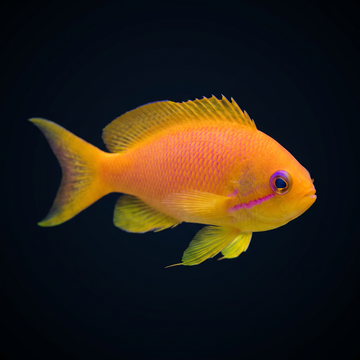
Barbonius Anthias saltwater fish care guide

Overview:
Barbonius Anthias, known for its vibrant colors and dynamic presence, thrives in well-maintained marine aquariums. This species requires a tank of at least 100 gallons to accommodate its active swimming habits. Optimal water conditions include a temperature range of 72-78°F, a pH level of 8.1-8.4, and a specific gravity of 1.020-1.025. Adequate live rock structures are essential, providing both hiding spots and territories. Strong water movement and efficient filtration are crucial to mimic their natural reef environment and maintain water quality.

Compatibility:
Barbonius Anthias are generally peaceful but can be territorial, especially males. They thrive in groups, ideally with one male and multiple females to mimic their natural social structure. Avoid housing them with aggressive or overly large tankmates that may intimidate or outcompete them for food. Suitable companions include other peaceful reef fish such as gobies, wrasses, and tangs. Ensure ample space and hiding spots to reduce stress and aggression.

Health and Quarantine:
Regular health monitoring is vital for Barbonius Anthias. They are susceptible to common marine diseases like ich and velvet. Quarantine new arrivals for 2-4 weeks to prevent the introduction of pathogens into the main tank. During quarantine, observe for signs of illness such as erratic swimming, loss of appetite, or visible spots. Maintain pristine water conditions and provide a stress-free environment to support their immune system. Regularly check water parameters and perform routine water changes to prevent disease outbreaks.

Pellets Mysis Finely Chopped Seafood
Barbonius Anthias exhibit active swimming, often darting between coral structures. They are social, forming large shoals for protection and feeding. Generally non-territorial, they coexist peacefully with other non-aggressive species. However, they may exhibit dominance within their shoal. Compatible with similar-sized reef fish, they thrive in groups, reducing stress and encouraging natural behaviors.

FAQ

Frequently Asked Questions

About the Barbonius Anthias

  • How do I acclimate Barbonius Anthias to a bright reef tank without stressing their deepwater eyes and pale coloration?
    Start them in a dimly lit quarantine tank using mostly blue spectrum, then gradually increase intensity over 2–3 weeks. When moving them to the display, set your lights to a reduced “acclimation” schedule (50–60% of normal intensity) and ramp up over another 2–3 weeks. Provide multiple shaded areas with overhangs and caves so they can choose comfort zones. Avoid sudden light changes (no abrupt on/off; use ramping over 30–60 minutes). Keeping the top half of the tank slightly dimmer and high rockwork with ledges will help them feel secure and keep their colors from washing out.
  • Barbonius Anthias are known to be shy and reclusive. How can I get them to spend more time in the open water column?
    Use a peaceful dither fish such as small flasher or fairy wrasses to signal safety. Build a rockscape with archways and tunnels that open into visible “rooms” rather than tight caves so they can hover at the edges while still feeling covered. Keep boisterous tangs and large angels to a minimum or add them only after your Barbonius are fully settled. Feed small, frequent portions of meaty foods (mysis, calanus, finely chopped seafood) in the same area of the tank; consistency helps them associate that zone with food and safety. Limit sudden movements in front of the glass for the first few weeks and avoid tapping or cleaning aggressively while they acclimate.
  • My Barbonius Anthias eats frozen food but refuses pellets. Is it important to get them on dry food, and how can I do it without starving them?
    It’s not mandatory but very helpful long term, especially if you travel or rely on autofeeders. Mix very small, high-quality micro pellets (0.5–1 mm) with their favorite frozen foods so the pellets are coated in scent. Start with a low pellet ratio (10–20%) and gradually increase over 2–3 weeks. Target-feed near their hiding spots with a turkey baster so pellets drift naturally in the current. Avoid withholding all frozen food; instead, shorten feedings slightly, so they are hungry but not stressed. Some individuals never fully accept pellets, so maintain a strong frozen regimen and consider refrigerated liquid foods if they remain pellet-averse.
  • What is the ideal social structure for Barbonius Anthias in captivity, and how do I minimize aggression within a group?
    Keep either a single specimen or a harem with one clear dominant individual and several subordinates (for this larger anthias, 1 male and 2–4 females in a 6-foot tank is typical). Introduce them all at once, or add the largest fish last to reduce bullying. Provide multiple vertical levels and broken sight lines so subordinates can move out of view quickly. Heavy feeding (3–4 small meals per day) limits competition-based aggression. If one fish is constantly harassed—torn fins, hiding all day—use an acclimation box to separate the aggressor or the victim until the group stabilizes, then reintroduce under observation.
  • Because Barbonius Anthias are collected from deeper water, are there special decompression or health issues I should watch for after purchase?
    Yes. They are prone to barotrauma if not decompressed properly during collection and transport. On arrival, inspect for positive buoyancy, distended bellies, bulging eyes, or abnormal swimming (spinning, head-down floating). Choose vendors who specifically state that these fish are hand-collected and slow-decompressed. Place new arrivals in a low-stress quarantine with moderate flow, subdued light, and ample cover. Avoid aggressive netting or rapid vertical movement in buckets. If mild residual buoyancy issues are present but the fish is eating and active, they often resolve with time; do not attempt to vent the swim bladder unless you are extremely experienced, as improper venting can be fatal.