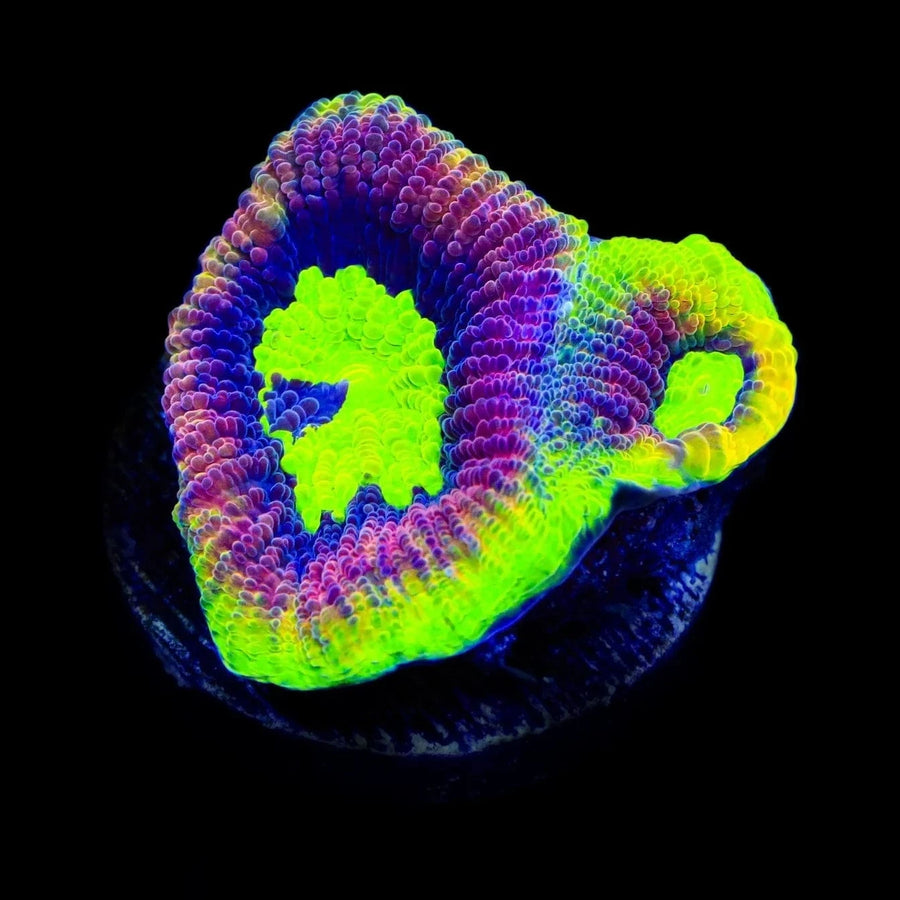
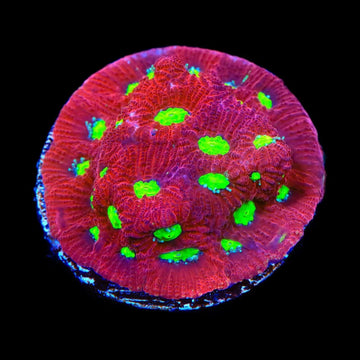
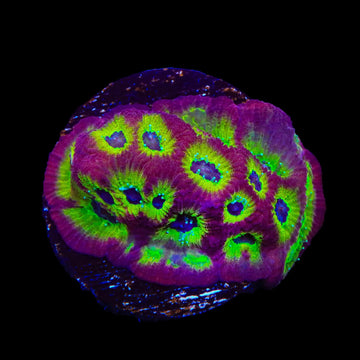
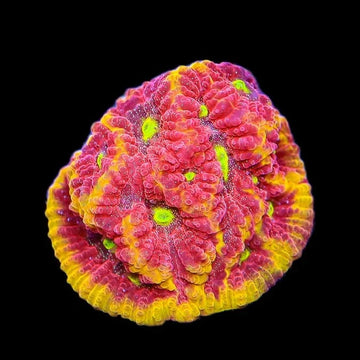
WWC All Star Favia Coral
Overview
All Star Favia Coral has large polygonal corallites with raised walls and contrasting mouths. Favia favus is a stony, encrusting to massive brain coral that prefers moderate light and low to moderate, indirect flow. It relies on symbiotic algae for energy but accepts occasional small meaty foods at night, which can support growth and color. Place with several inches of space, as night sweeper tentacles can sting nearby corals.
Quick Facts
Care
Moderate
Lighting
Low–Moderate
Flow
Moderate, indirect
Placement
Low–Mid
Temperament
Semi-aggressive (4–6 inches spacing)
Recommended Parameters
Temp
76–80°F
pH
8.1–8.4
Salinity
1.025–1.026
Calcium
400–450 ppm
AlkAlkalinity
8–10 dKH
Magnesium
1280–1350 ppm
Feeding
photosynthetic, mysis shrimp, enriched brine shrimp, finely chopped seafood, zooplankton, microplankton, cyclops, copepods, coral-specific powdered foods, marine snow
Care & Placement
FAQ
Frequently Asked Questions
About the WWC All Star Favia Coral
-
My All Star Favia’s colors faded from neon contrasts to dull green. What’s the likely cause and fix?
This coral’s pigments wash out under excessive white light or chronically low nutrients. Aim for moderate PAR (80–150) with strong blue spectrum, stable alkalinity (8–9 dKH), and modest nitrate/phosphate (e.g., 5–15 ppm NO3, 0.03–0.08 PO4). Nighttime target feeding boosts chroma. Trace balance matters; avoid heavy metals, but maintain iodine/iron at normal reef levels via regular water changes. -
How aggressive are its sweeper tentacles, and how should I space it from neighbors?
Favia favus throws long, sticky sweepers after lights out—often 2–4 inches, more under higher flow or when sensing nearby rivals. Give 4–6 inches of clearance from meaty LPS and fleshy polyps. Reduce direct crossflow that “carries” sweepers into other corals. A small rock “island” helps contain stings and simplifies pruning. -
I see slow tissue loss starting at the base. What should I check first?
Base recession often stems from detritus accumulation, shaded edges, or alk swings. Increase gentle, random flow around the base, turkey-baste debris, and verify alkalinity stability. Inspect for vermetid snails or boring worms and remove physically. If tissue looks gelatinous, siphon and iodine dip. Improve stability before escalating to antibiotics. -
How can I manage its dome-like growth to avoid self-shadowing and dead spots?
Mount on a pedestal or small, raised rock to keep the skirt clear. Periodically rotate the piece to even light exposure, and trim overhangs by sawing small wedges between corallites. Maintain moderate, wrapping flow to keep valleys clean. Target-feed the shaded side occasionally to support polyps that get less light.