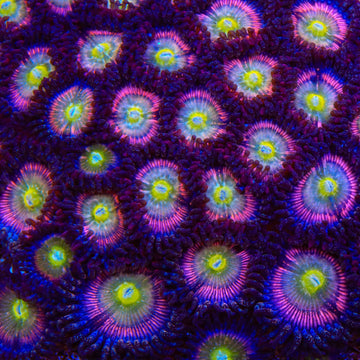
TSA Pinwheel Zoanthids Coral
Overview
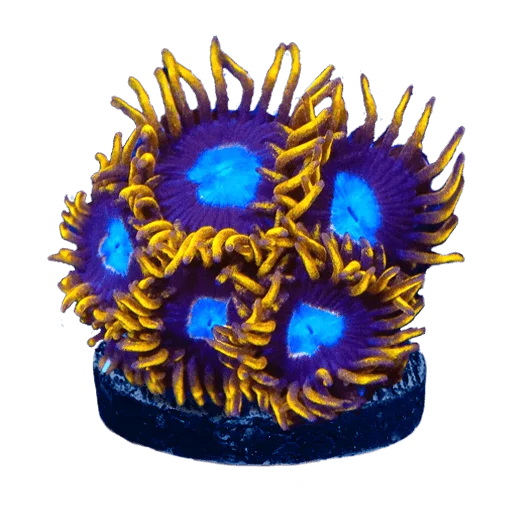
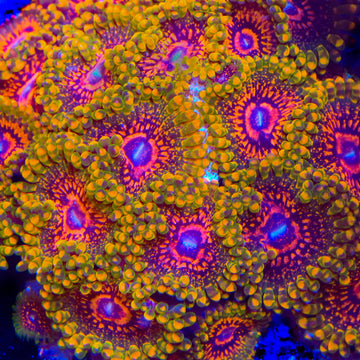
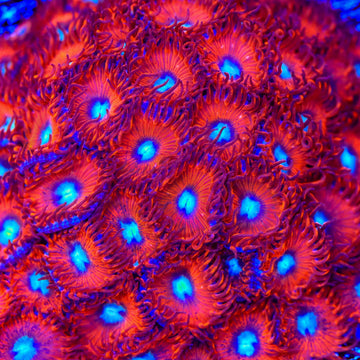
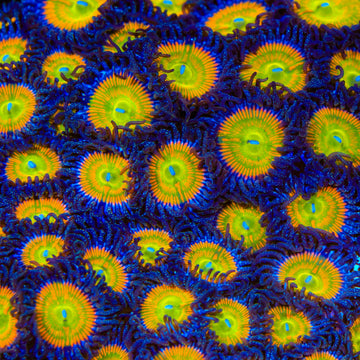
Pinwheel Zoanthids Coral shows compact, button-like polyps with radial striping around a contrasting center. Zoanthus sp. is a soft, colonial polyp coral that does well under moderate light and moderate, indirect flow. It is primarily photosynthetic via symbiotic algae but will accept fine particulate or small meaty foods, supporting faster growth and stronger color. Place on a separate rock to control spreading and leave space from stinging corals; handle with care, as some zoanthids may contain toxins.
Quick Facts
Care
Easy
Lighting
Low–Moderate
Flow
Moderate
Placement
Low–Mid
Temperament
Peaceful to semi-aggressive (2–3 inches spacing)
Recommended Parameters
Temp
76–82°F
pH
8.1–8.4
Salinity
1.025–1.026
Calcium
400–440 ppm
AlkAlkalinity
8–10 dKH
Magnesium
1250–1350 ppm
Feeding
photosynthetic (primary), microplankton, phytoplankton, zooplankton, rotifers, copepod nauplii, cyclops, powdered coral foods, amino acid supplements
Care & Placement
FAQ
Frequently Asked Questions
About the TSA Pinwheel Zoanthids Coral
-
My Pinwheel Zoanthids are “reaching” with long stalks and small heads—what’s causing this?
That stretching signals low PAR or stagnant flow. Bump light gradually to ~80–150 PAR, biasing blue spectrum, and add random, moderate flow to keep skirts moving without blasting the polyps. Keep nutrients non-zero (nitrate 5–15 ppm, phosphate 0.03–0.1) so color returns as light increases. Check shading from faster growers and remove film algae—both can trigger elongation and smaller crowns. -
How do I keep the pinwheel pattern vivid instead of browning or washing out?
Maintain stable, moderate nutrients and strong blue spectrum (actinic/royal blue) for fluorescence, with white dialed back to avoid photobleaching. Avoid stripping nutrients with aggressive carbon dosing. Trace balance matters—regular water changes typically cover iodide/iron needs; dose only if you test. Keep alkalinity steady (7.5–8.5 dKH) and avoid abrupt light changes; ramp adjustments over 1–2 weeks to lock in color. -
My colony closed and started “melting” after months of growth—what advanced troubleshooting works?
Suspect pests (zoa-eating nudibranchs, sundial snails, spiders), bacterial issues, or chemical warfare. Night-inspect and manually remove pests; dip with an iodine or commercial coral dip and repeat every few days to catch hatchlings. Increase random flow and run fresh carbon for allelopathy from leathers or euphylliids. Siphon detritus under the mat. If a section decays, frag away healthy edges to a clean plug to save the line. -
Best practices to frag Pinwheel Zoanthids without losses?
Wear eye/skin protection and work in a ventilated area. Cut between polyps through the mat with a sharp scalpel; avoid crushing the foot. Mount to rough plugs with gel cyanoacrylate, then dip lightly in iodine. Heal in moderate flow and subdued light for 5–7 days. Keep nutrients stable and avoid handling until skirts extend. If slime accumulates, gently baste and increase crossflow to prevent bacterial film.