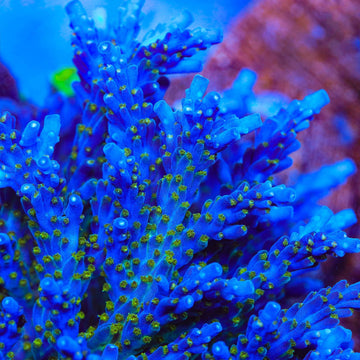
TSA Neon Nectar Acropora Coral
Overview
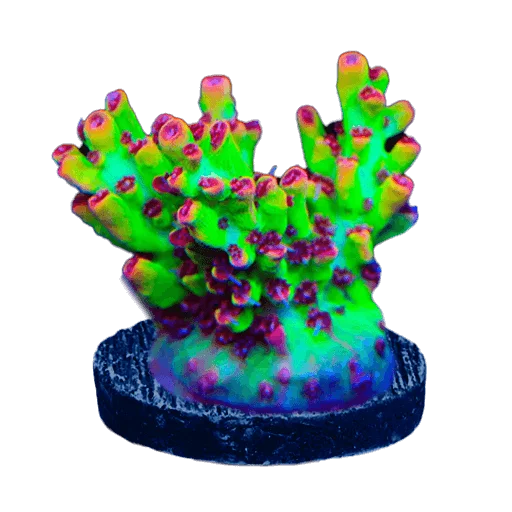
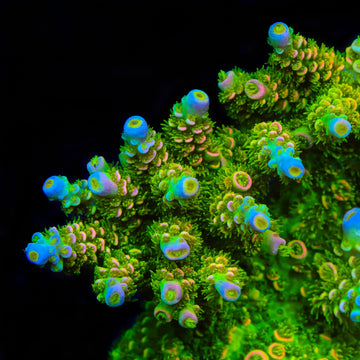
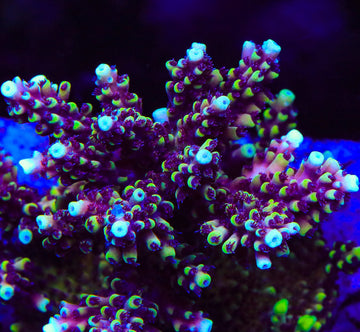
Golden Honeycomb Acropora Coral shows tight, honeycomb-like polyp spacing on golden-tipped branches. Acropora tenuis is a small-polyp stony branching coral that prefers strong light and high, turbulent water flow. It is primarily photosynthetic with symbiotic algae, but occasional tiny planktonic foods can support growth and color. Place high on stable rock with space from aggressive corals, and avoid shading or sudden parameter swings.
Quick Facts
Care
Difficult
Lighting
High
Flow
High
Placement
High
Temperament
Peaceful (3–4 inches spacing)
Recommended Parameters
Temp
76–80°F
pH
8.1–8.4
Salinity
1.025–1.026
Calcium
420–450 ppm
AlkAlkalinity
7.5–9 dKH
Magnesium
1250–1350 ppm
Feeding
photosynthetic (primary), microzooplankton, rotifers, copepod nauplii, oyster eggs, reef roids, reef chili, amino acid supplements, marine snow
Care & Placement
FAQ
Frequently Asked Questions
About the TSA Neon Nectar Acropora Coral
-
Why does my Golden Honeycomb Acropora (Acropora tenuis) shift from golden to green or blue under the same lights over time?
Tenuis pigments swing with micro-changes in nutrient balance and UV/blue spectrum emphasis. Golden tones hold best with moderate nutrients (NO3 5–10 ppm, PO4 0.03–0.07), high but stable PAR (280–350), and strong, chaotic flow. Excessive nutrient stripping or sudden UV increases push blues; elevated nutrients and lower PAR push greens/browning. Adjust slowly, and keep alkalinity rock-steady (7.5–8.5 dKH) to maintain pigment stability. -
My colony grows a thick base but stalls vertically—normal for this species?
Yes. A. tenuis often prioritizes encrusting to anchor before shooting axial branches. Encourage vertical growth by ensuring high, variable flow across the tips (random gyre pulses), keeping PAR highest at the crown, and avoiding shadowing from neighboring branches. Slightly raising the colony off the rock to improve underside flow helps. Stable calcium (420–460 ppm) and balanced alk uptake prevent tip burn that can pause axial growth. -
How can I spot and manage pests specific to Acropora tenuis without nuking the tank?
Watch for tiny bite marks and pale patches between polyps (AEFW) or reduced polyp extension with minute orange “dots” (red bugs). Use a turkey baster to blast the colony; flatworms dislodge as ovals. Employ a removable frag/plug approach: weekly dips (e.g., iodine or specific coral dips) plus interceptor-style treatments in a separate system for red bugs. Add wrasses (e.g., melanurus) as patrol, and inspect new frags under white light before introduction. -
Any propagation tips to keep the honeycomb pattern and color after fragging?
Select branches with defined axial tips and visible radial corallites; avoid overly thin, shaded twigs. Make clean cuts with bone cutters, glue to small, open plugs, and cure in high, random flow. Place frags where PAR matches the mother’s tip zone to preserve pigments. Dose low-level amino acids only after polyp extension returns (7–10 days). Keep alk swings under 0.2 dKH/day; sudden rises wash out golds and slow encrustment.