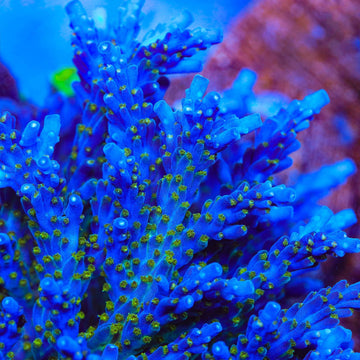
TSA Nebula Tenuis Acropora Coral
Overview
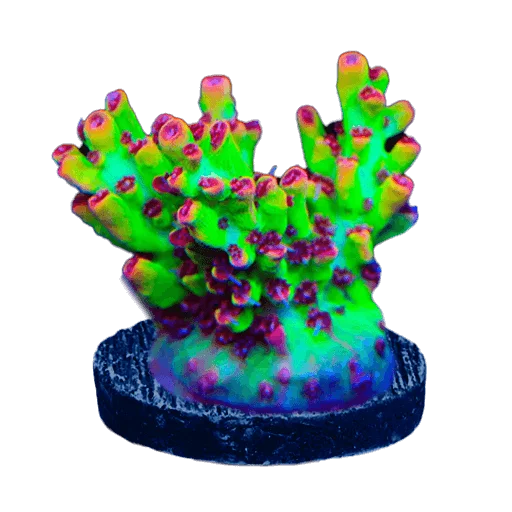
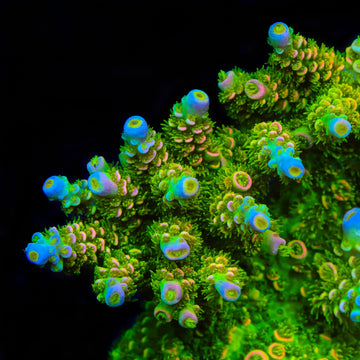
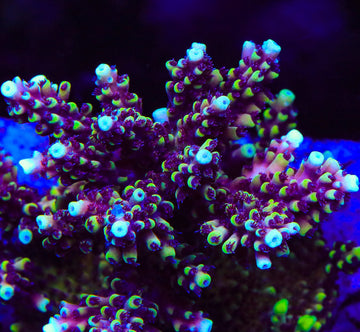
Flower Bomb Acropora Coral shows dense, branching tips with contrasting polyp coloration. Acropora tenuis is a small-polyp stony branching coral that prefers strong lighting and high, turbulent water flow. It is primarily photosynthetic through symbiotic algae, but occasional feeding of fine plankton can support growth and color. Place high on stable rockwork with space from aggressive neighbors, and keep alkalinity and nutrients steady.
Quick Facts
Care
Difficult
Lighting
High
Flow
High
Placement
High
Temperament
Peaceful (2–3 inches spacing)
Recommended Parameters
Temp
77–80°F
pH
8.1–8.4
Salinity
1.025–1.026
Calcium
420–450 ppm
AlkAlkalinity
7.5–9 dKH
Magnesium
1250–1350 ppm
Feeding
photosynthetic (primary), microplankton, zooplankton, phytoplankton, rotifers, reef plankton, coral-specific powdered foods, amino acid supplements
Care & Placement
FAQ
Frequently Asked Questions
About the TSA Nebula Tenuis Acropora Coral
-
Why does my Flower Bomb Acropora (Acropora tenuis) show bright tips but a shadowed, browning base?
Tenuis forms dense, bushy branches that can self-shade. Increase chaotic, cross-flow to push O2 and nutrients into the interior, and trim or reposition to open light paths. Aim PAR 250–350 on mid-branches and 100–150 at the base. Keep NO3 5–15 ppm and PO4 0.03–0.10 ppm; too low nutrients pale tips, while excess with low light browns the base. -
How can I prevent “burnt tips” when raising light or alkalinity on A. tenuis?
Raise PAR and alkalinity gradually over 2–3 weeks. Keep alkalinity 8.0–8.6 dKH with minimal daily swing, and match increased light with slightly higher nutrients (not ULNS). Strong, turbulent flow dissipates oxygen spikes and heat at tips. If tips frost rapidly, pause changes, feed fine particles lightly at night, and resume slower adjustments. -
What spectrum brings out the signature “flower bomb” colors in A. tenuis?
Emphasize blues/violets (420–460 nm) for saturated pinks, purples, and teals, with a moderate white channel to maintain structure and avoid flat greens. A 14–20K visual mix works well. Stabilize nutrients; low phosphate washes colors, while excessive nitrate mutes contrast. Keep photoperiod 9–10 hours with a 1–2 hour ramp to reduce shock. -
How do I tell normal rapid growth from tissue loss (STN/RTN) on this species?
Normal growth shows smooth, even white rims along tips with immediate new polyp formation and no sloughing. STN starts as a matte, receding edge from the base or shaded areas; RTN is swift, peeling tissue with exposed skeleton. Improve flow, stabilize parameters, frag ahead of recession, and inspect for pests. Iodine dips help if caught early.