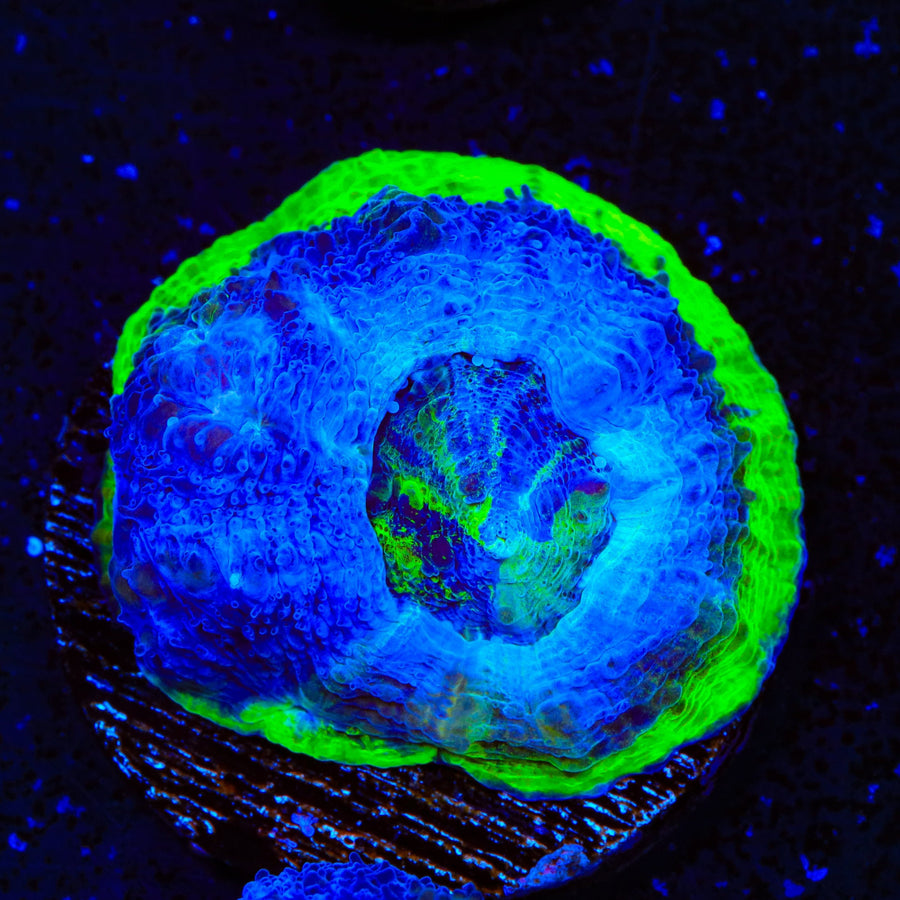
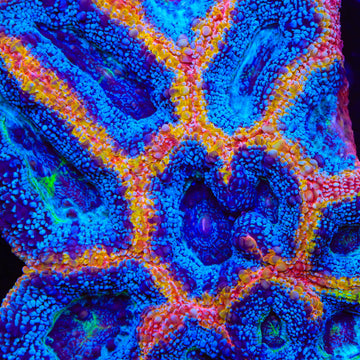
TSA Moon Sugar Bowerbankii Coral
Overview
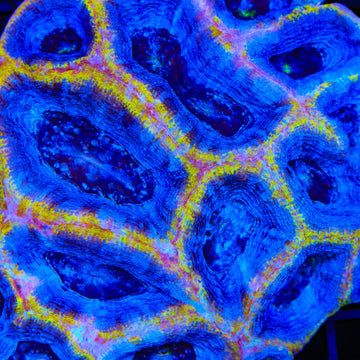
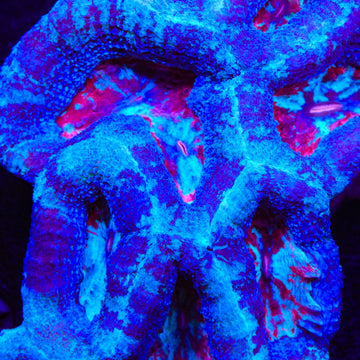
Bowerbanki Coral shows large fleshy polyps with thick ridges and distinct, contrasting mouths. Micromussa bowerbanki is a stony, encrusting to dome-forming coral that prefers moderate lighting and low to moderate, indirect flow. It is photosynthetic with symbiotic algae but benefits from occasional small meaty feedings, which can support faster growth and strong color. Place with space around it, as sweeper tentacles can sting nearby corals, and avoid direct high flow or sudden intense light.
Quick Facts
Care
Moderate
Lighting
Low–Moderate
Flow
Moderate, indirect
Placement
Low–Mid
Temperament
Semi-aggressive (3–6 inches spacing)
Recommended Parameters
Temp
76–80°F
pH
8.1–8.4
Salinity
1.025–1.026
Calcium
400–450 ppm
AlkAlkalinity
8–9.5 dKH
Magnesium
1280–1350 ppm
Feeding
photosynthetic, mysis shrimp, enriched brine shrimp, copepods, rotifers, zooplankton, microplankton, finely chopped seafood, coral-specific powdered foods
Care & Placement
FAQ
Frequently Asked Questions
About the TSA Moon Sugar Bowerbankii Coral
-
Why does my Bowerbanki Coral inflate heavily during the day and deflate at night?
Micromussa bowerbanki routinely puffs up to increase light exposure and retracts tissue when feeding at night. Excessive daytime ballooning can signal irritating flow, vermetid snail webs, or sudden salinity/alkalinity swings. If deflation persists, reduce direct flow, inspect for stings or pests, and stabilize parameters. Target feed at dusk to sync with natural feeding and encourage consistent behavior. -
My Bowerbanki’s colors dulled after I changed lighting—how can I bring them back?
This species shows strong spectral response: heavy blue light preserves fluorescence, while intense white can wash reds/oranges. If it browned, light may be too low or nutrients too high; if it paled, intensity likely too high. Raise PAR slowly (10–15% weekly), favor blue channels, and maintain moderate nutrients (nitrate 5–15 ppm, phosphate 0.03–0.1 ppm). Consistent feeding helps rebuild pigments. -
How do I stop edge recession after a bump or frag cut?
Recession often follows tissue damage and opportunistic bacteria. Immediately perform an iodine-based dip, then increase indirect, turbulent flow around the wound. Trim to clean skeleton if necrosis creeps. Keep alkalinity steady (8–9 dKH), avoid large temperature swings, and feed small meaty foods to support recovery. If jelly-like slough appears, repeat dips and isolate in lower light until polyp margins re-knit. -
What spacing does Bowerbanki need to avoid night-time stings?
It deploys short but potent sweepers after lights out. Give 3–5 inches of clearance from other fleshy LPS and avoid placing it downcurrent from sensitive neighbors. Mount on its own rubble “island” to curb encroachment. It tolerates nearby softies better than chalices or favias, which can outfight it. Watch for silent chemical stress—shrinking polyp rims or repeated daytime retraction signal conflict.