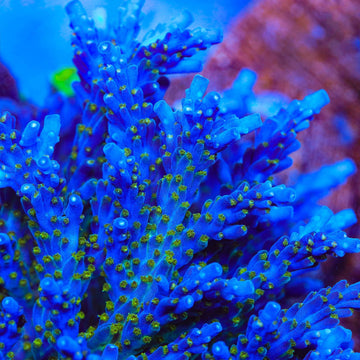
TSA Mango Passion Tenuis Acropora Coral
Overview
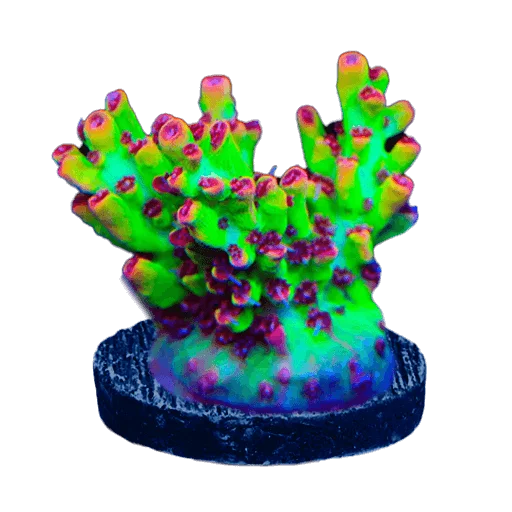
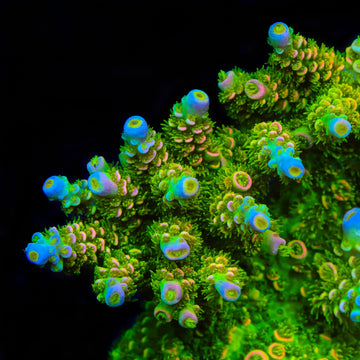
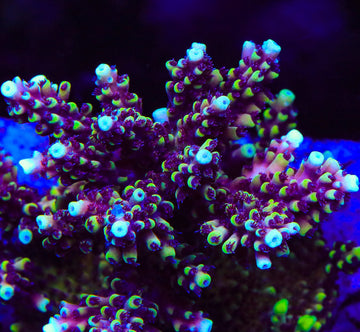
Bubbleyum Tenuis Acropora Coral shows thick, branching tips with contrasting polyp coloration. Acropora tenuis is a small-polyp stony branching coral that prefers strong light and high, turbulent water flow. It relies on symbiotic algae for most nutrition but can benefit from occasional small particulate foods, which may support growth and color. Place high on stable rockwork with space from aggressive neighbors, and avoid shading or direct contact with other corals.
Quick Facts
Care
Difficult
Lighting
High
Flow
High
Placement
High
Temperament
Semi-aggressive (3–6 inches spacing)
Recommended Parameters
Temp
77–80°F
pH
8.1–8.4
Salinity
1.025–1.026
Calcium
420–450 ppm
AlkAlkalinity
7.5–9 dKH
Magnesium
1280–1350 ppm
Feeding
photosynthetic (primary), microzooplankton, rotifers, copepod nauplii, oyster eggs, coral-specific powdered foods (e.g., Reef-Roids), amino acid supplements
Care & Placement
FAQ
Frequently Asked Questions
About the TSA Mango Passion Tenuis Acropora Coral
-
Why does my Bubbleyum Tenuis lose pink/blue contrast after a few weeks under strong LEDs?
Color fade often ties to imbalanced nutrients under high PAR. Aim for stable alkalinity (8–9 dKH) and keep measurable nitrate (5–15 ppm) and phosphate (0.02–0.08 ppm). Excessively “clean” water with very high light can wash colors; conversely, high phosphate mutes blues. Ensure strong violet/UV (380–420 nm) and good flow. Avoid rapid light increases; acclimate over 2–3 weeks. -
My colony encrusts well but stalls on vertical branching—what’s the bottleneck?
A. tenuis typically encrusts before throwing axial branches. If it plateaus, check flow dynamics—add more randomized, cross-current pulses to stimulate axial growth. Keep alk steady and avoid daily swings. Slightly bump PAR (e.g., 250 → 300) after stability is proven. Trim nearby shading branches and maintain trace balance (potassium ~380–420 mg/L) to support tip growth. -
The base is browning and receding where the colony shadows itself—how do I prevent this?
Shadowing is common as tenuis thickens. Increase side lighting or slightly raise the colony to widen spread. Add more varied, turbulent flow to sweep detritus from the base. Periodically trim or reposition branches to open light channels. Avoid laminar streams blasting one side; use alternating gyres or random modes to keep tissues oxygenated. -
How can I tell if poor polyp extension is from pests or parameter stress?
If extension drops suddenly, inspect at night with a flashlight for AEFW bite marks or eggs and for red bugs on polyps. If no pests are seen, check for alkalinity swings, elevated temperature, or aggressive neighbors’ chemical warfare. Run fresh carbon, stabilize dKH, and adjust flow. When in doubt, isolate a frag in QT for close observation and dips.