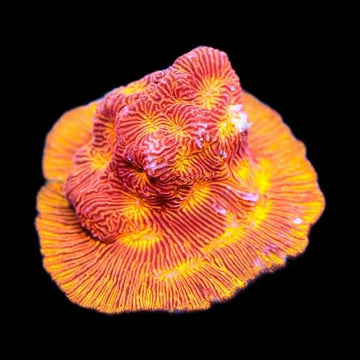
TSA Hulk Leptoseris Coral
Overview
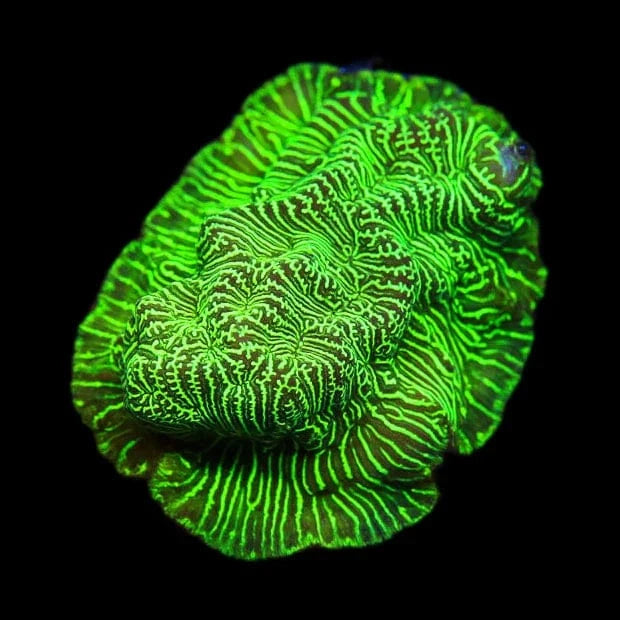
Hulk Leptoseris Coral shows bright green plating ridges forming thin, overlapping discs. Leptoseris sp. is a small-polyp stony, plating coral that prefers low to moderate light and gentle to moderate, indirect flow. It relies on symbiotic algae for most nutrition, but occasional fine particulate foods at night can support growth and maintain color. Place on stable rock with space around the edges, and keep distance from corals with long stinging sweepers.
Quick Facts
Care
Moderate
Lighting
Low-moderate
Flow
Low-moderate
Placement
Low
Temperament
Peaceful (2–3 inches spacing)
Recommended Parameters
Temp
76–80°F
pH
8.1–8.4
Salinity
1.025–1.026
Calcium
400–450 ppm
AlkAlkalinity
7.5–8.5 dKH
Magnesium
1250–1350 ppm
Feeding
photosynthetic (primary), phytoplankton, microplankton, rotifers, copepod nauplii, powdered coral foods (reef roids), marine snow
Care & Placement
FAQ
Frequently Asked Questions
About the TSA Hulk Leptoseris Coral
-
Why does my Hulk Leptoseris fade or bleach under lighting that suits my other SPS?
Leptoseris sp. are adapted to deeper, dimmer zones. Hulk typically prefers 50–120 PAR with a blue-heavy spectrum. High PAR or rapid acclimation can bleach or flatten fluorescence. Start in shaded lower rockwork, ramp intensity over weeks, and avoid strong white channels. Stable nutrients (NO3 5–15 ppm, PO4 0.03–0.1 ppm) help maintain the neon green rather than washing out or browning. -
The colony is cupping upward and self-shading—normal or a sign of trouble?
Normal. Leptoseris plates adapt to light direction and flow, often cupping to capture oblique light and shade their own tissue. Mount at an angle with crossflow so the underside gets gentle movement. Periodically baste the underside to prevent detritus buildup that can cause central recession. If you need flatter growth, rotate the frag to change light incidence. -
I’m seeing tissue loss from the center outward despite stable parameters—what should I check?
Look for detritus trapped under the plate, low underside flow, and pests. Leptoseris-eating nudibranchs leave scalloped bite marks and come out at night; inspect with a red light and dip if found. Increase underside flow, turkey-baste weekly, and consider an iodine or broad-spectrum coral dip. If bacterial, a short, gentle Lugol’s dip plus improved cleanliness usually halts recession. -
Target feeding seems ineffective—how should I feed this coral for color and growth?
Its mouths are tiny and open mostly at night. Broadcast very fine foods (e.g., rotifers, reef powders, live phyto) after lights out with flow briefly reduced, then restored to disperse particulates. Aim for consistent, small feedings 1–2 times weekly. Overfeeding larger particles just fouls the plate; focus on waterborne microfoods and stable nutrients to support fluorescence and steady plating growth.