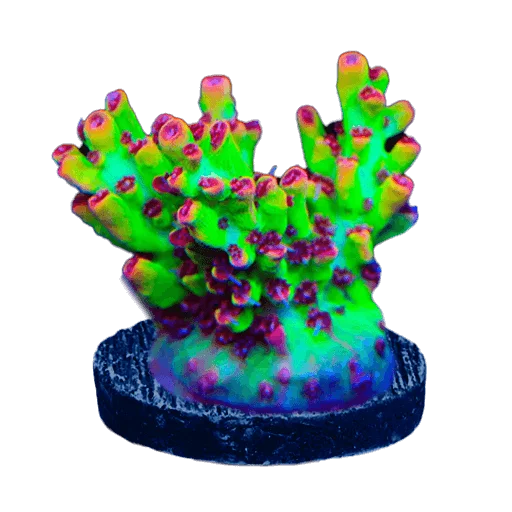
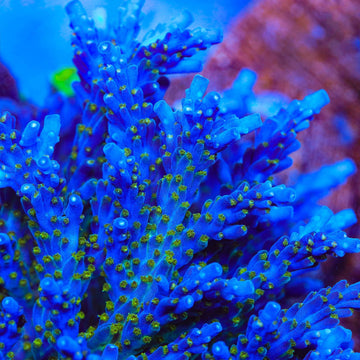
TSA Hellraiser Acropora Coral
Overview
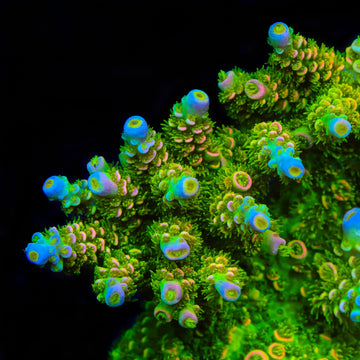
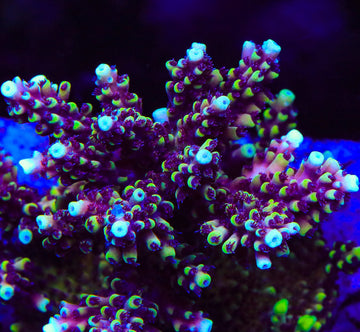
Dante's Inferno Acropora Coral shows branching, tightly spaced axial tips with contrasting polyp coloration. Acropora tenuis Coral is a small-polyp stony branching species that thrives under strong light and high, turbulent water flow. It is primarily photosynthetic via symbiotic algae but accepts fine particulate foods; regular, moderate feeding can support growth and deepen color. Place high on stable rockwork with space from aggressive neighbors, and keep alkalinity and calcium stable to prevent tip burn.
Quick Facts
Care
Difficult
Lighting
High
Flow
High
Placement
High
Temperament
Peaceful (3–4 inches spacing)
Recommended Parameters
Temp
77–80°F
pH
8.1–8.4
Salinity
1.025–1.026
Calcium
420–450 ppm
AlkAlkalinity
7.5–9.0 dKH
Magnesium
1280–1350 ppm
Feeding
photosynthetic (primary), microplankton, zooplankton, rotifers, copepod nauplii, phytoplankton, powdered coral foods (e.g., Reef Roids), marine snow, bacterioplankton
Care & Placement
FAQ
Frequently Asked Questions
About the TSA Hellraiser Acropora Coral
-
Why does my Dante’s Inferno Acropora Coral lose its red/orange glow and shift toward green or brown?
Acropora tenuis color swings with light spectrum, PAR, and nutrients. Aim for 250–350 PAR with strong blue (around 420–460 nm) and low, stable nitrate/phosphate (not zero). Elevated nutrients or too little light push brown/green pigments. Keep alk 7.5–8.5 dKH steady; swings mute reds. Increase random flow and allow full encrustment before pushing PAR higher. -
What growth quirks should I expect, and how can I avoid base recession on Acropora tenuis?
Tenuis forms corymbose clusters; upper branches can shade the base, causing slow tissue loss. Increase crossflow so polyps at the base sway, adjust rockwork to reduce shadowing, and trim dense tips to open light paths. Mount the frag slightly tilted so branches don’t stack vertically. Promote strong encrustment first; rushing vertical growth raises shading risk. -
My polyps extend at night but stay tight by day—normal for this coral?
Yes. Tenuis often shows stronger nocturnal extension. Daytime retraction can worsen with excessive light, laminar flow, or pest irritation. Switch to more turbulent flow, verify PAR isn’t spiking, and inspect for AEFW bite marks or red bugs. A wrasse species known for pest patrol helps, but always quarantine and dip new Acropora. -
What advanced feeding or trace strategies help color and growth without algae blooms?
Feed very fine zooplankton or aminos sparingly 1–3x weekly with strong export (skimming, refugium). Keep measurable but low nutrients. Trace elements like potassium, iron, and manganese support blues/reds in tenuis, but dose only with test-backed schedules to avoid toxicity. Prioritize stable alk, calcium, and magnesium; chasing traces without stability often backfires.