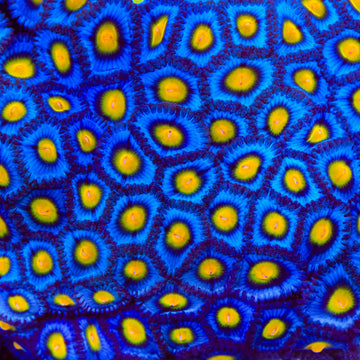
TSA Green Implosion Palythoa Coral
Overview
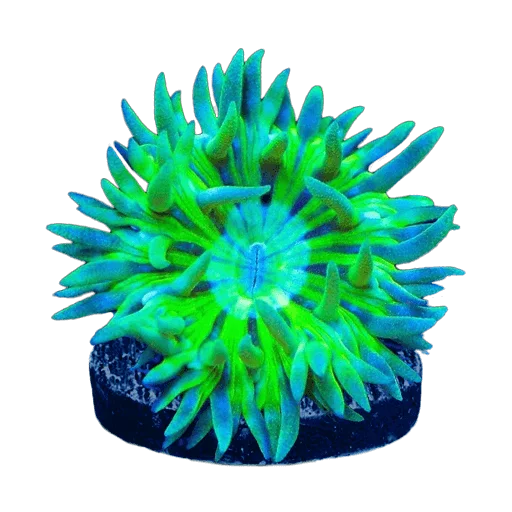
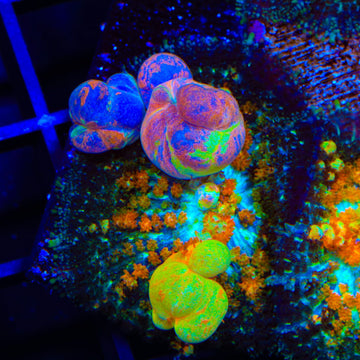
Green Implosion Palythoa Coral features dense mats of button-like polyps with bright green centers. Palythoa sp. is a soft colonial zoanthid, thriving under moderate light and low to moderate water flow. It is photosynthetic via symbiotic algae but accepts small meaty foods, which can speed growth and deepen color. Place on an island rock to control spreading, and handle with care due to possible palytoxin; keep space from stinging neighbors.
Quick Facts
Care
Easy
Lighting
Low–Moderate
Flow
Moderate
Placement
Low–Mid
Temperament
Semi-aggressive (3–6 inches spacing)
Recommended Parameters
Temp
76–80°F
pH
8.1–8.4
Salinity
1.025–1.026
Calcium
400–450 ppm
AlkAlkalinity
8–10 dKH
Magnesium
1250–1350 ppm
Feeding
photosynthetic (primary), microplankton, phytoplankton, zooplankton, rotifers, reef-specific powdered foods (e.g., Reef-Roids), finely minced mysis shrimp, finely minced brine shrimp
Care & Placement
FAQ
Frequently Asked Questions
About the TSA Green Implosion Palythoa Coral
-
Why did my Green Implosion Palythoa lose neon green and look browner over time?
Color shift usually tracks light spectrum and nutrients. Blue-heavy spectrum (420–460 nm) with moderate PAR restores fluorescence, while high nitrate/phosphate can deepen brown zooxanthellae. Too “ultra-clean” water may wash out color and shrink polyps. Stabilize alkalinity and trace (iodine/iron within normal reef ranges), add gentle flow to shed films, and avoid sudden spectrum or intensity changes—ramp adjustments over weeks. -
How fast will it spread, and what’s the best way to contain it?
It creeps via a tough mat that can bridge small gaps and even adhere sand to colonize new rock. Use an isolated “island,” maintain a sand moat, and direct flow so fragments don’t drift. For edging control, lift and cut a strip of mat to break the growth line, or spot-apply kalk paste to the advancing edge. Siphon debris under the mat to prevent hidden die-off. -
Is target feeding worthwhile, and how can I tell it’s helping?
Yes—small meaty foods (mysis slurry, roe, fine pellets) and occasional amino acids can boost growth. Turn off flow, feed lightly, restore flow after a few minutes. Signs of benefit: thicker oral discs, quicker polyp reopening after lights on, faster mat extension, and deeper green speckling. If you see prolonged slime, slower reopening, or rising nutrients, reduce frequency or portion size. -
What’s a safe propagation method for Palythoa sp., and how do I handle toxin risk?
Wear gloves, eye protection, and a mask; work in strong ventilation. Cut the mat between polyps with a fresh blade; underwater cutting reduces aerosol. Rinse frags, iodine dip, and place in moderate flow for healing. Run fresh carbon and avoid hot water or steam near tissue. Light-acclimate frags—start lower and raise intensity over a week to prevent bleaching.