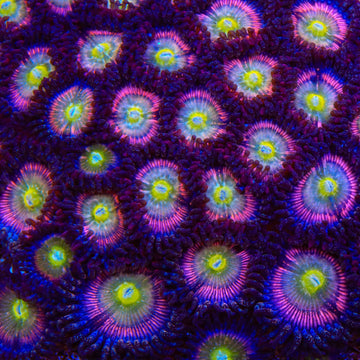
TSA Green Goblin Zoanthids Coral
Overview
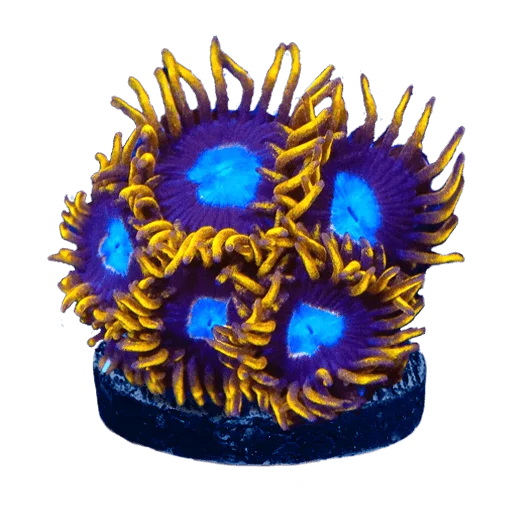
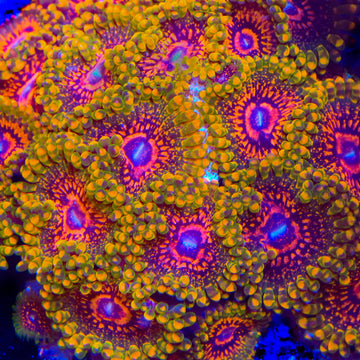
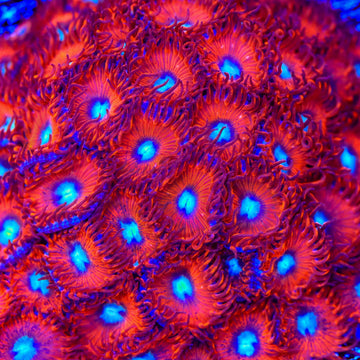
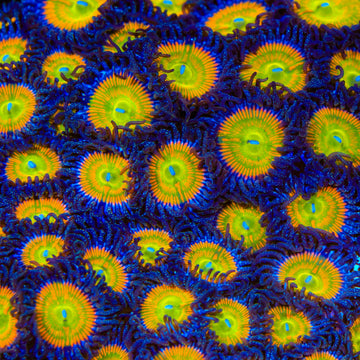
Green Goblin Zoanthids Coral displays bright green button-like polyps with contrasting centers and short skirts. Zoanthus sp. Coral is a soft, colonial polyp coral that grows in mats; it prefers moderate light and low to moderate water flow. It is primarily photosynthetic due to symbiotic algae but will accept fine particulate or small meaty foods, which can improve growth and color. Place on an isolated rock to manage spreading, and keep distance from aggressive stingers.
Quick Facts
Care
Easy
Lighting
Moderate–High
Flow
Moderate, indirect
Placement
Low–Mid
Temperament
Semi-aggressive (3–6 inches spacing)
Recommended Parameters
Temp
76–82°F
pH
8.1–8.4
Salinity
1.025–1.026
Calcium
380–450 ppm
AlkAlkalinity
8–10 dKH
Magnesium
1250–1350 ppm
Feeding
photosynthetic (primary), microplankton, phytoplankton, zooplankton, rotifers, cyclops, powdered coral foods, marine snow, finely chopped mysis, enriched brine nauplii
Care & Placement
FAQ
Frequently Asked Questions
About the TSA Green Goblin Zoanthids Coral
-
Why did my Green Goblin Zoanthids lose their neon glow and turn dull or yellowish?
Color shift usually points to light spectrum and nutrient imbalance. Aim for moderate PAR (80–150) with strong blue/violet (420–470 nm); excessive white can wash out fluorescence. Keep nitrate detectable (5–15 ppm) and phosphate 0.03–0.10 ppm to avoid pale tissue. Avoid blind dosing trace elements; instead, stabilize alkalinity and salinity. If bleached, lower PAR 20–30% and increase blue bias over 1–2 weeks. -
Are Green Goblin Zoanthids risky to handle due to toxins?
Zoanthus can contain palytoxin, though typically less than many Palythoa. Treat all zoas with respect: wear gloves and eye protection, frag in well‑ventilated areas, and never scrub or heat rocks (no hot water, boiling, or steam). Cut submerged when possible to limit aerosol. Rinse tools, wash hands, and run fresh activated carbon after major work. Keep pets and children away during maintenance. -
How can I get a dense “carpet” of short polyps instead of tall, stretchy stalks?
Polyps stretch under low light and weak flow. Provide moderate PAR (100–150) with a blue‑heavy spectrum and moderate, randomized flow that keeps skirts gently moving without blasting. Maintain stable alkalinity (7.5–9 dKH) and avoid ultra‑low nutrients. Space them a few inches from aggressive neighbors; use fresh carbon to reduce chemical warfare that can cause retraction and elongation. Regular fragging of the leading edge encourages lateral matting. -
My colony stays closed for days—what rare issues should I check beyond parameters?
Inspect at night for predators: zoa‑eating nudibranchs (and egg spirals), zoa spiders, and sundial snails. Manually remove pests, then follow with an iodine or peroxide‑based dip at conservative strength. For “zoa pox,” use Furan‑2 dips per label for several sessions. Increase aeration and run carbon to reduce allelopathy. Verify nutrients aren’t bottomed out, and adjust flow to prevent detritus settling at the mat’s edge.