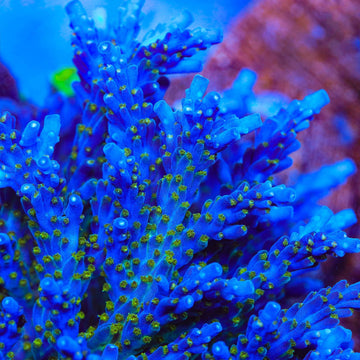
TSA Green Dragon Acropora Coral
Overview
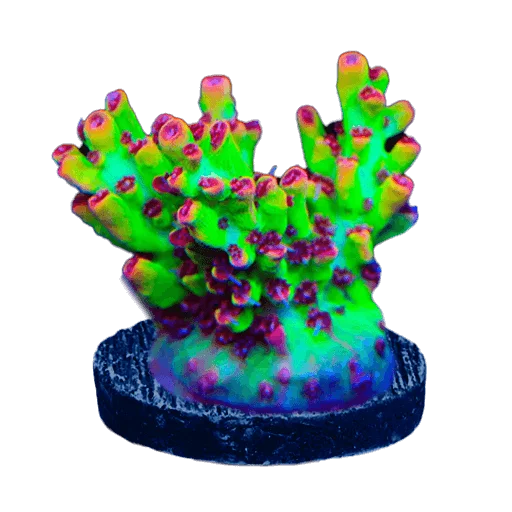
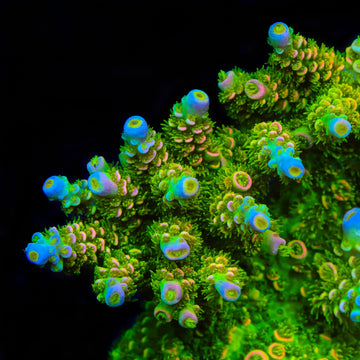
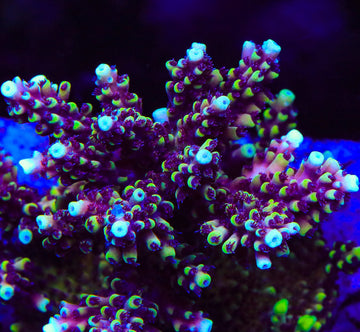
Green Dragon Acropora Coral shows bright green, tightly spaced branchlets with fine axial tips. Acropora carduus is a branching small-polyp stony coral that prefers strong light and high, turbulent water flow. It relies mainly on symbiotic algae for energy but can benefit from occasional small plankton or amino feedings, which may support faster growth and maintain color. Place high on stable rock with ample space from aggressive neighbors, and keep alkalinity and nutrients steady to prevent tissue loss.
Quick Facts
Care
Difficult
Lighting
High
Flow
High
Placement
High
Temperament
Peaceful (2–3 inches spacing)
Recommended Parameters
Temp
76–80°F
pH
8.1–8.4
Salinity
1.025–1.026
Calcium
400–450 ppm
AlkAlkalinity
7.5–9 dKH
Magnesium
1280–1350 ppm
Feeding
photosynthetic (primary), microplankton, rotifers, copepod nauplii, oyster eggs, coral-specific powdered foods (e.g., Reef-Roids), amino acid supplements
Care & Placement
FAQ
Frequently Asked Questions
About the TSA Green Dragon Acropora Coral
-
My Green Dragon Acropora is fading from neon green to olive—what’s the likely cause and fix?
Color shifts often track nutrient and spectrum balance. Aim for NO3 ~2–10 ppm and PO4 ~0.03–0.08 ppm; too low pale, too high brown. Strong blue/UV (420–470 nm) keeps greens vivid; reduce excess white. Maintain stable alkalinity (7.3–8.3 dKH). Trace balance matters—iron/manganese deficiencies mute green. Increase random flow and avoid sudden PAR jumps; acclimate lighting over 2–3 weeks. -
How does Acropora carduus typically grow, and how should I place it?
It encrusts tightly, then forms dense bottlebrush branches with short radial corallites. Place high with room for outward growth. Provide strong, chaotic flow (30–50x tank turnover) that sweeps the colony base to prevent detritus and STN. Avoid stagnant centers by not crowding nearby branches. Keep space from shade-casting neighbors and soft corals that release irritants; run carbon if mixed. -
I’m seeing burnt tips but also some base recession—how do I pinpoint the trigger?
Burnt, stark-white tips with good base usually signal an alkalinity spike under high PAR. Verify test kit and target slow corrections. Base STN with normal tips often indicates low flow at the base, bacterial stress, or nutrient swings. Increase crossflow, siphon detritus, stabilize NO3/PO4, and consider a mild iodine dip. Rule out pests before making big chemistry changes. -
What pests target this coral, and how can I detect them early?
AEFW leave oval bite marks and tissue roughness, often on shaded undersides; a baster blast may dislodge tan flatworms. Red bugs present as tiny orange specks, reducing polyp extension and color pop. Quarantine new frags, inspect under blue light with magnification, and use dips (e.g., Bayer/iodine) per protocol. After treatment, boost flow and stability to speed recovery.