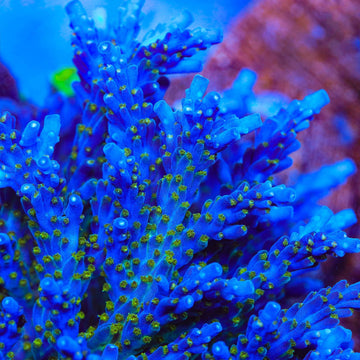
TSA Grape Ape Acropora Coral
Overview
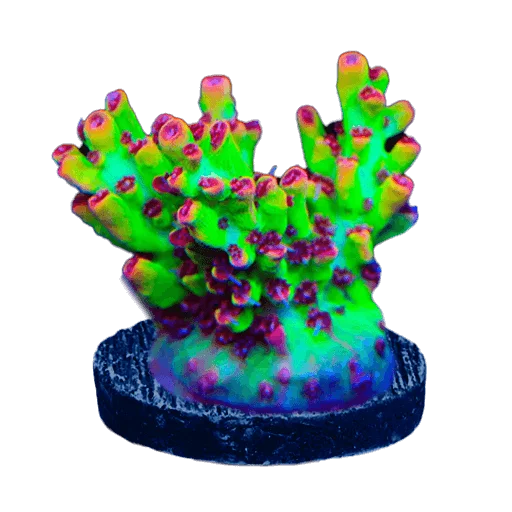
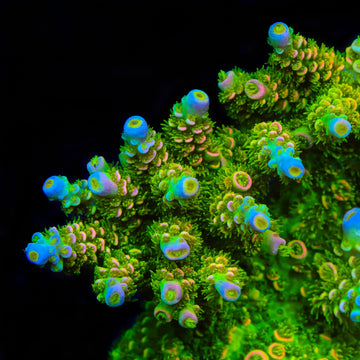
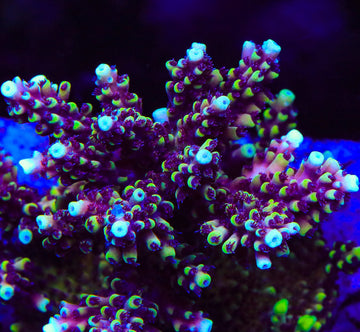
Grape Ape Acropora Coral shows branching, grape-purple tips with contrasting polyps. Acropora sp. is a small-polyp stony branching coral that prefers strong lighting and high, turbulent water flow. It is primarily photosynthetic through symbiotic algae but will take fine particulate foods, which can support growth and deepen color. Place high on stable rock with space from aggressive corals, and keep alkalinity and calcium steady.
Quick Facts
Care
Difficult
Lighting
High
Flow
High
Placement
High
Temperament
Semi-aggressive (3–4 inches spacing)
Recommended Parameters
Temp
77–80°F
pH
8.1–8.4
Salinity
1.025–1.026
Calcium
420–450 ppm
AlkAlkalinity
7–9 dKH
Magnesium
1280–1350 ppm
Feeding
photosynthetic, microplankton, zooplankton, rotifers, copepod nauplii, cyclops, coral-specific powdered foods (e.g., Reef Roids), amino acids
Care & Placement
FAQ
Frequently Asked Questions
About the TSA Grape Ape Acropora Coral
-
Why does my Grape Ape Acropora lose its deep purple and turn brown or pale?
Color shifts usually track the nutrient-light balance and spectrum. Maintain moderate nitrate (2–10 ppm) and phosphate (0.02–0.08 ppm); ultra-low nutrients wash out purple, excess browns it. Provide high, stable PAR (250–400) with strong blues/violets, but avoid blasting UV that can mute chromoproteins. Keep alkalinity steady (7.5–8.5 dKH); swings or high alk under intense light can cause tip burn and color fade. -
How do I manage self-shading and basal recession in this branching Acropora?
Grape Ape forms dense, upward branches that can starve the base of light and flow. Prune interior branches to create “light wells,” rotate the colony monthly, and direct cross-flow through the base. Mount higher with open space around the pedestal to prevent detritus buildup. If recession starts, frag above the die-off margin and improve turbulence at the base. -
What advanced pest signs should I watch for, and how do I respond without nuking the tank?
Look for crescent bite marks and beige flatworms (AEFW) on shaded undersides, or reduced polyp extension and tiny yellow “flecks” (red bugs). Remove the colony for a flashlight inspection. Quarantine, perform serial broad-spectrum dips, and turkey-baste to dislodge eggs/juveniles. Repeat every 5–7 days for several cycles. Avoid whole-tank treatments; focus on isolation, manual removal, and rigorous observation. -
Any propagation tips specific to maintaining its growth form and color?
Take 3–5 cm branch tips with visible axial corallites; avoid crushing the tip. Use a glue–epoxy–glue “sandwich” for secure mounting and orient frags vertically for proper axial growth. Heal in high, turbulent flow and moderate-high PAR (200–250) for 1–2 weeks, then ramp to final intensity. Keep trace elements consistent via water changes; unstable alk or starvation slows encrustment and dulls purple.