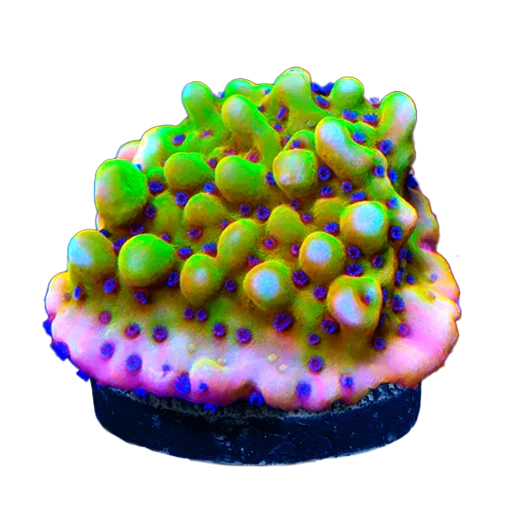
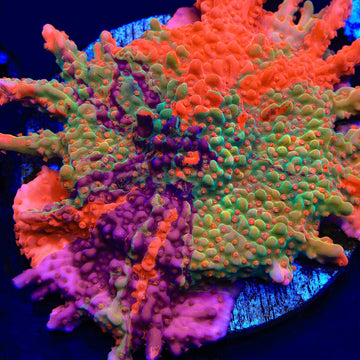
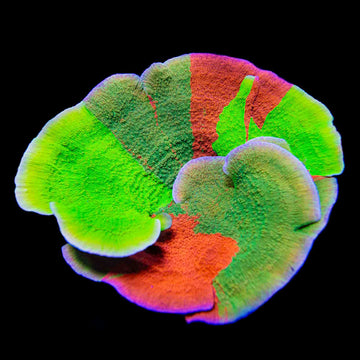
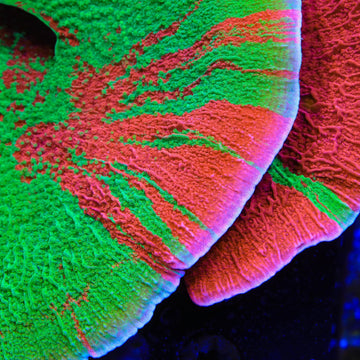
TSA Grafted Quasimodo Montipora Coral
Overview
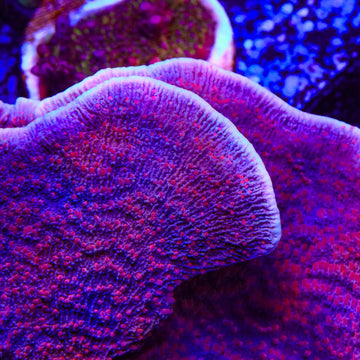
Grafted Quasimodo Montipora Coral shows fused patches of contrasting colors on contoured, nodular plates. Montipora capricornis is a hard plating SPS coral that prefers moderate to strong light and moderate, turbulent flow. It is primarily photosynthetic with symbiotic algae, but occasional small particulate foods can support faster growth and stabilize coloration. Place higher on rockwork with space around the rim to prevent shading and avoid contact with more aggressive corals.
Quick Facts
Care
Moderate
Lighting
Moderate–High
Flow
Moderate–High
Placement
Mid–High
Temperament
Peaceful (2–3 inches spacing)
Recommended Parameters
Temp
76–80°F
pH
8.1–8.4
Salinity
1.025–1.026
Calcium
400–450 ppm
AlkAlkalinity
8–9.5 dKH
Magnesium
1280–1350 ppm
Feeding
photosynthetic, phytoplankton, rotifers, micro zooplankton, powdered coral foods, marine snow, amino acids
Care & Placement
FAQ
Frequently Asked Questions
About the TSA Grafted Quasimodo Montipora Coral
-
Why is the graft line on my Grafted Quasimodo Montipora fading or “blending” into one color?
Grafts can drift if one tissue outpaces the other or if spectrum/nutrients shift. Aim for moderate PAR (200–300), strong blue/violet (420–460 nm) with some white, and stable alk 7.8–8.6. Avoid ultra‑low nutrients; keep detectable nitrate (5–15 ppm) and phosphate (0.03–0.1 ppm). Minimize shading at the graft margin. If a single color dominates, prune that edge to let the weaker color catch up. -
The Quasimodo growth is lumpy and traps detritus—should I be concerned?
The knobby, nodular plates are typical of this phenotype, but debris can fuel cyano or localized recession. Provide brisk crossflow under and over shelves, not just a single laminar stream. Periodically baste the surface and undersides. Space the colony from rock to allow flow through scrolls. Maintain alkalinity stability and moderate nutrients to keep tissue thick and resilient, reducing risk from minor accumulation. -
Why are the undersides browning or receding while the top looks great?
Self‑shading. Montipora capricornis plates shade lower tissue, which can brown, thin, or die back. Tilt the colony toward side lighting, increase side/under‑lighting, or selectively trim outer lips to open light paths. Encourage upward, not just outward, growth with placement and flow. Avoid explosive growth from high alk/low nutrients, which creates thin, shadowing shelves that outpace light availability. -
Any special compatibility concerns when mixing this coral with other SPS or Montipora?
It can overgrow and shade neighbors rapidly; give space around its rim. Keep it well away from aggressive LPS with long sweepers. When mixing Montipora, monitor for slow tissue loss that can follow allelopathic stress. Run fresh carbon, ensure strong export, and keep parameters stable to reduce chemical pressure. If two caps collide, expect a stand‑off; prune proactively to prevent smothering and preserve the grafted sections.