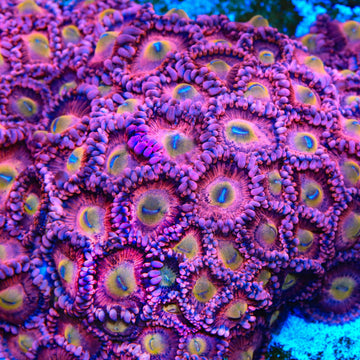
TSA Grafted Gamma Knife Hydnophora Coral
Overview
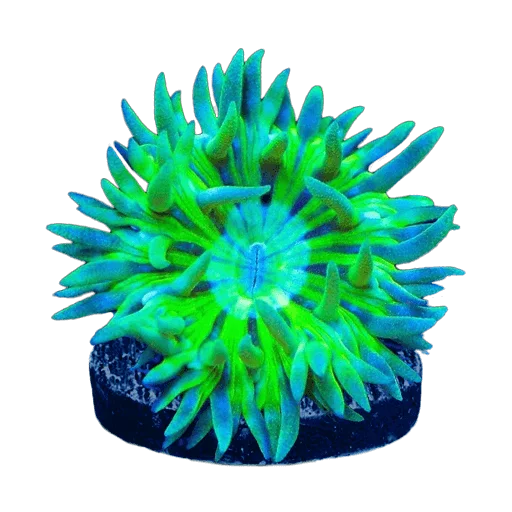
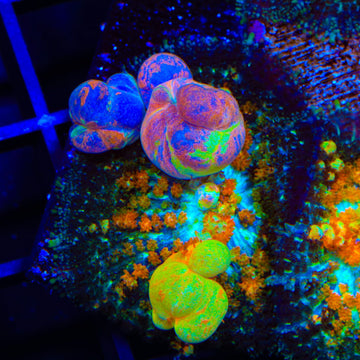
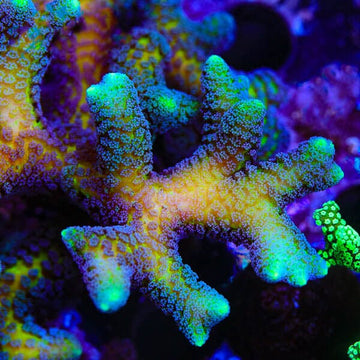
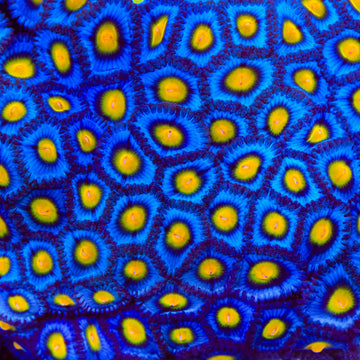
Grafted Gamma Knife Hydnophora Coral displays bright grafted coloration across sharp, ridged knobs. Hydnophora rigida is a stony branching to encrusting coral that prefers moderate to strong light and moderate to high, turbulent flow. It is photosynthetic with symbiotic algae but benefits from occasional small planktonic or meaty feeds to support growth and color stability. Place with ample space from other corals, as it has a strong sting and can damage nearby colonies.
Quick Facts
Care
Moderate
Lighting
Moderate–High
Flow
Moderate–High
Placement
Mid–High
Temperament
Aggressive stinger (keep 6–8 inches spacing)
Recommended Parameters
Temp
76–80°F
pH
8.1–8.4
Salinity
1.025–1.026
Calcium
400–450 ppm
AlkAlkalinity
8–10 dKH
Magnesium
1280–1350 ppm
Feeding
photosynthetic (primary), microplankton, rotifers, cyclops copepods, baby brine shrimp nauplii, oyster eggs, powdered coral foods, marine snow
Care & Placement
FAQ
Frequently Asked Questions
About the TSA Grafted Gamma Knife Hydnophora Coral
-
Why does my Grafted Gamma Knife Hydnophora show uneven color or a fading graft line over time?
Dual-color grafts depend on two genetically distinct tissues staying healthy at their junction. Sudden alkalinity or temperature swings, shading, or tissue nicks at the seam can let one strain outcompete the other. Stabilize parameters (especially alkalinity), provide strong, turbulent flow around the seam, maintain moderate-high PAR with strong blue/UV, and avoid shading to preserve both colors. -
What growth quirks should I expect from Hydnophora rigida in mixed SPS tanks?
It grows as rigid plates or short branches with raised hydnophores that can overtop neighbors. Expect fast lateral encrustment and self-shading that causes basal die-off if flow is weak. Give space—its sting outclasses many SPS and LPS. Use island rockwork, strong cross-flow to clear sediments, and periodically trim edges to prevent contact warfare. -
My colony is browning or losing fluorescence—what’s the most likely cause?
Typically elevated nutrients paired with lower PAR or weak blue spectrum. Aim for stable, moderate nutrients (e.g., detectable nitrate and low phosphate), PAR in the upper-mid SPS range, and ample blue-violet output. Increase turbulent flow to reduce boundary layers and improve gas exchange. Avoid rapid nutrient stripping; step changes can trigger tissue recession in this species. -
The base is receding despite good polyp extension—how do I stop the slow creep?
It’s often a flow and shading issue. Improve undercarriage flow with additional random streams, lift or angle the colony to open channels, and trim or relocate upper plates. Check for hidden detritus pockets and alk swings. A small perimeter cut (isolation margin) around the receding edge can halt spread while conditions are corrected.