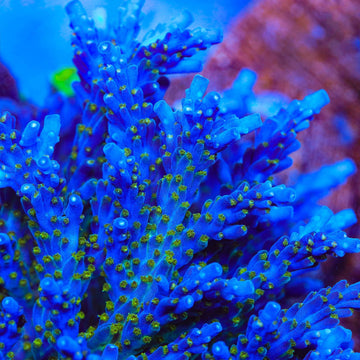
TSA Goliath Acropora Coral
Overview
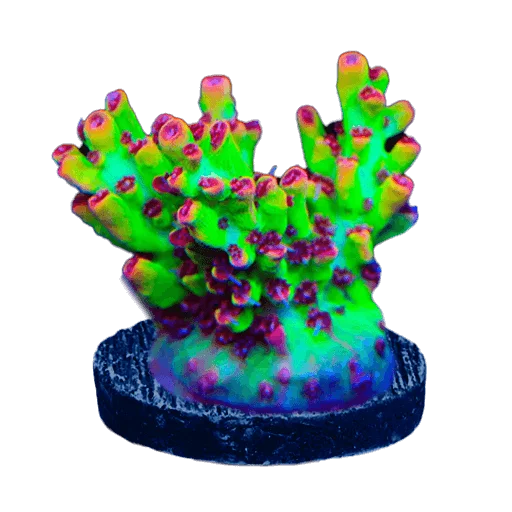
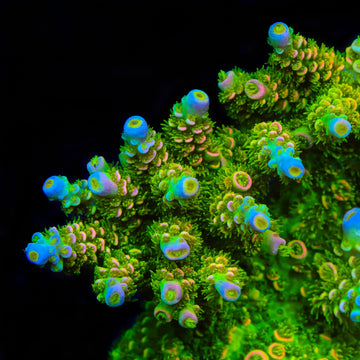
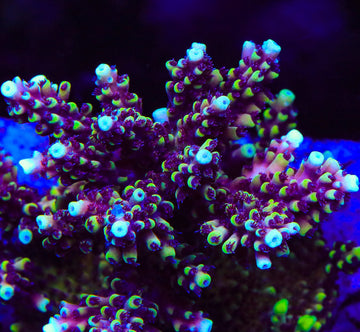
Goliath Acropora Coral shows thick, branching stalks with compact, pointed corallites. Classified as Acropora sp., it is a small polyp stony branching coral that prefers strong lighting and high, stable water flow. Primarily photosynthetic via symbiotic algae, it can take occasional fine particulate foods, which may support growth and coloration. Place high on rockwork with ample space from aggressive neighbors, and maintain stable alkalinity and calcium to avoid stress.
Quick Facts
Care
Difficult
Lighting
High–Very-High
Flow
High, turbulent
Placement
High
Temperament
Peaceful (3–4 inches spacing)
Recommended Parameters
Temp
76–80°F
pH
8.1–8.4
Salinity
1.025–1.026
Calcium
400–450 ppm
AlkAlkalinity
7–9 dKH
Magnesium
1280–1350 ppm
Feeding
photosynthetic (primary), microplankton, rotifers, copepod nauplii, powdered coral foods (e.g., Reef-Roids), oyster eggs/oyster feast, amino acid supplements
Care & Placement
FAQ
Frequently Asked Questions
About the TSA Goliath Acropora Coral
-
Why do the tips of my Goliath Acropora Coral bleach while the base stays colored?
Tip burn often points to a mismatch of high light with rising alkalinity or ultra-low nutrients. Keep alk steady (7.5–8.5 dKH), maintain a phosphate “floor” (0.03–0.08 ppm) and nitrate 5–15 ppm, and provide strong, turbulent flow. Ramp PAR changes slowly (target 300–450 at tips). Verify potassium (~390–420 ppm) and iodine are in range; deficits can blunt pigments and stress new growth. -
Can this coral shift between tabling and branching forms in a tank?
Yes. Acropora sp. adjusts structure to flow and light. Broad, laminar flow with strong top-down light encourages plating/table-like growth; chaotic high flow from multiple directions with side lighting drives denser branching. Prevent self-shading by elevating the colony and allowing lateral clearance. Rotate or slightly adjust pumps monthly to avoid single-direction growth and dead zones inside the colony. -
How do I lock in deep blues or purples instead of defaulting to green/brown?
Color is a balance of light spectrum, nutrients, and trace support. Use strong blue/royal-blue heavy spectra, but avoid blasting PAR without nutrients. Hold phosphate at 0.03–0.08 ppm and nitrate 5–15 ppm. Keep potassium 390–420 ppm and maintain minor iodine/iron levels via measured dosing or water changes. Stable temperature and alk matter more than chasing ultra-high PAR; sudden swings wash out chromoproteins. -
Are there pests uniquely troublesome for this species, and how do I detect them early?
Acropora-eating flatworms and “red bugs” target Acropora sp. Look for feeding bite marks, pale patches between polyps, or skittish polyp extension despite stable parameters. Inspect undersides with a flashlight after lights out; turkey-baste the colony to flush flatworms. Quarantine new pieces, perform repeated dips, and consider a pest-hunting wrasse. If infested, pair dips with manual siphoning and increase observation intervals for several weeks.