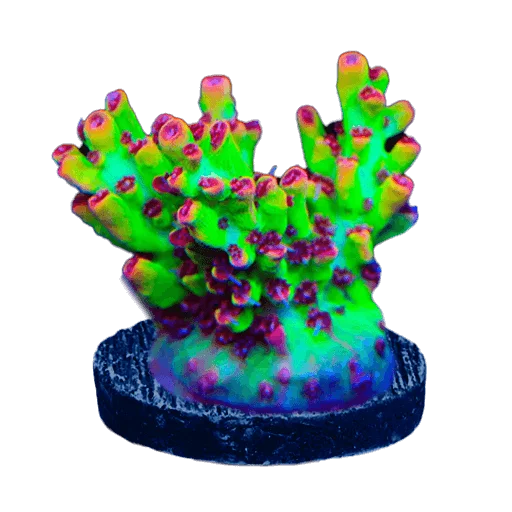
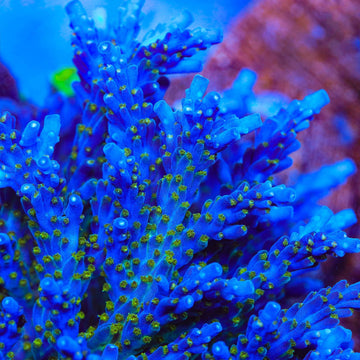
TSA Goldilocks Gumdrop Acropora Coral
Overview
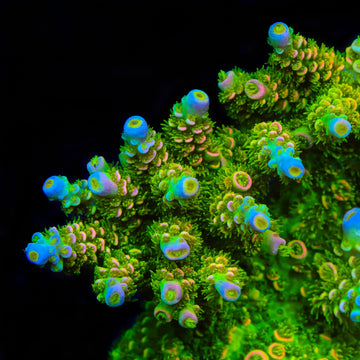
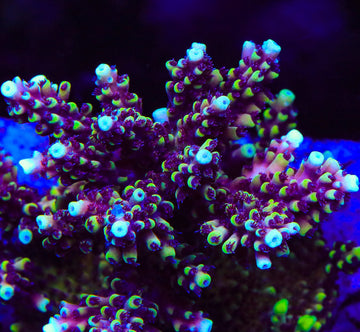
Goldilocks Gumdrop Acropora Coral shows bushy branching with rounded, bead-like corallites. Acropora tenuis is a small-polyp stony branching coral that prefers strong light and high, turbulent water flow. It is primarily photosynthetic with symbiotic algae but will accept very fine planktonic foods, which can support growth and color. Place high on stable rockwork with room for upward growth, away from aggressive stingers, and avoid rapid changes in alkalinity or temperature.
Quick Facts
Care
Difficult
Lighting
High
Flow
High
Placement
High
Temperament
Semi-aggressive (short sweepers; 2–3 inches spacing)
Recommended Parameters
Temp
77–80°F
pH
8.1–8.4
Salinity
1.025–1.026
Calcium
420–450 ppm
AlkAlkalinity
7–9 dKH
Magnesium
1280–1350 ppm
Feeding
photosynthetic (primary), microplankton, rotifers, copepod nauplii, reef roids, oyster eggs, amino acid supplements, coral-specific powdered foods
Care & Placement
FAQ
Frequently Asked Questions
About the TSA Goldilocks Gumdrop Acropora Coral
-
Why does my Goldilocks Gumdrop (Acropora tenuis) shift from multicolor to uniform brown or neon green?
This species is sensitive to light spectrum and nutrient balance. A richer blue/UV spectrum (400–470 nm) and moderate PAR (250–350) help maintain multitone tips and contrasting polyps. Too little light or excess nutrients push brown/green pigments; too much light with ultra-low nutrients can wash colors. Aim for NO3 5–15 ppm, PO4 0.03–0.1 mg/L, alk 8–9 dKH, and stable temp. -
What flow pattern promotes the best branch density without burning the tips?
Use strong, chaotic flow that alternates direction to flush the corallites, not a constant laminar blast. Position pumps for intersecting gyres and random pulses so polyps extend fully but tissue doesn’t recede at axial tips. If tips look glossy or receding, reduce direct velocity or adjust angle; if detritus settles between branches, increase turbulence. -
Are there species-specific pests or symbionts I should watch for?
Acropora-eating flatworms and “red bugs” target A. tenuis readily. Inspect for bite marks or pale patches between corallites. Dip new pieces and consider periodic low-stress dips if symptoms appear. Tiny guard crabs (Tetralia/Trapezia) often shelter in branches and can boost polyp health and polyp cleaning; avoid dipping them out unless necessary. -
How do I prevent shadowed bases and dead zones in a maturing colony?
Tenuis builds dense radial corallites that shade lower tissue. Use multi-angle lighting, rotate the colony monthly, and prune interior branches lightly to open channels. Mount higher with space around the base and keep nearby fleshy LPS at a distance to avoid stings. Occasional amino/particulate feeds at night can support shaded tissue under strong flow.