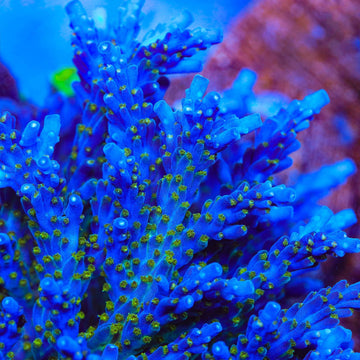
TSA Golden Honeycomb Acropora Coral
Overview
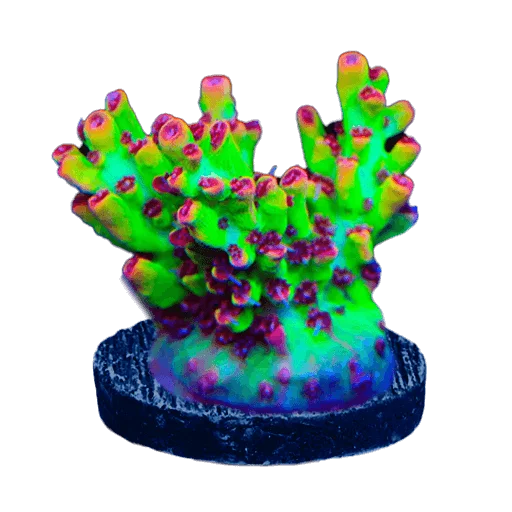
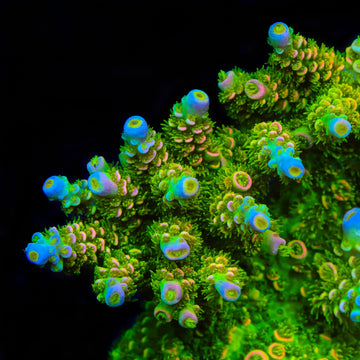
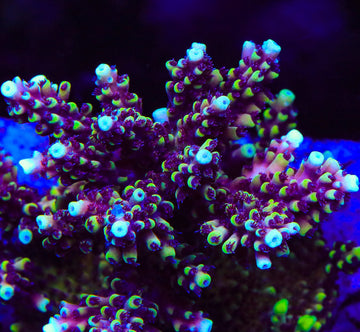
Golden Honeycomb Acropora Coral shows a tight, honeycomb-like polyp pattern on slender, branching stalks. Acropora sp. Coral is a small-polyp stony branching coral that thrives under strong light and high, turbulent water flow. Primarily photosynthetic via symbiotic algae, it can benefit from occasional small-particle foods, which may support growth and color. Place high on stable rockwork with ample space from aggressive neighbors, and maintain stable alkalinity and nutrients.
Quick Facts
Care
Difficult
Lighting
High
Flow
High, turbulent
Placement
High
Temperament
Peaceful (2–3 inches spacing)
Recommended Parameters
Temp
77–80°F
pH
8.1–8.4
Salinity
1.025–1.026
Calcium
420–450 ppm
AlkAlkalinity
8–9 dKH
Magnesium
1250–1350 ppm
Feeding
photosynthetic primary, microzooplankton, rotifers, copepod nauplii, baby brine shrimp, cyclops, powdered coral foods, oyster eggs, amino acid supplements
Care & Placement
FAQ
Frequently Asked Questions
About the TSA Golden Honeycomb Acropora Coral
-
Why is my Golden Honeycomb Acropora losing its gold tones and turning tan?
Color shifts often trace to spectrum and nutrient balance. Aim for 250–400 PAR with strong blue/UV; too much warm white can mute gold. Keep NO3 around 5–15 ppm and PO4 0.03–0.08 ppm; ultra-low nutrients wash out pigments, excess browns them. Ensure turbulent flow to prevent detritus shading the honeycomb corallites. Check potassium and iodine; low levels dull fluorescence. -
Why did my colony change from open “table” plates to tight, bushy branches?
Growth form responds to microhabitat. Higher, chaotic flow and higher PAR push flatter plates; lower light or more linear flow promotes vertical, compact branching. Mount frags horizontally on a pedestal rock to encourage plating and minimize self-shading. Let the base encrust before high-light moves; sudden relocations cause reconfiguration and energy loss. -
How do I prevent tip burn or sudden tissue loss on this Acropora?
Tip burn often follows alkalinity spikes in low-nutrient systems. Match alk to nutrient load (7.5–8.5 dKH is safer when nutrients are modest). Increase random flow across tips, not directly at them. Stabilize temperature (24–26°C) and avoid rapid PAR jumps; use light acclimation. For STN/RTN, frag ahead of the recession line, run carbon, and improve nighttime aeration to support pH. -
What pests target the honeycomb corallites, and how can I detect them early?
Acropora-eating flatworms leave crescent bite marks and egg clusters on undersides; red bugs cause poor polyp extension and faded color. Inspect nightly with a flashlight; turkey-baste the colony—AEFW dislodge as beige ovals. Quarantine all new frags, use targeted dips (multiple rounds for egg cycles), and consider a halichoeres wrasse as a helper. Avoid relying on dips alone; manual egg removal is key.