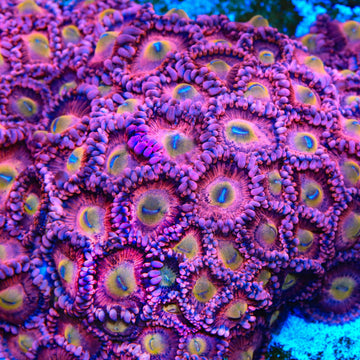
TSA Golden Girls Cyphastrea Coral
Overview
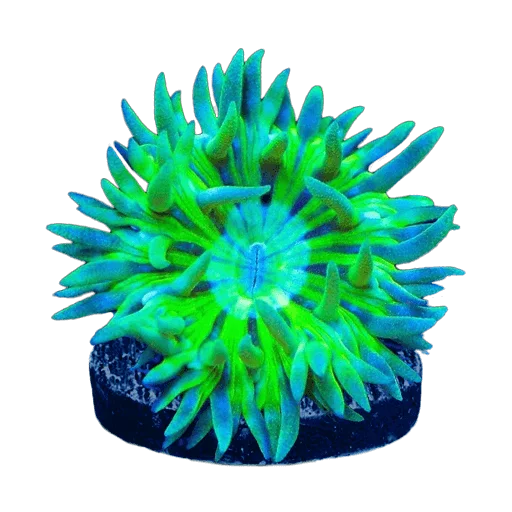
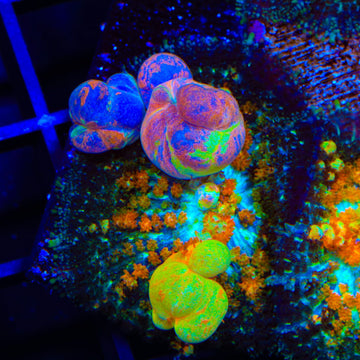
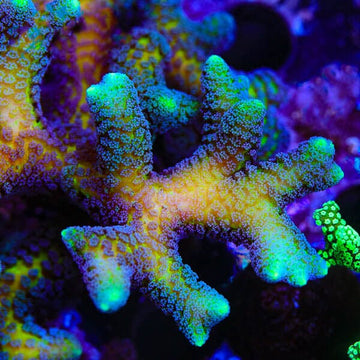
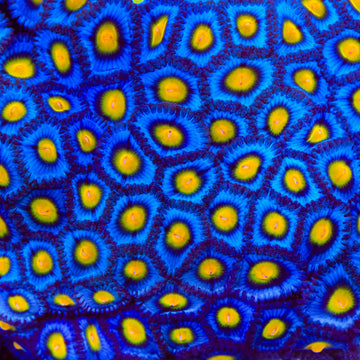
Golden Girls Cyphastrea Coral displays a golden base with small, raised polyps that give it a textured surface. Cyphastrea sp. Coral is an encrusting stony coral that forms low, spreading mats; it prefers low to moderate light and gentle to moderate water flow. It is photosynthetic with symbiotic algae and accepts fine particulate foods, which can support faster growth and deeper coloration. Place it on stable rock away from aggressive neighbors, and allow space for steady encrusting growth.
Quick Facts
Care
Easy
Lighting
Low–Moderate
Flow
Low–Moderate
Placement
Low–Mid
Temperament
Peaceful (1–2 inches spacing)
Recommended Parameters
Temp
76–80°F
pH
8.1–8.4
Salinity
1.025–1.026
Calcium
400–450 ppm
AlkAlkalinity
8–9 dKH
Magnesium
1250–1350 ppm
Feeding
photosynthetic, microplankton, rotifers, copepod nauplii, cyclops, powdered coral foods (e.g., Reef-Roids), oyster eggs, marine snow, phytoplankton
Care & Placement
FAQ
Frequently Asked Questions
About the TSA Golden Girls Cyphastrea Coral
-
Why did my Golden Girls Cyphastrea Coral fade from bright gold to dull brown or green?
This coral prefers moderate PAR (50–150) and a blue-heavy spectrum; too much white light often washes out gold and boosts zoox pigment, causing browning. Stabilize alkalinity (7.5–9 dKH), keep nutrients detectable (NO3 5–15 ppm, PO4 0.03–0.1), and increase blue/UV channels gradually. Trace balance matters—regular water changes usually restore color without risky dosing. -
My Cyphastrea’s polyps rarely extend—what’s the likely cause?
It often extends more after lights out. Daytime retraction can be due to overly strong, direct flow, nearby stingers, vermetid snail filaments, or film algae irritating the surface. Shift to indirect, moderate flow, inspect and remove vermetids, and gently baste the surface to keep it clean. Target-feed fine foods (rotifers, reef powders) at night to encourage routine extension. -
Will it overgrow neighbors or get burned by them?
It can slowly carpet nearby zoas, pavona, or other encrusters if given time, but loses to long-sweeper LPS (favia, galaxea, some euphyllia). Leave 2–3 inches from aggressive species and prune back mats before they meet. If contact occurs, move the more mobile piece and place the Cyphastrea on isolated islands to manage its spread. -
What’s the fix for sudden tissue recession from the center outward?
Often a combo of light shock, detritus trapping, and parameter swings. Reduce PAR via shading and re-acclimate, increase crossflow to prevent film buildup, and stabilize alk/calcium. Siphon any cyanobacteria or diatoms from the surface. An iodine dip can help curb bacterial stress. Maintain steady nutrients; ultra-low PO4/NO3 frequently accelerates recession in this genus.