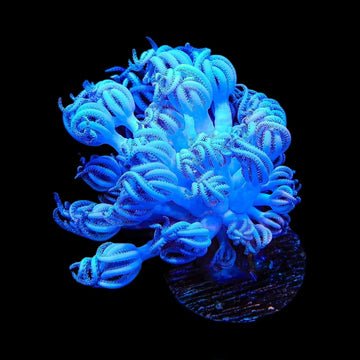
TSA Glow Pop Zoanthids Coral
Overview
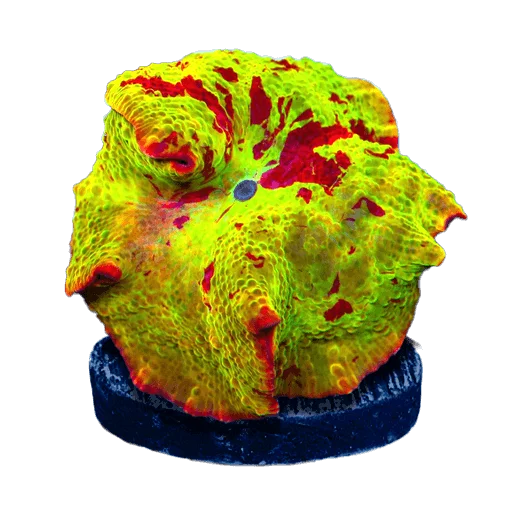
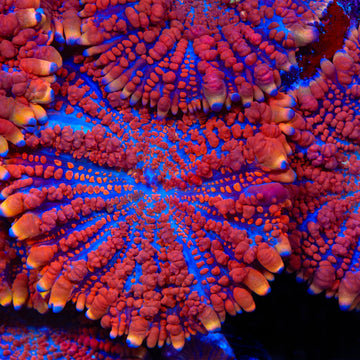
Glow Pop Zoanthids Coral shows small button-like polyps with bright contrasting centers and skirts. Zoanthus sp. is a soft, mat-forming colonial polyp that prefers moderate light and moderate, indirect flow. It is primarily photosynthetic via symbiotic algae, but occasional small particulate foods can support growth and color. Place on isolated rock to manage spreading, and keep distance from aggressive neighbors to avoid stings.
Quick Facts
Care
Easy
Lighting
Low–Moderate
Flow
Moderate, indirect
Placement
Mid–Low
Temperament
Peaceful to semi-aggressive (2–3 inches spacing)
Recommended Parameters
Temp
76–80°F
pH
8.1–8.4
Salinity
1.025–1.026
Calcium
400–450 ppm
AlkAlkalinity
8–10 dKH
Magnesium
1250–1350 ppm
Feeding
photosynthetic (primary), phytoplankton, microplankton, rotifers, copepod nauplii, cyclops, baby brine shrimp, powdered coral-specific foods, marine snow
Care & Placement
FAQ
Frequently Asked Questions
About the TSA Glow Pop Zoanthids Coral
-
Why do my Glow Pop Zoanthids look stretched or “long‑stemmed,” and how can I compact their growth?
Elongation typically points to low PAR or low flow. Aim for moderate light (roughly 80–150 PAR) and a gentle, swaying crossflow to encourage tighter polyps and fuller skirts. Excess blue can keep color but won’t fix stretching if intensity is too low. Raise PAR gradually over 2–3 weeks. Keep nutrients non-zero (e.g., NO3 5–15 ppm, PO4 0.03–0.1) to avoid pale, thin polyps. -
My Glow Pops lost fluorescence after a few weeks—how can I bring back the pop?
Fluorescence in Zoanthus sp. responds to stable nutrients, trace balance, and spectrum. If running ultra‑low nutrients, colors can mute; loosen nutrient export slightly. Use a blue‑heavy spectrum (peaks near 420–470 nm) with consistent photoperiod. Avoid rapid changes in white intensity. Check potassium and iodine within normal reef ranges; correct slowly. Improve flow to keep detritus off the mat and prevent dulling biofilm. -
What pests uniquely target these polyps, and how do I differentiate issues from simple irritation?
Look for zoa‑eating nudibranchs (often match polyp color), their egg spirals, sundial snails, and small spiders. Pests usually cause daytime closures and bite marks; irritation from high PAR or stings tends to cause uniform retraction without tissue loss. Use a focused dip (commercial coral dip, proper duration), manually remove eggs, and inspect nightly with a flashlight—nudibranchs are most active after lights out. -
They’re thriving but creeping toward slower corals—what’s the best containment strategy?
Place frags on isolated “islands” or on removable tiles bordered by small sand gaps the mat won’t readily cross. Trim the mat monthly with a razor before it reaches neighboring LPS or encrusters. Redirect flow so polyps don’t lean into competitors’ sweepers. If overrun occurs, shade the advancing edge temporarily to slow growth while you manually peel and rehome sections.