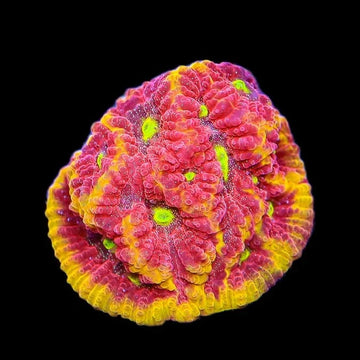
TSA Glitter Puddle Favia Coral
Overview
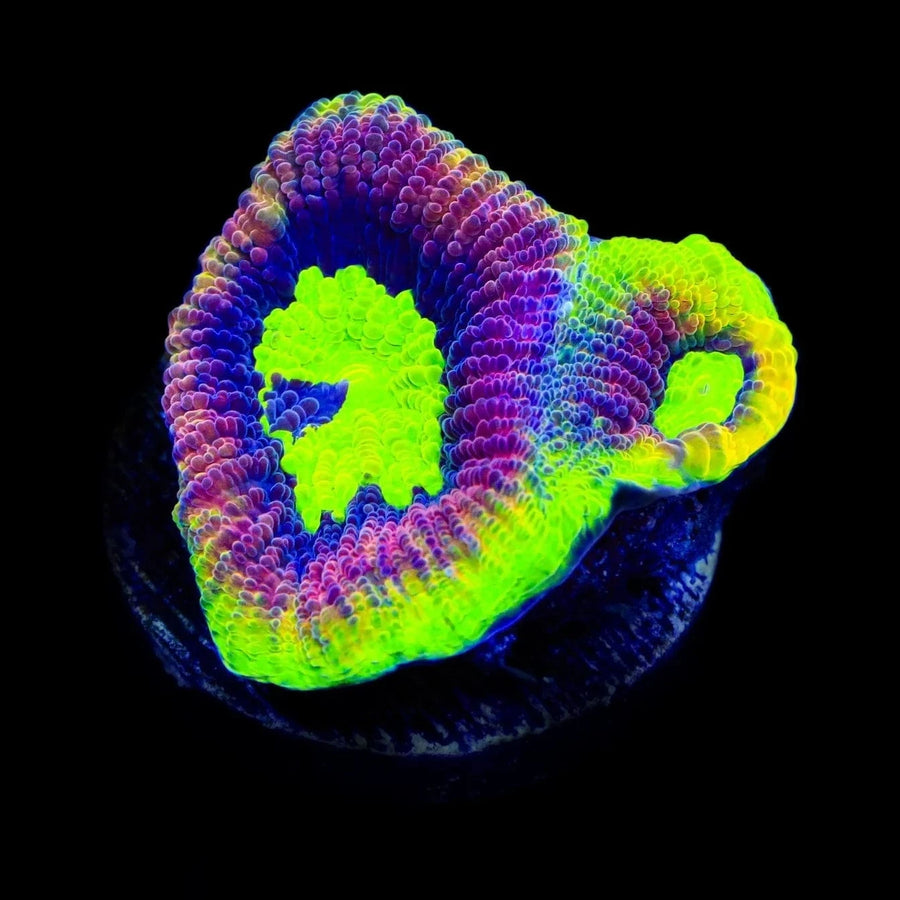
Glitter Puddle Favia Coral features distinct polygonal corallites with thick, raised walls and fleshy polyps. Favia favus is a stony brain coral that forms domes or encrusting heads, doing well under moderate light and gentle to moderate water flow. It hosts symbiotic algae and benefits from occasional small meaty feedings at night to support growth and color. Place it with space from other corals due to night sweeper tentacles, and start it in lower to mid levels to acclimate to light.
Quick Facts
Care
Easy
Lighting
Low–Moderate
Flow
Moderate, indirect
Placement
Low–Mid
Temperament
Aggressive (6–8 inches spacing)
Recommended Parameters
Temp
76–80°F
pH
8.1–8.4
Salinity
1.025–1.026
Calcium
420–450 ppm
AlkAlkalinity
8–10 dKH
Magnesium
1280–1350 ppm
Feeding
photosynthetic, mysis shrimp, enriched brine shrimp, finely chopped marine meaty foods (krill, clam), copepods, rotifers, zooplankton, microplankton, coral-specific powdered foods
Care & Placement
FAQ
Frequently Asked Questions
About the TSA Glitter Puddle Favia Coral
-
Why does my Glitter Puddle Favia send out long sweepers at night, and how do I manage aggression?
Favia favus extends 2–4 inch sweeper tentacles after lights out to capture food and defend space. Give 4–6 inches clearance from neighbors, especially softies and other LPS. A bit more random flow can shorten sweepers and carry mucus away, reducing sting risk. Feed at dusk to satisfy feeding drives. If contact is unavoidable, place sturdier neighbors up-current and fragile ones down-current. -
How do I keep the “glitter” speckling and rich colors from fading or browning?
This species colors best under moderate PAR with strong royal blue–violet spectrum. Avoid abrupt jumps in intensity; acclimate over 2–3 weeks. Maintain stable nutrients (nitrate 5–15 ppm, phosphate 0.03–0.1 ppm) rather than chasing ultra-low numbers. Consistent alkalinity (8–9 dKH) supports fluorescence. Trace balance from regular water changes is usually enough; avoid heavy dosing that can mute tones or trigger algae on exposed skeleton. -
Mine grows as low bumps, not a big dome—normal? Can I encourage a certain shape?
Favia favus starts encrusting, then thickens into mounds as it gains mass. Lower PAR and slightly higher flow favor a flatter, spreading mat; moderate PAR with steady nutrients promotes vertical dome growth. Give it a stable, clean perimeter so new septa aren’t smothered by algae. Mount frags on flat rock rather than tall plugs if you want a plate-like colony for easier future pruning. -
I’m seeing tissue pull back around the rims while mouths still inflate—what’s the likely cause?
Rim recession often follows alkalinity swings, light shock, or chronic irritation from vermetid snails and nearby stingers. Stabilize alk and temperature, reduce PAR 20–30% temporarily, and clear vermetids. Keep the perimeter clean with a turkey baster; a thin ring of reef-safe epoxy can shield exposed skeleton from algae. Resume normal light gradually once tissue thickens, and avoid large meaty foods that can tear fragile edges.