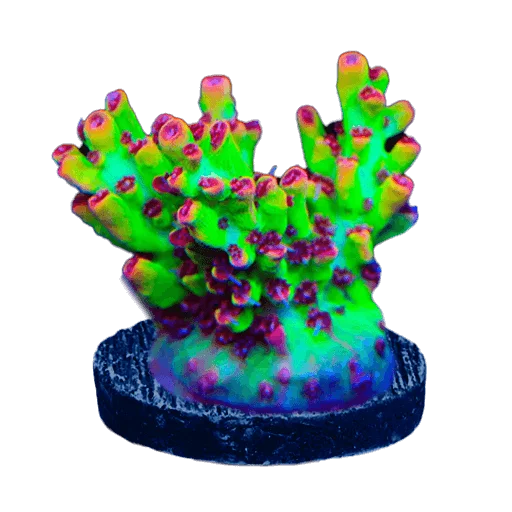
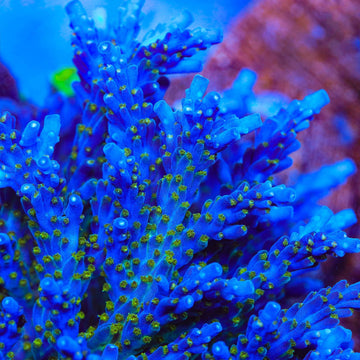
TSA GI Dragon Acropora Coral
Overview
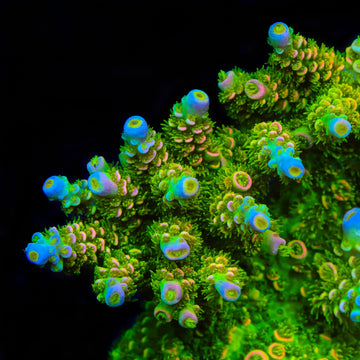
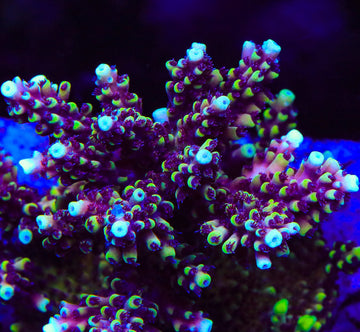
GI Dragon Acropora Coral shows tightly spaced, upward-branching sticks with small polyps and contrasting tip coloration. Acropora tenuis is a branching small-polyp stony coral that prefers strong light and high, turbulent water flow. It is photosynthetic via symbiotic algae but can take occasional fine plankton or coral foods, which can support faster growth and deeper color. Place high on stable rock with room for upward and outward growth, and keep away from aggressive corals to avoid tissue damage.
Quick Facts
Care
Difficult
Lighting
High
Flow
High, turbulent
Placement
High
Temperament
Peaceful (2–3 inches spacing)
Recommended Parameters
Temp
77–80°F
pH
8.1–8.4
Salinity
1.025–1.026
Calcium
400–450 ppm
AlkAlkalinity
7.5–9 dKH
Magnesium
1280–1350 ppm
Feeding
photosynthetic (primary), microzooplankton, rotifers, copepod nauplii, oyster eggs, reef powdered coral foods (e.g., Reef Roids, Reef Chili), amino acid supplements
Care & Placement
FAQ
Frequently Asked Questions
About the TSA GI Dragon Acropora Coral
-
How do I keep the GI Dragon Acropora’s vivid reds/greens from washing out?
Aim for 250–350 PAR with strong blue (420–460 nm) and stable nutrients (NO3 2–10 ppm, PO4 0.03–0.08 ppm). Keep alkalinity 7.5–8.5 dKH with minimal daily swing. Too-clean water or sudden light increases fade pigments; ramp LEDs slowly. Provide high, chaotic flow and consistent trace elements (iodine/iron via ICP-guided dosing). Slightly elevated nutrients often restore depth without causing algae. -
My GI Dragon shades its base and starts to recede—how can I prevent basal STN?
Tenuis grows dense, upward branches that self-shade. Space frags 3–4 cm apart and trim axial tips to open the colony. Angle the piece so light grazes the base, and increase crossflow to prevent detritus buildup. Keep alk and temp stable; even minor alk dips can start recession at shaded tissue. Consider side-mounting to encourage lateral plating. -
Polyp extension is great at night but minimal by day—normal or a problem?
Many healthy tenuis retract polyps under strong light or high flow by day. If color and growth are good, it’s normal. If daytime PE declines suddenly, check for pests (look for AEFW bite marks or red bugs), stray metals (ICP test), and phosphate starvation. Slightly reduce peak PAR, adjust flow angle, and restore PO4 to 0.03–0.05 ppm to improve comfort. -
Are there pests or rare issues this morph is especially sensitive to?
GI Dragon shows early color dulling with AEFW or red bugs before tissue loss. Inspect with a flashlight after lights out; baste to reveal flatworms. Quarantine and dip new acros; for confirmed AEFW, use weekly dips for 4–6 weeks and add a wrasse (e.g., melanurus) as support. Also watch for zinc/copper spikes from rusting magnets—swap suspect hardware and run fresh carbon.