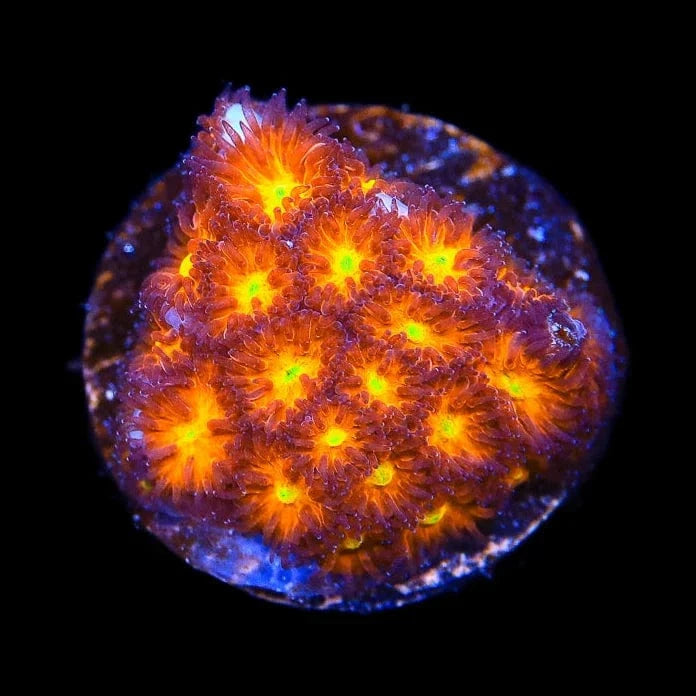
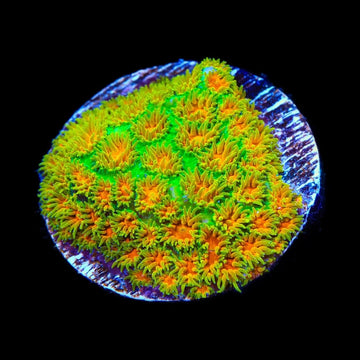
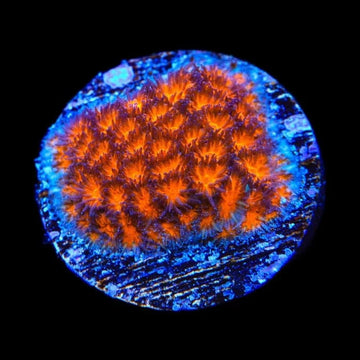
TSA Ghoul Wrangler Leptastrea Coral
Overview
Ghoul Wrangler Leptastrea Coral shows tight clusters of small round polyps that form encrusting mats with contrasting centers. Leptastrea sp. is a small-polyp stony coral that grows as a crust and does well under moderate light with moderate to strong, varied flow. It is photosynthetic with symbiotic algae but benefits from occasional small meaty foods, which can support growth and color. Place on stable rock with some space from aggressive corals and avoid shading from larger colonies.
Quick Facts
Care
Easy
Lighting
Low–Moderate
Flow
Moderate indirect
Placement
Low–Mid
Temperament
Semi-aggressive (short sweepers; 2–3 inches spacing)
Recommended Parameters
Temp
76–80°F
pH
8.1–8.4
Salinity
1.025–1.026
Calcium
400–450 ppm
AlkAlkalinity
8–10 dKH
Magnesium
1250–1350 ppm
Feeding
photosynthetic, microplankton, rotifers, copepods, cyclops, baby brine shrimp, finely chopped mysis, coral-specific powdered foods
Care & Placement
FAQ
Frequently Asked Questions
About the TSA Ghoul Wrangler Leptastrea Coral
-
What light and flow keep Ghoul Wrangler Leptastrea Coral at peak color without paling?
Aim for low–moderate PAR (60–120) with strong blue spectrum and moderate, cross-cutting flow. Too much white light or PAR >150 often washes orange/green hues. Slightly nutrient-rich water (nitrate 5–15 ppm, phosphate 0.03–0.08 ppm) helps saturation. If tissue edges thin or polyps stay tight, reduce light 20–30% and increase turbulent flow to keep the surface free of film and detritus. -
How aggressive is Leptastrea sp., and how should I place it near other corals?
It’s an encruster with short but potent nighttime feeders that can irritate neighbors within 1–2 inches. Give a buffer, especially near softies that shed chemicals and zoas that can smother edges. It can overgrow small frags and plugs; use isolated rubble islands or cut “moats” in the rock to contain spread and limit contact wars. -
Can I steer Ghoul Wrangler Leptastrea to mound up instead of just encrusting flat?
Yes. Mount on a vertical or angled face with moderate, laminar-leaning flow. Provide small ledges or rubble stacks so new growth climbs rather than spreads. Stable alkalinity (8–9 dKH) and calcium (420–460 ppm) support skeletal build-up. If it stalls, lightly shade the base to push growth toward unlit edges where it seeks new real estate. -
Why are polyps withdrawn despite stable parameters, and how do I fix it?
Common culprits are vermetid snail webs, film algae on the rim, and nearby chemical stress from soft corals. Inspect for webbing and nip vermetids, brush the margin with a soft toothbrush, and run fresh carbon. Increase intermittent flow to clear mucus. If edges recede, lower PAR slightly and feed fine meaty foods at dusk to jump-start recovery.