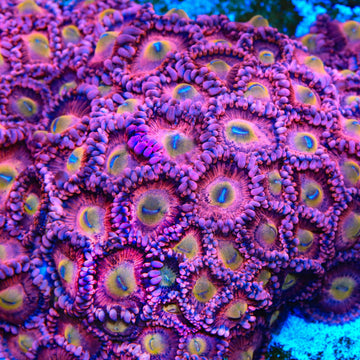
TSA Gamma Knife Hydnophora Coral
Overview
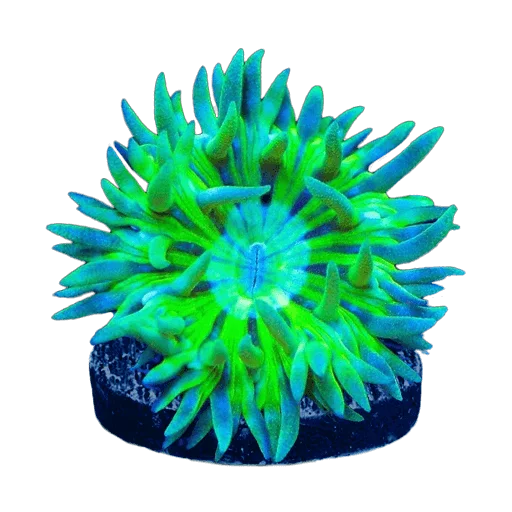
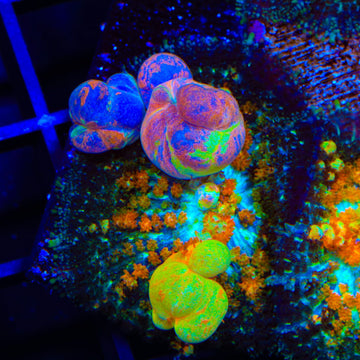
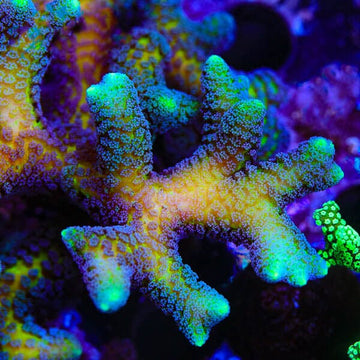
Gamma Knife Hydnophora Coral forms thick, ridged branches with sharp, tooth-like protrusions. Hydnophora rigida is a stony branching coral that prefers moderate to high light and strong, turbulent water flow. It is photosynthetic through symbiotic algae but also accepts small meaty foods, which can support growth and maintain color. Place with ample space and avoid contact with neighbors, as its sweeper tentacles and tissue can damage nearby corals.
Quick Facts
Care
Moderate
Lighting
Moderate–High
Flow
Moderate–High
Placement
Mid–High
Temperament
Aggressive (6–8 inches spacing)
Recommended Parameters
Temp
75–80°F
pH
8.1–8.4
Salinity
1.025–1.026
Calcium
420–450 ppm
AlkAlkalinity
8–9 dKH
Magnesium
1250–1350 ppm
Feeding
photosynthetic (primary), microplankton, zooplankton, rotifers, cyclops, finely minced mysis shrimp, brine shrimp nauplii, coral-specific powdered foods
Care & Placement
FAQ
Frequently Asked Questions
About the TSA Gamma Knife Hydnophora Coral
-
Why does my Gamma Knife Hydnophora Coral develop dead patches on shaded undersides?
Hydnophora rigida self-shades as it builds steep ridges. In lower flow and light, the shaded base can starve, leading to STN from the underside. Mount it high with open space around the colony and provide strong, turbulent flow. Rotate or reposition frags early to expose new faces; once thick, trimming overhangs may be needed. -
How aggressive is it, and what spacing prevents stings?
Hydnophora has very potent nematocysts and will send short sweepers and mesenterial filaments that can burn neighbors within 2–4 inches, sometimes more in high flow. Give 4–6 inches of clearance from Montipora, Pocillopora, and fleshy LPS. Avoid downcurrent placement toward sensitive corals, and use rock “moats” to block contact. -
My neon green turned dull or brown. Is this nutrient or light related?
Both can drive color shifts. Sudden high PAR can bleach tips; ultra-low nutrients can wash out fluorescence; excess nutrients deepen brown zoox. Target moderate–high PAR (200–300) with acclimation, random high flow, and stable alkalinity. Aim for low but present nutrients (nitrate ~2–10 ppm, phosphate ~0.02–0.08) to keep vivid greens without browning. -
What’s the safest way to frag Hydnophora rigida without causing rapid tissue loss?
Use a diamond saw or sharp bone cutters to make clean cuts between ridge valleys; avoid crushing the skeletal ridges. Dip in an iodine-based solution, then place frags in high, turbulent flow to keep cuts clean. Maintain very stable alkalinity and temperature for a week; epoxy only the base to prevent smothering living tissue.