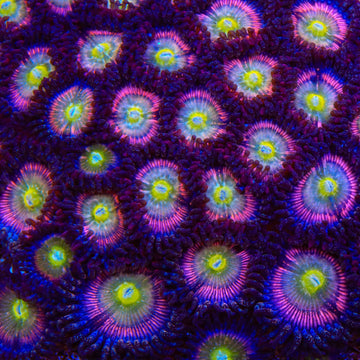
TSA Galaxy Glitter Zoanthids Coral
Overview
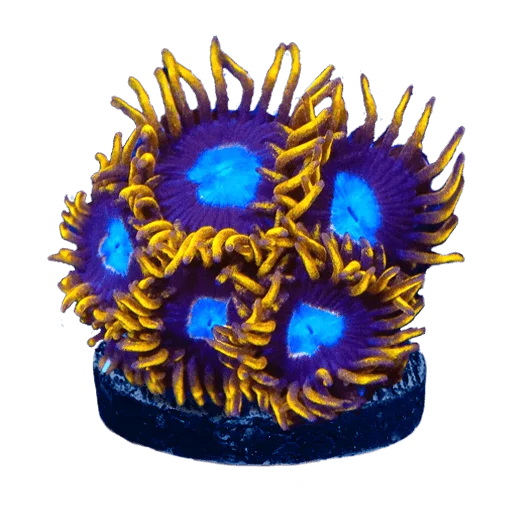
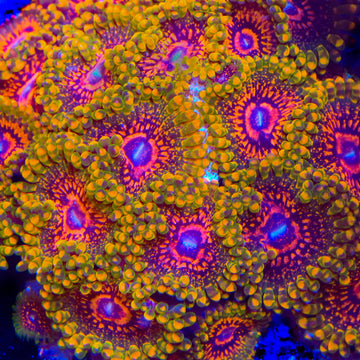
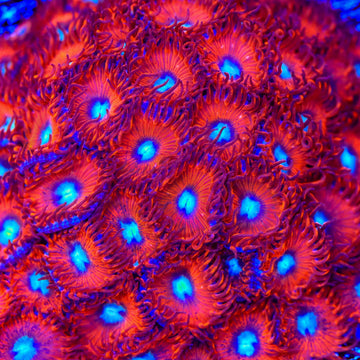
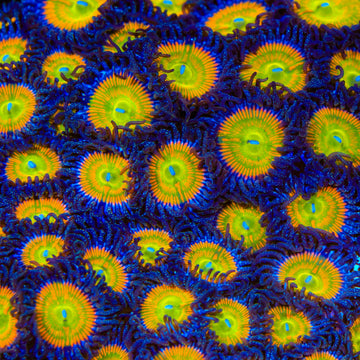
Galaxy Glitter Zoanthids Coral displays compact polyps with speckled, star-like centers and contrasting skirts. Classified as Zoanthus sp., it is a soft, colonial mat-forming polyp that does well under moderate light and low to moderate, steady flow. Primarily photosynthetic with symbiotic algae, it benefits from occasional small particle foods, which can boost growth and maintain color. Place on isolated rock to manage spread, and keep space from aggressive neighbors to avoid stings.
Quick Facts
Care
Easy
Lighting
Low–Moderate
Flow
Moderate, indirect
Placement
Low–Mid
Temperament
Semi-aggressive (2–3 inches spacing)
Recommended Parameters
Temp
76–82°F
pH
8.1–8.4
Salinity
1.025–1.026
Calcium
400–440 ppm
AlkAlkalinity
8–10 dKH
Magnesium
1250–1350 ppm
Feeding
photosynthetic (primary), phytoplankton, zooplankton, microplankton, rotifers, baby brine shrimp (nauplii), cyclops, oyster eggs, fine powdered coral foods
Care & Placement
FAQ
Frequently Asked Questions
About the TSA Galaxy Glitter Zoanthids Coral
-
Why do my Galaxy Glitter Zoanthids (Zoanthus sp.) look dull under white light but sparkle under blues?
The “glitter” comes from fluorescent proteins that respond most strongly to blue/UV spectra. As white intensity rises, reflected light can wash out fluorescence. Try a higher blue-to-white ratio during viewing hours, clean salt film from lenses, and keep nutrients moderate; excess nitrate/phosphate can mute fluorescence. Old bulbs/LEDs with shifted spectrum also reduce pop—replace or adjust channels. -
My colony is growing fast but individual polyps look stretched and thin—what does that indicate?
Stretching usually signals insufficient PAR or overly low flow. Galaxy Glitter prefers moderate light with gentle, varied flow. Increase PAR gradually (10–15% weekly), aim cross-flow to keep detritus off the mat, and avoid blasting the skirts. If only lower rows elongate, shading from upper tiers is the culprit—trim or reposition to improve exposure. -
How can I maintain the speckled “galaxy” pattern during long-term growth and fragging?
Color stability depends on consistent spectrum, trace balance, and gentle handling. Keep blues stable, avoid big swings in N:P ratio, and maintain iodine/iron within natural ranges via regular water changes. When fragging, cut through the mat between polyps with a fresh blade, dip in iodine, and secure on clean rubble. Rapid healing under stable light helps retain the flecked pattern. -
What pests uniquely target Zoanthus sp., and how do I catch them before damage spreads?
Zoa-eating nudibranchs, sundial snails, and zoa spiders blend into the mat. Look for missing skirts, bite marks, and egg spirals on the underside. Night inspections with a blue flashlight work well. Use sequential dips (iodine or peroxide at safe ratios) every 3–4 days for two weeks to break egg cycles, and manually remove adults. Quarantine any new morphs.