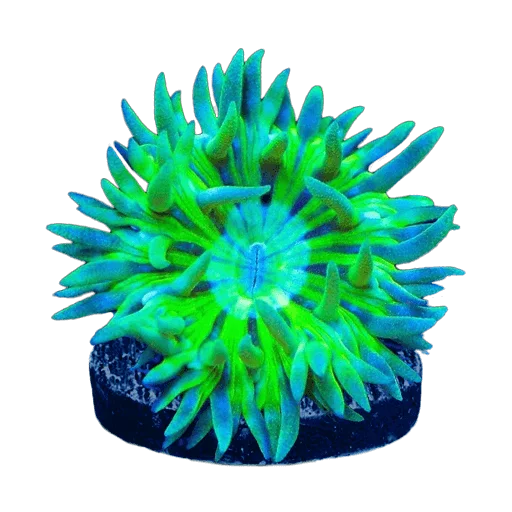
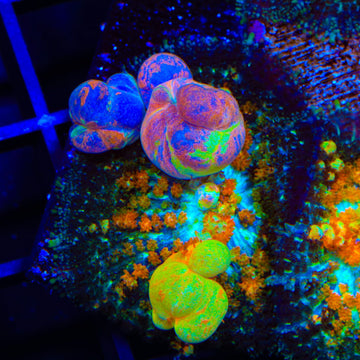
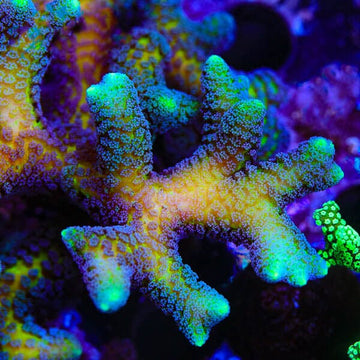
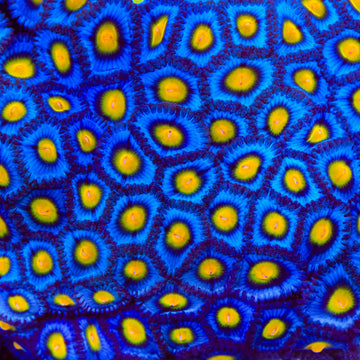
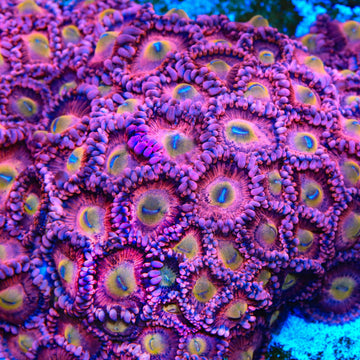
TSA Galactic Burst Zoanthids Coral
Overview
Galactic Burst Zoanthids Coral displays tight mats of small polyps with bright contrasting centers and skirts. Zoanthus sp. is a soft, colonial button polyp that does well in moderate light and low to moderate, stable water flow. Primarily photosynthetic via symbiotic algae, it benefits from occasional small particulate foods, which can speed growth and maintain color. Place on isolated rock to manage spreading, and keep distance from aggressive stinging corals.
Quick Facts
Care
Easy
Lighting
Moderate
Flow
Moderate
Placement
Mid–Low
Temperament
Peaceful (1–2 inches spacing)
Recommended Parameters
Temp
76–82°F
pH
8.1–8.4
Salinity
1.025–1.026
Calcium
380–450 ppm
AlkAlkalinity
8–10 dKH
Magnesium
1250–1350 ppm
Feeding
photosynthetic (primary), microplankton, zooplankton, rotifers, cyclops, baby brine shrimp, finely chopped mysis, powdered coral foods, amino acid supplements
Care & Placement
FAQ
Frequently Asked Questions
About the TSA Galactic Burst Zoanthids Coral
-
Why do my Galactic Burst Zoanthids shrink or “melt” after looking great for weeks?
This pattern often follows a rapid parameter shift or bacterial stress. Check salinity drift, alkalinity swings, and organics. Increase random flow to keep films off skirts, and consider a broad-spectrum coral dip. For true “zoa pox,” a Furan‑2 bath can help. Reduce white channels, maintain stable 7.8–8.3 pH, and avoid overhandling. Recovery can take several weeks. -
How can I keep the Galactic Burst coloration from washing out under strong lighting?
They color best under blue‑heavy spectrum with moderate PAR (80–150 at the mat). Too much white light can mute pigments. Start low and ramp up 10–15% weekly. Slightly higher nutrients (nitrate 5–15 ppm, phosphate 0.03–0.1 ppm) often deepen tones. Shade edges with rock contours to create gentle gradients; this lets colonies self‑select their preferred intensity. -
What pests target Zoanthus sp., and how do I confirm the culprit?
Look for bite marks and missing skirts at lights‑on: that suggests zoa‑eating nudibranchs; check undersides for matching egg spirals. Sundial snails have black‑and‑white banded shells and hide at the mat base. Spiders are tiny, crab‑like and cling between polyps. Night inspections with a blue flashlight help. Remove manually, then follow with targeted dips over multiple nights to catch hatch cycles. -
My colony stays closed near leathers and euphyllia—what’s happening?
Chemical cues and sweeper stings can suppress polyp extension. Run fresh carbon, increase skimming, and add distance: 6–8 inches from euphyllia sweepers, more if flow is high. For soft corals, carbon and weekly water changes mitigate allelopathy. Reorient flow so it doesn’t carry mucus directly onto the zoas. Colonies typically reopen within days once stressors are removed.