TSA Fun Dip Goniopora Coral
Overview
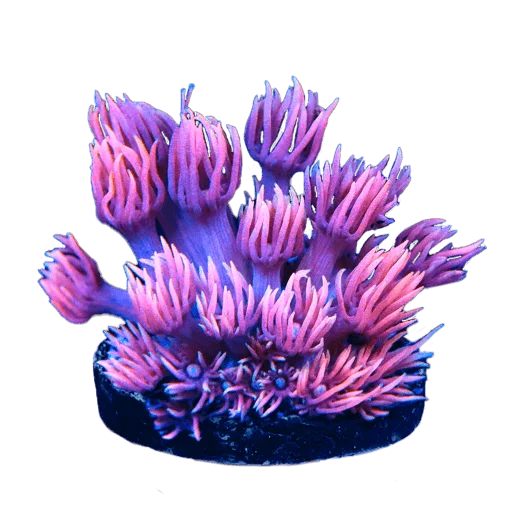
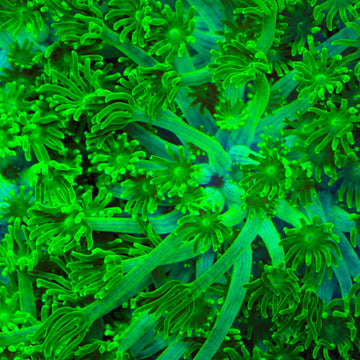
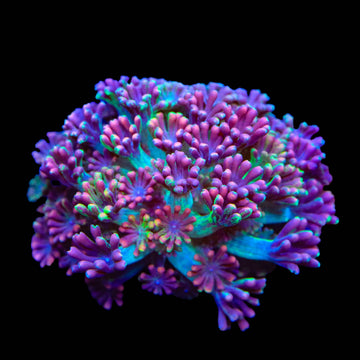
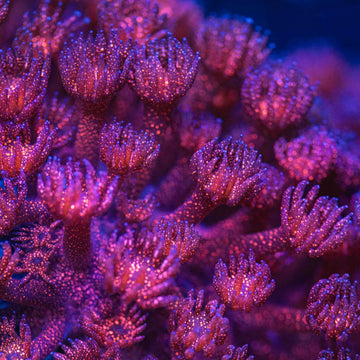
Flowerpot Coral displays long, flower-like polyps that extend on thin stalks, forming a rounded bouquet. Goniopora stokesi is a large‑polyp stony coral; it prefers moderate light and gentle to moderate, indirect water flow. It is photosynthetic with symbiotic algae but benefits from small particulate feeding, which can improve growth and polyp extension. Place it on the sandbed with space around the colony, avoid strong direct flow, and keep distance from other corals to prevent stings.
Quick Facts
Care
Difficult
Lighting
Low–Moderate
Flow
Moderate, indirect
Placement
Low–Mid
Temperament
Semi-aggressive (3–6 inches spacing)
Recommended Parameters
Temp
76–80°F
pH
8.1–8.4
Salinity
1.025–1.026
Calcium
420–450 ppm
AlkAlkalinity
8–9.5 dKH
Magnesium
1280–1350 ppm
Feeding
photosynthetic, phytoplankton, microplankton, zooplankton, rotifers, baby brine shrimp, copepods (Cyclops/Calanus), reef-specific powdered coral foods, marine snow, finely minced meaty microfoods
Care & Placement
FAQ
Frequently Asked Questions
About the TSA Fun Dip Goniopora Coral
-
How can I tell Flowerpot Coral from Alveopora when polyps are extended?
Count the tips on a single tentacle. Goniopora stokesi usually shows 24 tentacle tips per polyp, while Alveopora has 12. G. stokesi polyps are longer and more “flowy,” with thicker stalks and a more spherical, free-living skeleton. If retraction is partial, look for dense, closely packed calices and a heavier, ball-like base typical of G. stokesi rather than the lighter, branching structure of Alveopora. -
Mine retracts for days despite stable parameters—what hidden issues affect this species?
Check for micro-irritation: vermetid snail webs, bristleworm stings at the base, and fine sand blasting from nearby pumps. G. stokesi dislikes surging jets; use broad, gentle flow with a slow sway. Avoid ultra-low nutrients; target a bit of nitrate and phosphate. Nighttime pH dips, sudden trace swings, and nearby leather coral allelopathy also trigger prolonged retraction. -
Why is tissue recession starting at the base even though polyp tips look fine?
Base-first recession often reflects instability at the sand–skeleton interface. Elevate slightly on a ring or low stand to reduce abrasion and detritus. Improve low, laminar flow around the base to prevent bacterial buildup. Maintain moderate nutrients, stable alkalinity, and consider iodine dips for early lesions. Address vermetids or filamentous algae encroaching into calices before they trap waste. -
Do trace metals matter for polyp extension and color in G. stokesi?
This coral often responds to balanced trace availability, notably iron and manganese, supporting zooxanthellae and ciliary function. Use conservative, test-guided dosing or regular water changes; overdosing causes algae and stress. Pair with fine-particle feeding and steady nutrients to maintain color (greens, pinks, reds). Spectrum with ample blue/violet tends to preserve fluorescence without pushing excess light intensity.