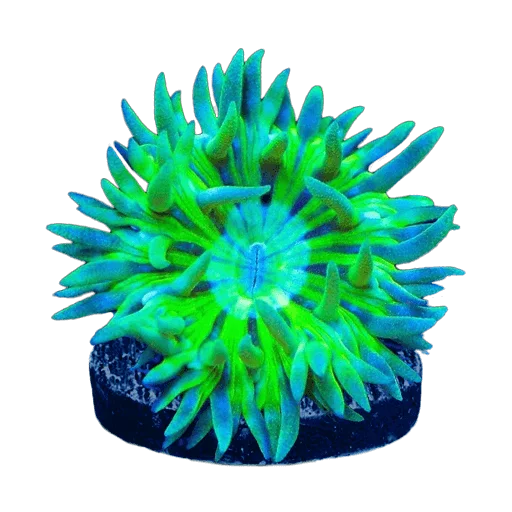
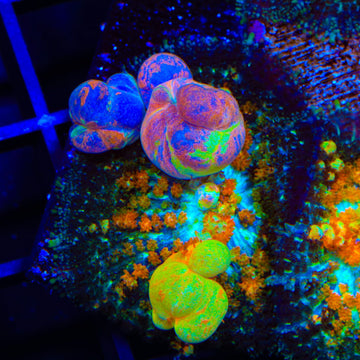
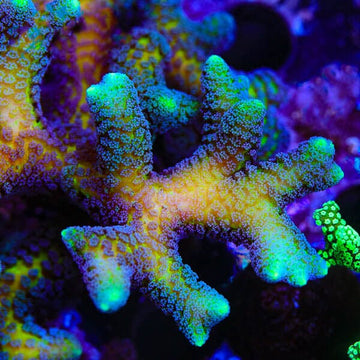
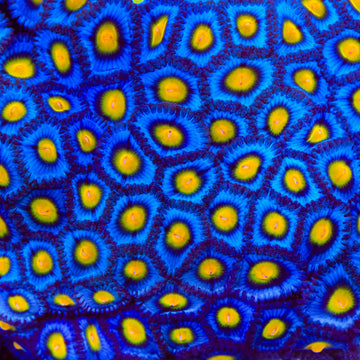
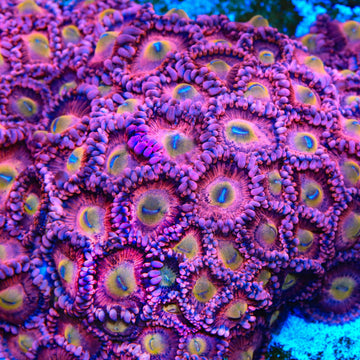
TSA Frozen Apple Zoanthids Coral
Overview
Frozen Apple Zoanthids Coral shows small button polyps with bright green centers and pale skirts. Zoanthus sp. is a soft, colonial polyp; keep under moderate light and moderate, indirect flow. It is photosynthetic via symbiotic algae but will take small meaty foods or coral foods, supporting faster growth and stable color. Place on a separate rock with space, as colonies can spread and crowd nearby corals.
Quick Facts
Care
Easy
Lighting
Low–Moderate
Flow
Moderate
Placement
Mid–Low
Temperament
Semi-aggressive (2–3 inches spacing; may overgrow neighbors)
Recommended Parameters
Temp
76–82°F
pH
8.1–8.4
Salinity
1.025–1.026
Calcium
400–450 ppm
AlkAlkalinity
8–10 dKH
Magnesium
1250–1350 ppm
Feeding
photosynthetic, microplankton, phytoplankton, fine zooplankton, rotifers, cyclops, coral-specific powdered foods, amino acid supplements
Care & Placement
FAQ
Frequently Asked Questions
About the TSA Frozen Apple Zoanthids Coral
-
How do I keep the “Frozen Apple” colors from washing out or browning in Zoanthus sp.?
Maintain moderate PAR (80–150) with strong blue spectrum (420–470 nm). Sudden high white light can mute greens and icy rings. Acclimate over 2–3 weeks using a screen or ramping intensity. Keep nutrients measurable but modest (NO3 ~5–15 ppm, PO4 ~0.03–0.1 ppm). Stable alkalinity and low film algae on the mat help polyp extension and color pop. -
Why do my Frozen Apple polyps stay small and “pinched” after a move?
This morph often sulks after light/flow changes. Provide brisk, indirect flow that ripples skirts without blasting the mat. Check for rapid swing in salinity or alkalinity; minor corrections over days are better than instant fixes. Shade slightly and increase light slowly. Polyps usually regain size within 1–2 weeks once stability returns. -
What pests target this morph, and how do I differentiate damage?
Nibbled skirts and bare centers suggest zoa-eating nudibranchs; look at night for camouflaged adults and egg spirals. Missing polyps with neat holes point to sundial snails; jagged mat damage hints at zoa spiders. Dip new frags (iodine or Furan-2 for pox), manually remove adults/eggs, and consider a pest-hunting wrasse. Repeat inspections for two weeks. -
Do Frozen Apple Zoanthids need target feeding, or will it hurt growth?
They’re largely photosynthetic and thrive without heavy feeding. Occasional fine-particulate foods (reef roids, oyster eggs) can boost growth, but overfeeding fuels film algae on the mat, causing retraction. Feed sparingly once weekly with solid export (skimming, floss). Keep flow up after feeding so particles don’t settle between polyps.