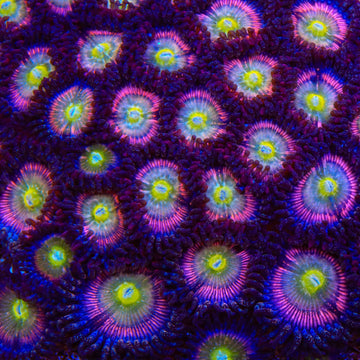
TSA Frosted Phoenix Zoanthids Coral
Overview
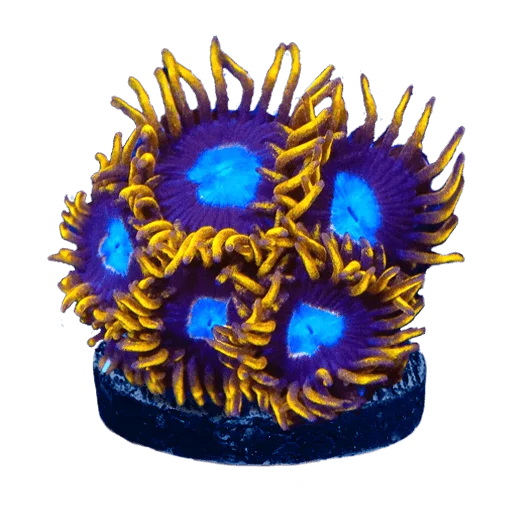
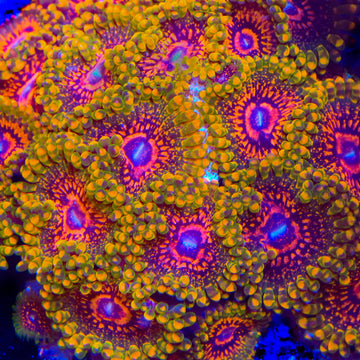
Frosted Phoenix Zoanthids Coral shows tight colonies of small polyps with bright centers and contrasting outer rings. Zoanthus sp. is a soft, colonial polyp coral that prefers moderate light and gentle to moderate water flow. It is mainly photosynthetic through symbiotic algae but benefits from occasional small particulate foods, which can support faster growth and maintain color. Place on an isolated rock to control spreading and leave space from stinging neighbors.
Quick Facts
Care
Easy
Lighting
Moderate
Flow
Moderate
Placement
Low–Mid
Temperament
Peaceful to semi-aggressive (2–3 inches spacing)
Recommended Parameters
Temp
76–80°F
pH
8.1–8.4
Salinity
1.025–1.026
Calcium
380–420 ppm
AlkAlkalinity
8–10 dKH
Magnesium
1250–1350 ppm
Feeding
photosynthetic (primary), phytoplankton, rotifers, cyclops, zooplankton, microplankton, powdered coral foods, marine snow
Care & Placement
FAQ
Frequently Asked Questions
About the TSA Frosted Phoenix Zoanthids Coral
-
Why do my Frosted Phoenix Zoanthids close up for days after looking fine under new lights?
They’re sensitive to spectrum and intensity shifts. This morph often contracts under abrupt increases in PAR or white-heavy lighting. Use a 2–3 week acclimation ramp, favor blue spectrum for color stability, and keep moderate, indirect flow. If closures persist, run fresh carbon to reduce chemical stress, check for nudibranchs or sundial snails at night, and correct alkalinity swings. -
How can I keep the “frosted” highlights from fading to dull green or brown?
Maintain stable nutrients with slight nitrate and phosphate (not zero), strong blue/violet spectrum, and moderate PAR (120–200). Overly white lighting or ultra-low nutrients mute pigments. Dose amino acids lightly 1–2x weekly and avoid heavy feeding that fuels film algae on the mat. Keep iodine within natural seawater levels; excessive iodine can also mute colors. -
What’s the safest way to propagate this Zoanthus morph without losing polyps to “melt”?
Cut between polyps on the mat with a new scalpel, minimizing tissue crush. Rinse fragments, then dip in iodine or povidone solution for 5–10 minutes. Mount to clean plugs with gel cyanoacrylate, dry the base briefly, and place in lower light and strong, indirect flow for a week. Wear eye/skin protection due to potential toxins in zoanthids. -
My colony stopped spreading on the rock but is growing on the plug rim—why?
They prefer clean, low-competition surfaces. Algal film or sponge on the target rock can halt encrustment. Gently brush the area, increase flow across the growth edge, and keep phosphate controlled but detectable. Rotate the plug to bring the leading edge near cleaner rock, or “bridge” with a small rubble piece to guide growth.