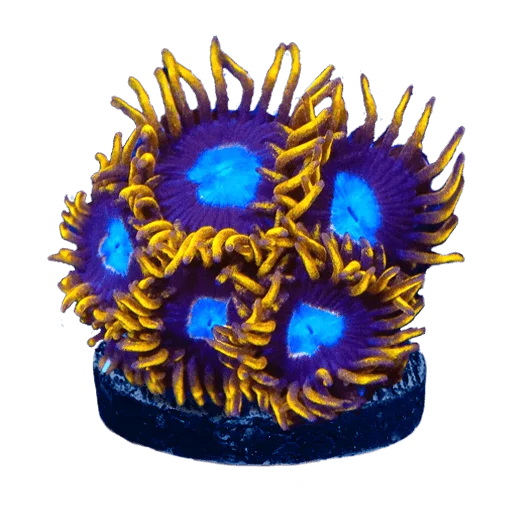
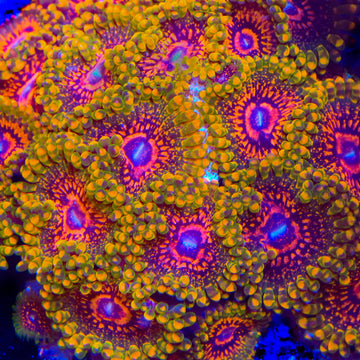
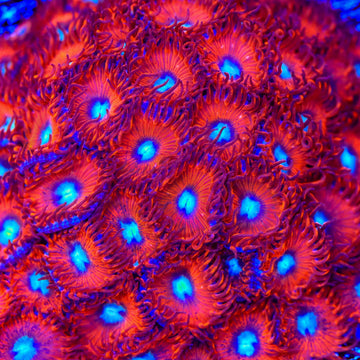
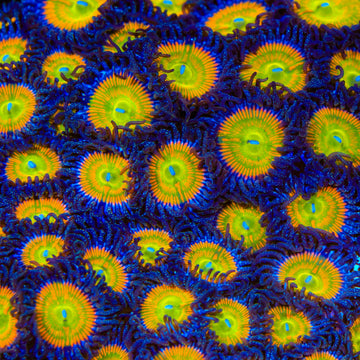
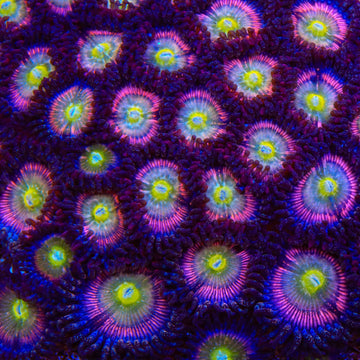
TSA Frosted Pheonix Zoanthids Coral
Overview
Frosted Phoenix Zoanthids Coral features small, button-like polyps with contrasting skirts and centers; Zoanthus sp. is a colonial soft polyp. It thrives under moderate light and moderate, variable water flow. Primarily photosynthetic with symbiotic algae, it also accepts small particulate foods that can improve growth and color. Place on an isolated rock to control spread and leave space from more aggressive neighbors.
Quick Facts
Care
Easy
Lighting
Low–Moderate
Flow
Moderate
Placement
Low–Mid
Temperament
Peaceful, fast-growing—allow 2–3 inches spacing to curb overgrowth
Recommended Parameters
Temp
76–80°F
pH
8.1–8.4
Salinity
1.025–1.026
Calcium
400–450 ppm
AlkAlkalinity
8–10 dKH
Magnesium
1250–1350 ppm
Feeding
photosynthetic (primary), microplankton, phytoplankton, rotifers, copepod nauplii, cyclops, finely minced brine shrimp, coral-specific powdered foods, marine snow
Care & Placement
FAQ
Frequently Asked Questions
About the TSA Frosted Pheonix Zoanthids Coral
-
Why do my Frosted Phoenix Zoanthids Coral (Zoanthus sp.) shrink or “pinch” after looking great for weeks?
This morph is sensitive to rapid alkalinity or nutrient swings. If NO3/PO4 drop near zero, polyps miniaturize. Increase stability first, then check for pests (zoa‑eating nudibranchs, sundial snails) at night. Improve flow to prevent film buildup, and try an iodine/Lugol’s dip for bacterial irritation. If true zoa pox appears (distinct beige dots), isolate and treat with Furan‑2 dips while restoring gentle, stable parameters. -
How can I keep the frosted rim and phoenix hues from browning out or shifting?
Color holds best under moderate PAR (100–200) with strong blue spectrum (420–470 nm). Ramp intensity slowly; blasting them with white-heavy light can wash the rim. Maintain balanced nutrients (NO3 5–15 ppm, PO4 0.03–0.1) to avoid pale tissue. Trace stability—especially iodine and potassium—supports fluorescence. Periodic amino acids or fine coral foods help, but avoid overfeeding that fuels films and dulls color. -
These zoas spread fast—how do I manage growth while keeping the colony full and tidy?
Use an “island” rock with a small gap from the main structure to contain creep. Trim runners monthly by lifting the mat edge and peeling back before it anchors deep. Redirect flow to discourage growth into shadowed detritus traps. Periodically thin interior polyps to maintain airflow and light between heads, which reduces nuisance algae and keeps skirts from deforming as the colony thickens. -
My colony closes randomly for a day, then bounces back—what’s causing it?
Zoanthus can close in response to chemical cues from neighbors, micro‑irritation from vermetid mucus, or sudden pH/temperature dips. Run fresh carbon, increase surface agitation, and clip vermetid tubes near the colony. Check for shadowing from new growth altering flow patterns. If closures persist, perform a clean dip sequence (pest dip, then iodine) and resume moderate, alternating flow to keep skirts clean and reduce irritants.