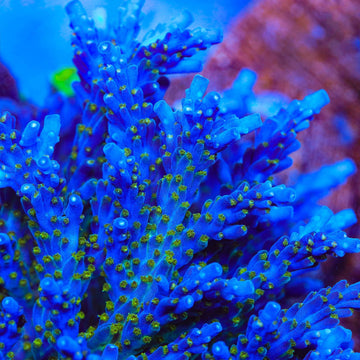
TSA Flower Bomb Acropora Coral
Overview
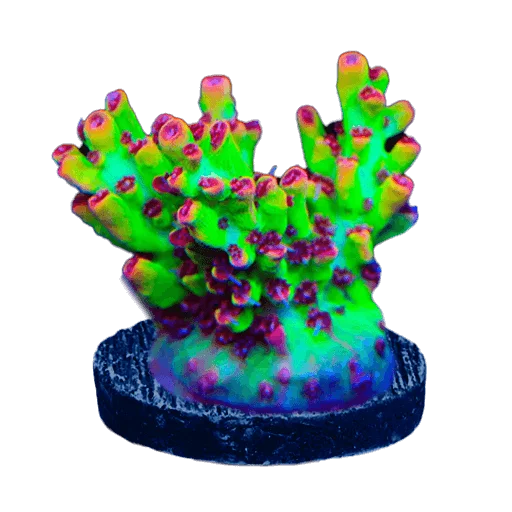
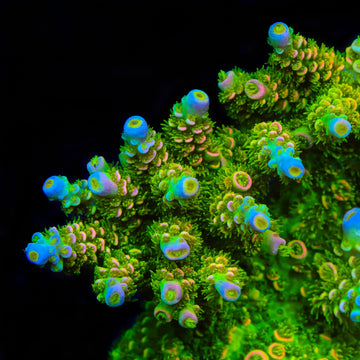
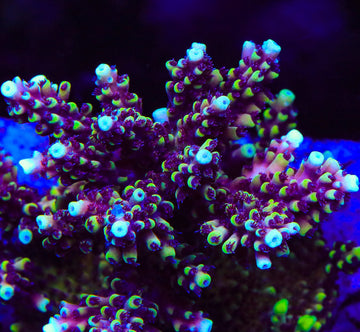
Flower Bomb Acropora Coral shows thick, branching tips with tightly spaced polyps and contrasting color at the growth edges. Acropora tenuis is a small-polyp stony branching coral that prefers strong lighting and moderate to high, turbulent water flow. It is mainly photosynthetic through symbiotic algae but can take fine planktonic foods; regular, light feeding can support growth and color. Place high on stable rockwork with space from aggressive neighbors, and keep parameters stable to prevent tissue loss.
Quick Facts
Care
Difficult
Lighting
High
Flow
High, turbulent
Placement
High
Temperament
Peaceful (2–3 inches spacing)
Recommended Parameters
Temp
77–80°F
pH
8.1–8.4
Salinity
1.025–1.026
Calcium
420–450 ppm
AlkAlkalinity
7.5–9 dKH
Magnesium
1300–1400 ppm
Feeding
photosynthetic (primary), microplankton, rotifers, copepod nauplii, oyster eggs, coral-specific powdered foods (e.g., Reef-Roids), amino acid supplements
Care & Placement
FAQ
Frequently Asked Questions
About the TSA Flower Bomb Acropora Coral
-
Why did my Flower Bomb Acropora lose its neon tip color after moving it higher?
Acropora tenuis can wash out under strong PAR if nutrients or alkalinity are low or unstable. Aim for PAR 250–350 with a blue-heavy spectrum, NO3 around 5–15 ppm, PO4 0.03–0.08, and stable alkalinity near 8–9 dKH. Sudden light jumps can “burn” tips; use screen acclimation over 2–3 weeks. Trace balance (potassium, iodine) also influences pinks and blues. -
How do I prevent base shadowing and slow tissue loss on this coral?
Provide vigorous, randomized flow that sweeps detritus from the base and inner branches; avoid strong laminar jets at a single side. Place the colony where light can reach the underside, or trim inward branches periodically. Mount the frag slightly off the rock to allow peripheral encrustment and airflow. Keep organics moderate; elevated DOC with low flow often precedes STN at the base. -
How can I spot and manage pests specific to Acropora tenuis?
Look for shallow, oval bite marks and pale patches (AEFW), and reduced polyp extension with tiny yellow/red dots (red bugs). Use a turkey baster blast; AEFW may dislodge as beige, flat ovals. Dips help adults but not eggs—quarantine, repeat dips every 6–7 days for several cycles, and inspect for egg spirals on undersides. Maintain strong flow and fish activity to discourage settlement. -
Which trace elements most affect the Flower Bomb color palette?
Potassium supports pinks/magentas; iodine and bromine improve blue/violet saturation; iron and manganese influence greens and overall fluorescence. Verify with periodic ICP tests before dosing, then adjust lightly and consistently rather than chasing colors. Overdosing can cause algae or tissue stress. Stable alkalinity and moderate nutrients are the foundation—trace tweaks refine, not replace, core husbandry.