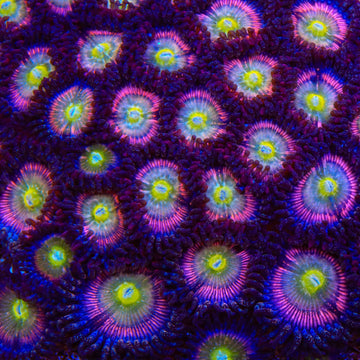
TSA Florida Orange Zoanthids Coral
Overview
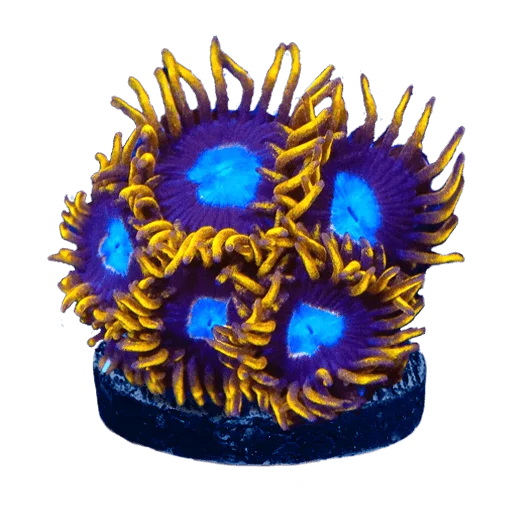
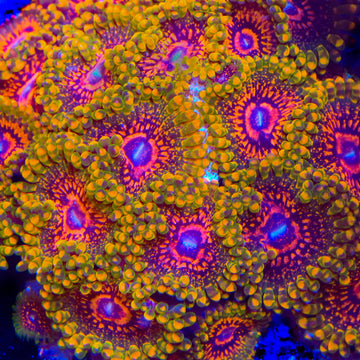
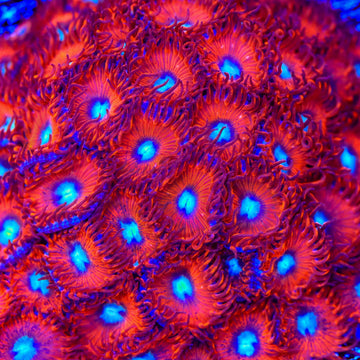
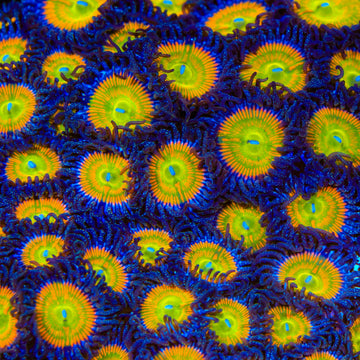
Florida Orange Zoanthids Coral features bright orange polyps with contrasting mouths on mat-forming colonies. Classified as Zoanthus sp., it is a soft, encrusting polyp coral that thrives under moderate light and low to moderate, indirect flow. Primarily photosynthetic with symbiotic algae, it benefits from occasional small particle foods, which can improve growth and maintain color. Place on an isolated rock to manage fast spreading, and keep space from aggressive stingers.
Quick Facts
Care
Easy
Lighting
Low–Moderate
Flow
Moderate indirect
Placement
Low–Mid
Temperament
Semi-aggressive (2–3 inches spacing)
Recommended Parameters
Temp
76–82°F
pH
8.1–8.4
Salinity
1.025–1.026
Calcium
380–420 ppm
AlkAlkalinity
8–10 dKH
Magnesium
1250–1350 ppm
Feeding
photosynthetic (primary), microplankton, phytoplankton, zooplankton, rotifers, Cyclops, brine shrimp nauplii, coral-specific powdered foods
Care & Placement
FAQ
Frequently Asked Questions
About the TSA Florida Orange Zoanthids Coral
-
How do I keep the orange coloration vibrant on Florida Orange Zoanthids (Zoanthus sp.)?
Maintain moderate PAR (100–200) with strong blue spectrum (around 420–460 nm) and stable nutrients (nitrate 5–15 ppm, phosphate 0.03–0.1 ppm). High white light can wash out orange; too little light can dull or brown polyps. Good flow prevents film algae that mutes color. Supplementing trace elements (iodine, iron) cautiously can help, but avoid overdosing. -
My polyps stay closed or look “shrunken.” What’s the likely cause with this morph?
Check for chemical aggression from leathers, mushrooms, and palythoas; run fresh carbon and increase flow. Inspect nightly for zoa-eating nudibranchs, sundial snails, and spiders. Rule out bright-light shock if recently moved—shade and re-acclimate. If tissue looks pitted, consider zoa pox; Furan-2 dips and improved flow often help. Ensure alkalinity stability and avoid abrupt salinity swings. -
These spread fast—how do I prevent them from overrunning neighboring corals?
Place them on an isolated rock “island” or on a removable rubble plate so you can prune easily. Create a sand moat gap to slow matting. Trim edges with bone cutters and peel the mat back periodically. Avoid placing next to slow growers or encrusters you value. A directional flow line can steer growth away from prized colonies. -
What pests target this morph, and how can I confirm them before they cause damage?
Look after lights out with a flashlight and blue filter: frilly-bodied nudibranchs matching polyp color, crescent-banded sundial snails, and tiny translucent “spider” crabs. Eggs appear as tiny coils on stalks. Remove manually, then use targeted dips (iodine, hydrogen peroxide at safe ratios, or commercial coral dips). A sixline or melanurus wrasse can help with ongoing pressure.