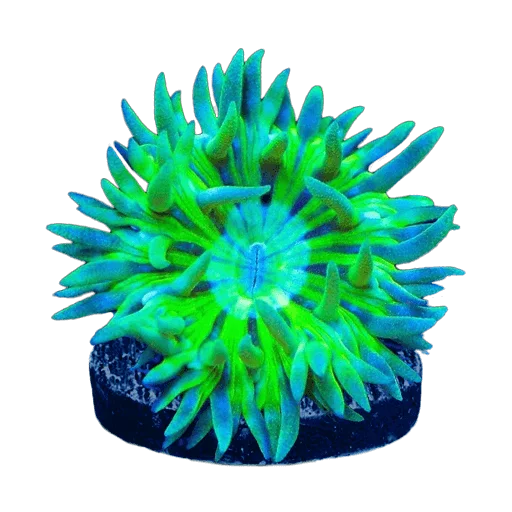
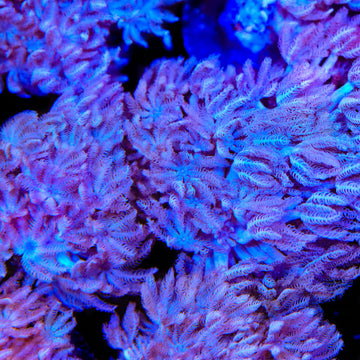
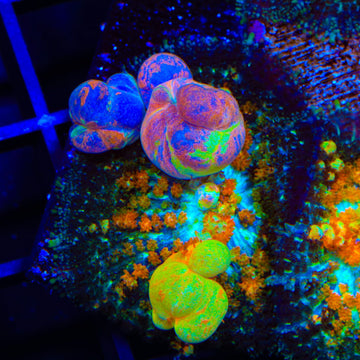
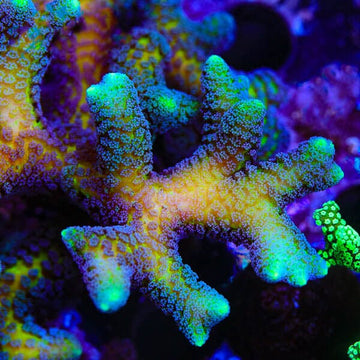
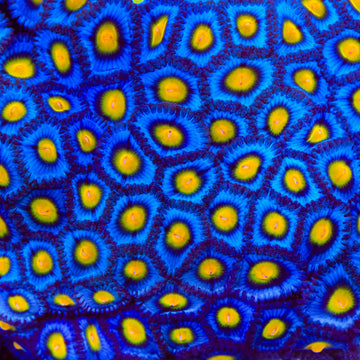
TSA Firefly Zoanthids Coral
Overview
Firefly Zoanthids Coral displays small button-like polyps with bright contrasting centers and frilled skirts. Zoanthus sp. is a soft colonial polyp coral that thrives in moderate light and low to moderate water flow. It is photosynthetic via symbiotic algae but can take occasional small meaty or planktonic foods to support growth and color. Place on an isolated rock to control spread, keep space from aggressive corals, and handle with care as some zoanthids can contain toxins.
Quick Facts
Care
Easy
Lighting
Low–Moderate
Flow
Moderate, indirect
Placement
Low–Mid
Temperament
Semi-aggressive (2–3 inches spacing)
Recommended Parameters
Temp
76–82°F
pH
8.1–8.4
Salinity
1.025–1.026
Calcium
380–430 ppm
AlkAlkalinity
8–10 dKH
Magnesium
1250–1350 ppm
Feeding
photosynthetic (primary), microplankton, zooplankton, rotifers, copepod nauplii, marine snow, coral-specific powdered foods (e.g., Reef-Roids), finely minced mysis shrimp, finely minced brine shrimp
Care & Placement
FAQ
Frequently Asked Questions
About the TSA Firefly Zoanthids Coral
-
Why did my Firefly Zoanthids lose their neon glow or shift colors under new lights?
Zoanthus sp. shift pigments with spectrum and PAR. Aim for blue-heavy lighting with moderate PAR (100–200) and stable nutrients (nitrate 5–15 ppm, phosphate 0.03–0.1). Photo-acclimate with screen or reduced intensity to prevent washing out. Minor trace balance (iodine, iron) and consistent alkalinity help. If colors brown, reduce nutrients or white channels; if pale, increase nutrients or lower PAR. -
How do I keep Firefly Zoanthids from overrunning my rockwork?
Mount them on an “island” rock with a sand moat and leave trimming margins. When edging toward neighbors, peel the mat back and cut cleanly with a new scalpel or coral shears. Wear gloves and eye protection due to toxin risk. Run fresh carbon and do a water change after heavy pruning to limit chemical stress. -
What pests or diseases specifically target this morph, and how do I treat them?
Watch for zoa-eating nudibranchs (match the polyp color), zoa spiders, and zoa pox (pale pustules). Dip new pieces and treat issues with repeated iodine or Bayer-style dips; Furan-2 dips are effective for pox. Hunt nudis at lights-out and remove egg spirals. Increase random flow to deter film bacteria, and quarantine problem frags until polyp extension returns. -
Do Firefly Zoanthids need feeding, and what works best?
They rely mainly on light but respond to occasional broadcast feeds of tiny fare (0.1–0.5 mm): rotifers, reef roids, or finely milled zooplankton. Target feeding can cause retraction; instead, reduce flow briefly, feed lightly, then resume. Overfeeding shows as film algae or prolonged closing. A weekly microfeed and periodic amino acids (low dose) are plenty.