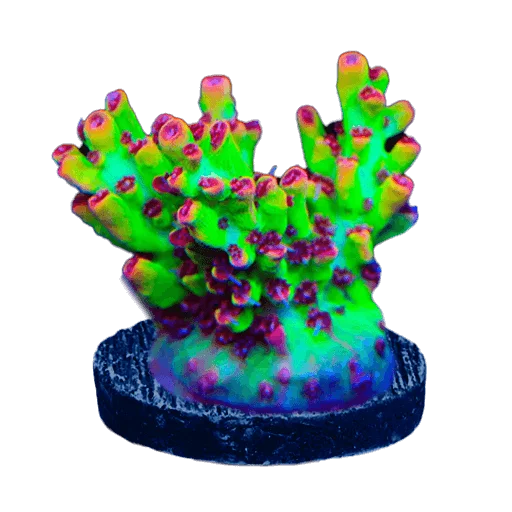
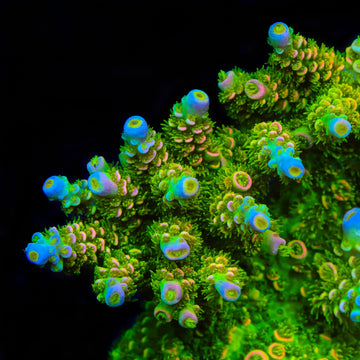
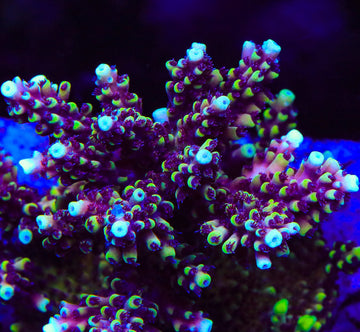
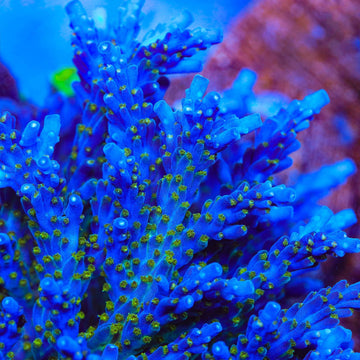
TSA Fire in the Sky Tenuis Acropora Coral
Overview
Fire in the Sky Acropora Coral shows branching, tightly spaced branchlets with contrasting tip coloration. Acropora tenuis is a small-polyp stony coral with a branching structure; it prefers strong lighting and high, turbulent water flow. It relies on symbiotic algae for most nutrition but benefits from occasional fine particulate foods, which can support growth and color. Place high on stable rock with ample space from aggressive neighbors, and maintain consistent, low-nutrient, stable water to avoid tissue loss.
Quick Facts
Care
Difficult
Lighting
High
Flow
High, turbulent
Placement
High
Temperament
Peaceful (2–3 inches spacing)
Recommended Parameters
Temp
76–80°F
pH
8.1–8.4
Salinity
1.025–1.026
Calcium
420–450 ppm
AlkAlkalinity
7.5–8.5 dKH
Magnesium
1280–1350 ppm
Feeding
photosynthetic (primary), microplankton, rotifers, copepod nauplii, oyster eggs, reef roids/powdered coral foods, amino acids
Care & Placement
FAQ
Frequently Asked Questions
About the TSA Fire in the Sky Tenuis Acropora Coral
-
Why does my Fire in the Sky Acropora (Acropora tenuis) lose red and blue contrast under strong light?
Color shifts often reflect nutrient balance and spectrum, not just PAR. Aim for 250–350 PAR with strong blue/UV (400–430 nm) dominance. Keep nitrate 2–10 ppm and phosphate 0.03–0.08 ppm—ultra-low nutrients can wash out reds, while excess can brown the base. Maintain stable alkalinity (8–9 dKH); spikes under high PAR cause tip burn and fading. -
How can I promote fuller branching instead of just a wide encrusted base?
Give high, cross-current flow that sweeps around the base to prevent detritus buildup, and avoid shadowing by slightly rotating the frag weekly until vertical branches form. Mount on a small plug or narrow ridge to discourage endless plating. Moderate feeding of fine particulate foods at night can support tissue growth without driving nutrients too high. -
My colony has great polyp extension but slow vertical growth—what should I adjust?
Persistent polyp extension with slow height often points to insufficient turbulent flow and mild shading. Increase random flow bursts to 30–50x turnover and reduce neighboring overhangs that cast shadows. Ensure phosphate isn’t bottomed out (<0.01 ppm) and that PAR at the upper branches exceeds 250. Small, regular water changes can replenish trace elements used in calcification. -
How do I differentiate pest damage from stress-related recession on A. tenuis?
AEFW leave irregular bite marks and pale patches with fine fecal dust; red bugs reduce polyp extension without obvious bites. Stress recession is smoother and tracks from a cut, base, or tip after parameter swings. Inspect at night with a flashlight, turkey-baste the colony to dislodge flatworms, and dip suspect frags. Quarantine new acros for 4–6 weeks.