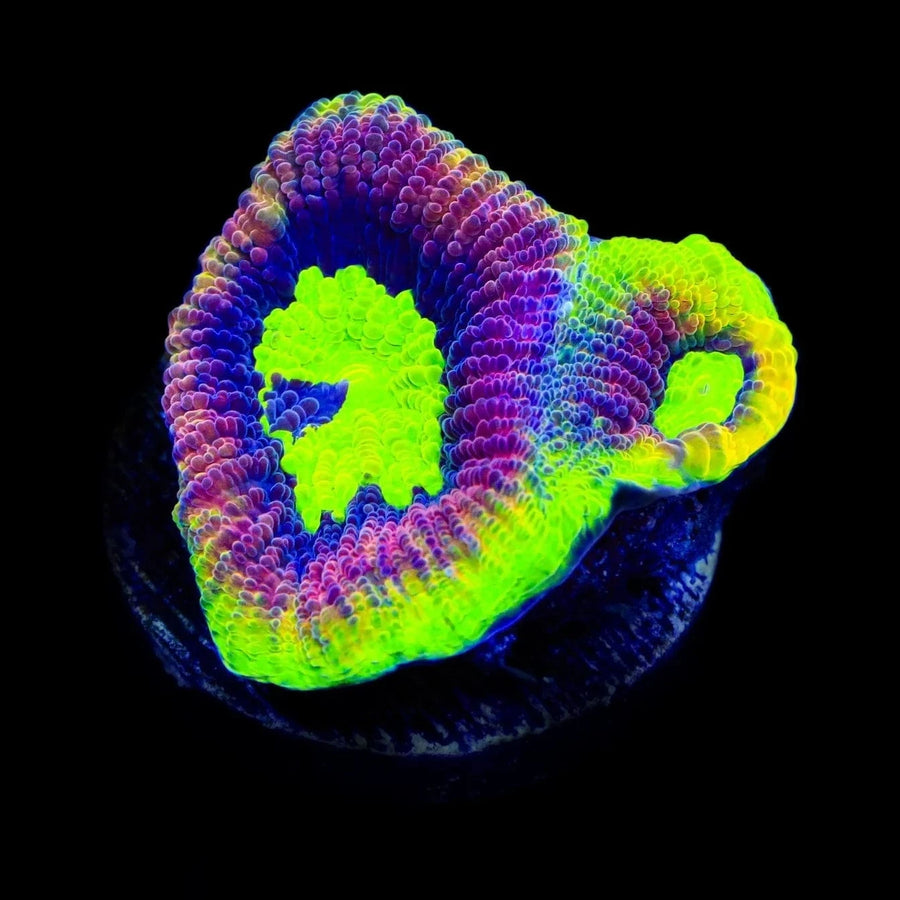
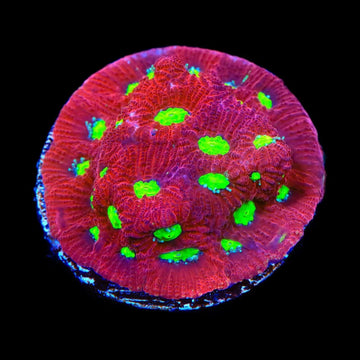
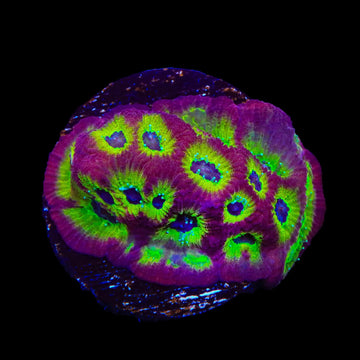
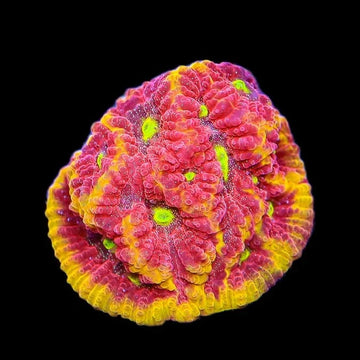
TSA Fire Favia Coral
Overview
Fire Favia Coral features domed, polygonal corallites with contrasting mouths and ridges. Favia favus is a hardy stony (LPS) brain coral forming compact, encrusting to massive colonies, preferring moderate light and gentle to moderate flow. It is photosynthetic via symbiotic algae but benefits from occasional small meaty feedings, which can boost growth and deepen color. Place on stable rock with space around it, as longer sweeper tentacles extend at night and can sting nearby corals.
Quick Facts
Care
Moderate
Lighting
Low–Moderate
Flow
Moderate, indirect
Placement
Low–Mid
Temperament
Semi-aggressive (6–8 inches spacing)
Recommended Parameters
Temp
76–80°F
pH
8.1–8.4
Salinity
1.025–1.026
Calcium
420–450 ppm
AlkAlkalinity
8–9 dKH
Magnesium
1280–1350 ppm
Feeding
photosynthetic, mysis shrimp, brine shrimp, finely chopped seafood (shrimp, clam, fish), zooplankton, microplankton, coral foods
Care & Placement
FAQ
Frequently Asked Questions
About the TSA Fire Favia Coral
-
Why is my Fire Favia Coral losing its vivid red/orange tones under strong lighting?
Favia favus prefers moderate PAR (80–150). High white intensity can wash reds and oranges; shift toward a blue-heavy spectrum and reduce peak intensity or photoperiod. Maintain stable alkalinity (8–9.5 dKH), moderate nitrate (5–15 ppm) and low phosphate (0.03–0.1 ppm). Trace balance matters—iodine and iron support fluorescence but avoid overdosing. Gradual changes over 2–3 weeks help colors rebound without shocking the coral. -
How aggressive are Fire Favia sweepers, and can I mitigate stings to neighbors?
Night sweepers can extend 2–5 cm. Allow 5–8 cm clearance and angle flow so sweepers don’t trail onto sensitive LPS or Zoanthids. Heavy meaty feedings can temporarily increase sweeper activity; feed smaller portions and target the Favia first to reduce foraging. Carbon use and regular water changes help with chemical output. Avoid placing near fleshy LPS that can’t retract quickly, like Trachyphyllia. -
What causes slow tissue recession around the rim, and how do I halt it?
Detritus trapped at the colony base, abrasive sand contact, and low-flow pockets are common triggers. Correct by increasing gentle, random flow around the perimeter and lifting the coral slightly off the sand. Check stability in alkalinity and temperature; swings often precede recession. Inspect for vermetid snails irritating tissue. An iodine or broad-spectrum coral dip may help if bacteria are involved. Siphon debris weekly and avoid blasting tissue with direct jets. -
My Fire Favia grows upward in ridges instead of spreading—normal?
Yes. Favia favus often starts encrusting, then builds thick ridges and mounding walls as corallites pack together. If you want a wider footprint, give it horizontal real estate with stable rock and moderate flow so new tissue can plate outward. Avoid shadowed areas created by overhangs; adjust angle so light reaches the colony edges. On sandbeds, place on a small tile to prevent abrasion and buried margins.