TSA Fire Dancer Goniopora Coral
Overview
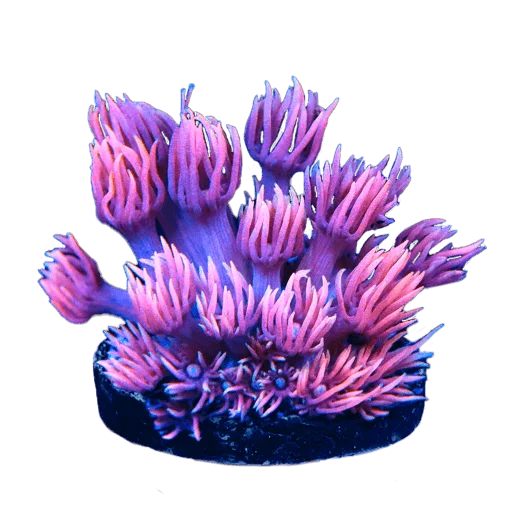
Fire Dancer Goniopora Coral shows long, waving polyps with bright orange-red tentacles. Goniopora sp., a large-polyp stony coral forming domed heads of tubular polyps, prefers moderate light and gentle to moderate, indirect flow. It is photosynthetic with symbiotic algae but benefits from occasional small particle feedings to support growth and maintain color. Place with room for full polyp extension and away from aggressive neighbors, and avoid strong, direct flow that can damage tissue.
Quick Facts
Care
Difficult
Lighting
Moderate
Flow
Moderate, indirect
Placement
Mid–Low
Temperament
Semi-aggressive (3–6 inches spacing)
Recommended Parameters
Temp
76–80°F
pH
8.1–8.4
Salinity
1.025–1.026
Calcium
420–450 ppm
AlkAlkalinity
8–9.5 dKH
Magnesium
1280–1350 ppm
Feeding
photosynthetic, microplankton, phytoplankton, zooplankton, rotifers, baby brine shrimp, Cyclops, oyster eggs, marine snow, powdered coral foods (e.g., Reef-Roids)
Care & Placement
FAQ
Frequently Asked Questions
About the TSA Fire Dancer Goniopora Coral
-
Why do Fire Dancer Goniopora sometimes retract for days even when parameters look fine?
Extended retraction often follows micro-irritation: abrupt flow changes, trace element depletion (notably manganese/iron), or sediment abrasion. Check for alk swings, rising PAR, and detritus buildup at the base. Restore gentle, randomized flow, target-feed very fine foods 2–3x weekly, and refresh trace elements via regular water changes or careful dosing. Avoid sudden spectrum shifts and sand storms. -
How can I maintain the intense red/orange coloration without stressing the coral?
Keep moderate PAR (120–180) with blue-heavy spectrum; avoid blasts above ~200 unless acclimated. Maintain stable nitrate 5–15 ppm and phosphate 0.03–0.1 to prevent paling. Gentle, alternating flow improves gas exchange without stripping tissue. Feed microplanktonic foods regularly. Excess white light can wash hues; too little nutrients dulls color. Color typically deepens after several weeks of stable conditions. -
My Goniopora’s tissue is receding from the base upward—what’s the likely cause?
Often stagnant flow at the base plus detritus leads to bacterial irritation. Lift the colony on a small pedestal, increase gentle cross-flow, and turkey-baste debris daily. Inspect for vermetid snails or algae encroachment and remove them. Maintain non-zero nutrients, and perform a targeted iodine dip if tissue looks gelatinous. Consistent alkalinity prevents further skeletal exposure. -
Are clownfish or shrimp “hosting” behaviors safe for Fire Dancer Goniopora?
Occasional contact is usually tolerated, but persistent perching can cause chronic recession and reduced extension. Encourage alternative hosts (e.g., a large Euphyllia or faux anemone) and adjust aquascape to make the Goniopora less accessible. Slightly increase flow to discourage loitering without blasting the coral. If contact continues, consider relocating either the coral or the offending resident.